

On this page
These 12 original questions cover Body Fluids and Circulation, under Unit 5, Human Physiology, in the NEET (UG)-2026 syllabus. Each follows NCERT Class 11 Biology, Chapter 15 (Reprint 2026-27); our body fluids and circulation guide recaps it.
How do you attack Statement I and Statement II questions?
Judge each statement alone against the NCERT chapter; hunt for the one swapped word. Our statement-based questions method has more.
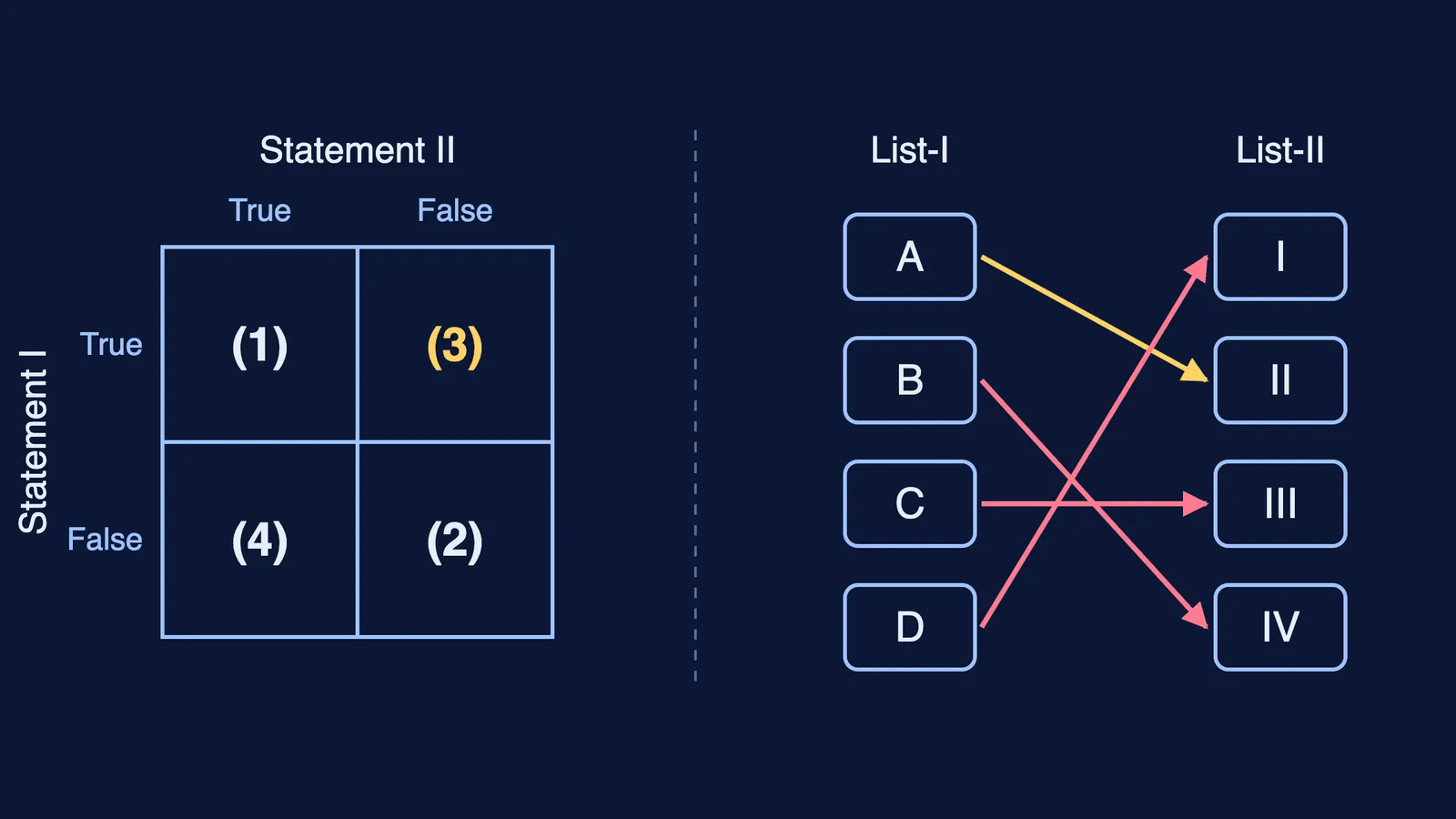
Options for Q1 to Q5: (1) Both correct. (2) Both incorrect. (3) I correct, II incorrect. (4) I incorrect, II correct.
Q1 (easy). Statement I: Plasma minus its clotting factors is serum. Statement II: Albumins are mainly involved in defence.
Answer: (3). NCERT gives defence to globulins; albumins help in osmotic balance.
Q2 (medium). Statement I: In an Rh-negative mother's first pregnancy, the placenta separates her blood from an Rh-positive foetus's. Statement II: Erythroblastosis foetalis is avoided by giving her anti-Rh antibodies before the first delivery.
Answer: (3). NCERT says right after the first delivery.
Q3 (medium). Statement I: Thrombin converts prothrombin into fibrinogen. Statement II: Calcium ions matter a great deal in clotting.
Answer: (4). Thrombin turns fibrinogen into fibrin.
Q4 (medium). Statement I: Annelids and chordates have closed circulation. Statement II: Molluscs have closed circulation.
Answer: (3). NCERT groups molluscs with arthropods as open.
Q5 (hard). Statement I: Lub, the first heart sound, marks the semilunar valves closing. Statement II: Atrial systole adds about 30 per cent to ventricular filling.
Answer: (4). Lub goes with the tricuspid and bicuspid valves closing.
Which statements are correct, and how do you narrow the options?
Mark each letter T or F, then strike every option holding a false letter.
Q6 (medium). Which are correct about the heart? A. It is derived from mesoderm. B. The interatrial septum is thick; the interventricular septum is thin. C. The tricuspid valve lies between the right atrium and right ventricle. D. Atrial walls are thicker than ventricular walls. E. Semilunar valves guard the ventricles' exits into the pulmonary artery and aorta.
(1) A, C and E only (2) A, B and C only (3) C, D and E only (4) A, C, D and E only
Answer: (1). B is reversed; ventricle walls are thicker.
Q7 (hard). Which are correct about heartbeat control? A. Nodal tissue regulation makes the heart myogenic. B. A cerebellar centre moderates cardiac function. C. Sympathetic signals strengthen ventricular contraction. D. Adrenal medullary hormones can raise cardiac output. E. The AV bundle runs through the AV septa to the top of the interventricular septum.
(1) A, C and D only (2) A, C, D and E only (3) B, C and E only (4) A, B, C and D only
Answer: (2). NCERT's centre is in the medulla oblongata, so B is false; true E rules out (1).
Q8 (medium). Which are correct about circulatory disorders? A. Repeated readings of 140/90 or more show hypertension. B. Coronary artery disease is often called atherosclerosis. C. Angina occurs only in elderly men. D. In 120/80, 80 mm Hg is systolic. E. Lung congestion is a main symptom of heart failure.
(1) A, B and E only (2) A, B and C only (3) B, D and E only (4) A, B, D and E only
Answer: (1). NCERT says angina affects both sexes at any age; 80 is diastolic.
How do you match List-I with List-II quickly?
Lock your surest pair, drop options that disagree, then check another. Our match-the-list method explains the steps.
Q9 (easy). List-I (blood group): A. A; B. B; C. AB; D. O. List-II (antibodies in plasma): I. nil; II. anti-A and anti-B; III. anti-B; IV. anti-A.
(1) A-IV, B-III, C-I, D-II (2) A-III, B-IV, C-I, D-II (3) A-III, B-IV, C-II, D-I (4) A-I, B-IV, C-III, D-II
Answer: (2). Plasma holds antibodies against antigens its RBCs lack (NCERT Table 15.1).
Q10 (easy). List-I: A. Neutrophils; B. Basophils; C. Eosinophils; D. Lymphocytes. List-II: I. Secrete histamine and heparin; II. B and T forms; III. Phagocytic granulocytes; IV. Allergic reactions.
(1) A-III, B-I, C-IV, D-II (2) A-III, B-IV, C-I, D-II (3) A-II, B-I, C-IV, D-III (4) A-I, B-III, C-IV, D-II
Answer: (1). Basophils secrete; eosinophils link to allergy.
Q11 (medium). List-I: A. Fishes; B. Amphibians; C. Birds; D. Arthropods. List-II: I. Open circulation; II. Two chambers, single circulation; III. Four chambers, double circulation; IV. Three chambers, incomplete double circulation.
(1) A-II, B-III, C-IV, D-I (2) A-IV, B-II, C-III, D-I (3) A-II, B-IV, C-I, D-III (4) A-II, B-IV, C-III, D-I
Answer: (4). Blood mixes in the amphibian's single ventricle.
Q12 (hard). List-I (cardiac cycle): A. Joint diastole; B. Atrial systole; C. Ventricular systole begins; D. Ventricular diastole begins. List-II: I. Semilunar valves close (dub); II. AV valves open, semilunar valves closed; III. Tricuspid and bicuspid valves close (lub); IV. Both atria contract after the SAN fires.
(1) A-II, B-IV, C-III, D-I (2) A-IV, B-II, C-III, D-I (3) A-II, B-IV, C-I, D-III (4) A-II, B-III, C-IV, D-I
Answer: (1). Rising ventricular pressure shuts the AV valves; falling pressure, the semilunar ones.
How should you use this set?
Cover the answers, mark all 12, redo misses later.
Not sure which part of the chapter to fix first? Fermi's AI tutor works out what you already know and builds a plan for the session.


