On this page
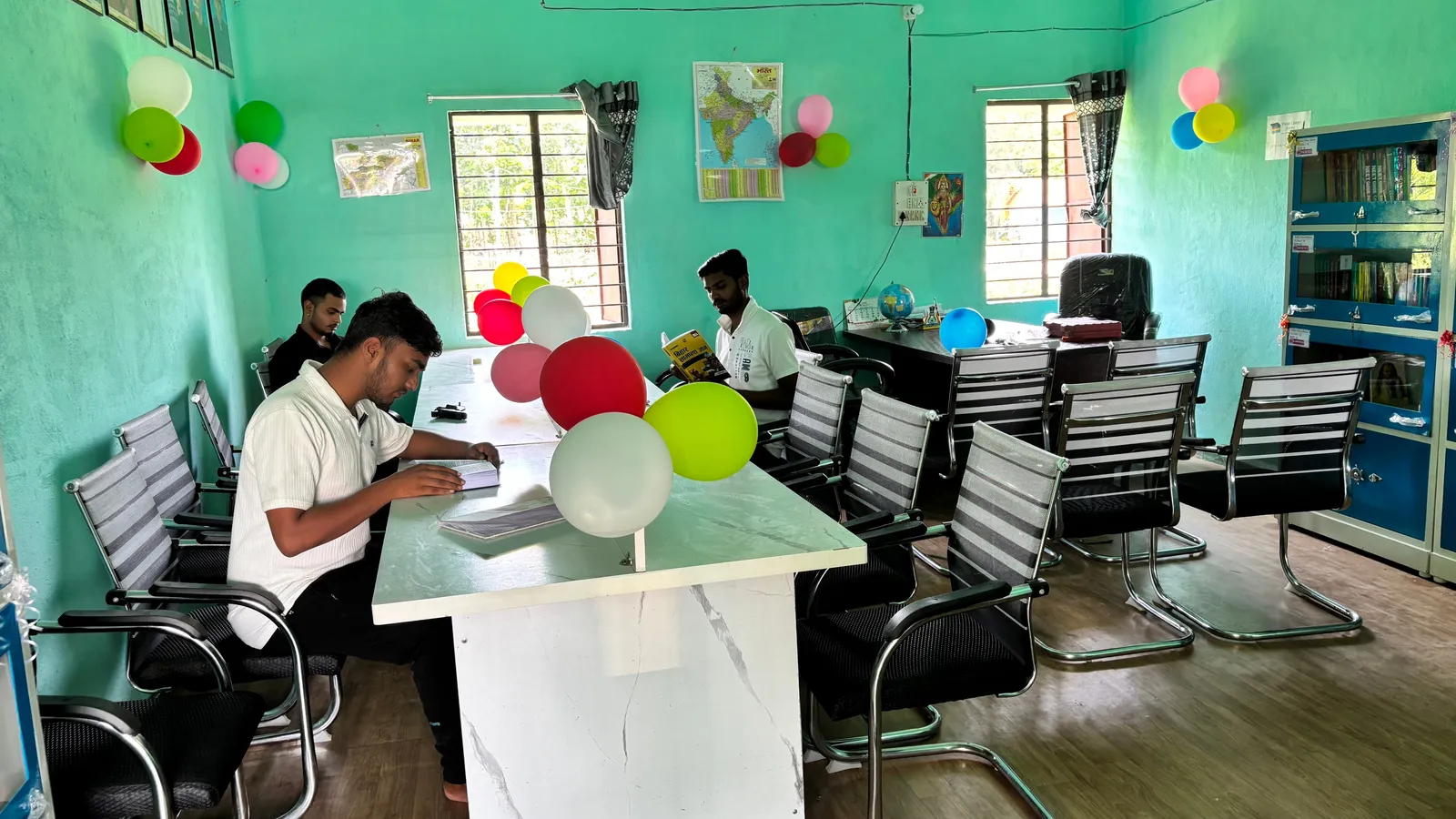
Many coaching centres run a self-study room or study hall: rows of desks, a few hours after class, and faculty somewhere nearby. Yet many students leave it with little done: half an hour deciding what to study, the rest looking up every time the door opens.
The fix is not more willpower. It is three small decisions made before you sit down: what you will do, where you will sit, and how you will handle doubts.
Why does the self-study room feel unproductive?
Two things usually go wrong. You arrive without a plan, so you open the module and drift. And the room is busy: friends walk past, someone asks for a pen, a phone lights up.
Those small breaks matter more than they seem. In a study in the Journal of Experimental Psychology: General, Erik Altmann, J. Gregory Trafton and David Hambrick gave people a task that needed them to keep their place in a sequence of steps. Interruptions averaging 2.8 seconds doubled the rate of sequence errors, and interruptions averaging 4.4 seconds tripled it. A multi-step physics numerical is a similar kind of task: lose your place and you redo half the page.
What should you bring to the self-study room?
Bring a written list of three to five tasks, each one finished in under an hour and specific enough that you know when it is done. "Revise thermodynamics" is not a task. "Solve module exercise 2, questions 1 to 15, and mark every wrong one" is.
Add one or two if-then plans for the moments that usually derail you. Psychologists call these implementation intentions. Peter Gollwitzer and Paschal Sheeran pooled 94 independent tests of them in a 2006 meta-analysis and found a medium-to-large effect on reaching goals (d = 0.65). In practice they look like this:
If I get stuck on a question for 10 minutes, then I star it, write my doubt in one line and move on.
If a friend comes to chat, then I say "at the break" and go back to the page.
If my phone buzzes, then it goes in my bag until the next break.
For help writing the list itself, see our guide to making a daily study task list.
Where should you sit in the coaching study hall?
Choose the seat by traffic, not by friends. Walk the room once and avoid these spots:
next to the door, the water cooler or the washroom corridor
the aisle seat on a busy row
right beside the faculty desk, where every doubt queue forms
Good seats are usually a corner or a wall row, two or three rows from the faculty desk. Sit with a friend only if you can both stay silent until the break.
How do you ask doubts without losing the whole session?
Nearby faculty are the real advantage of a coaching study hall, but walking over for every small doubt breaks your focus. Batch them. Keep a doubt sheet beside your notebook and make one trip per hour, or when you have two or three doubts.
When you reach the desk, use a short script so the teacher can help in a minute:
"This is question 12 from module 3, rotational motion."
"I took torque about the centre and got 4 rad/s squared; the answer is 6."
"I think my mistake is in the friction direction. Can you check that step?"
Showing your attempt gets a faster, better answer than "I didn't get this one." Our piece on keeping a structured doubt log shows how to track which doubts keep coming back.
If the faculty desk is busy and you are stuck on a method rather than a fact, the Fermi Problem Library has worked problems with a step-by-step solver that explains the reasoning rather than printing an answer, so you can check your approach and keep the human doubts for the harder questions.
What does a good three-hour session look like?
Here is a worked plan for a JEE student with a 4 pm to 7 pm slot after class:
4:00 to 4:10: settle in a wall seat, phone in bag, write the task list and doubt sheet heading.
4:10 to 5:00: today's class notes, rewritten as five questions you answer from memory.
5:00 to 5:10: break, then one trip to faculty with the doubts so far.
5:10 to 6:10: 15 module questions from today's chapter, wrong ones starred.
6:10 to 6:20: break and second doubt trip.
6:20 to 6:55: redo the starred questions without looking at the solution.
6:55 to 7:00: tick off the list and write tomorrow's first task.
If stray thoughts keep pulling you away, try a distraction parking lot on the corner of your page. If the study hall starts to feel stressful rather than just tiring, talk to someone you trust; you can also call the official Tele MANAS helpline on 14416.
Tomorrow, try one change: write the list before you walk in.