On this page
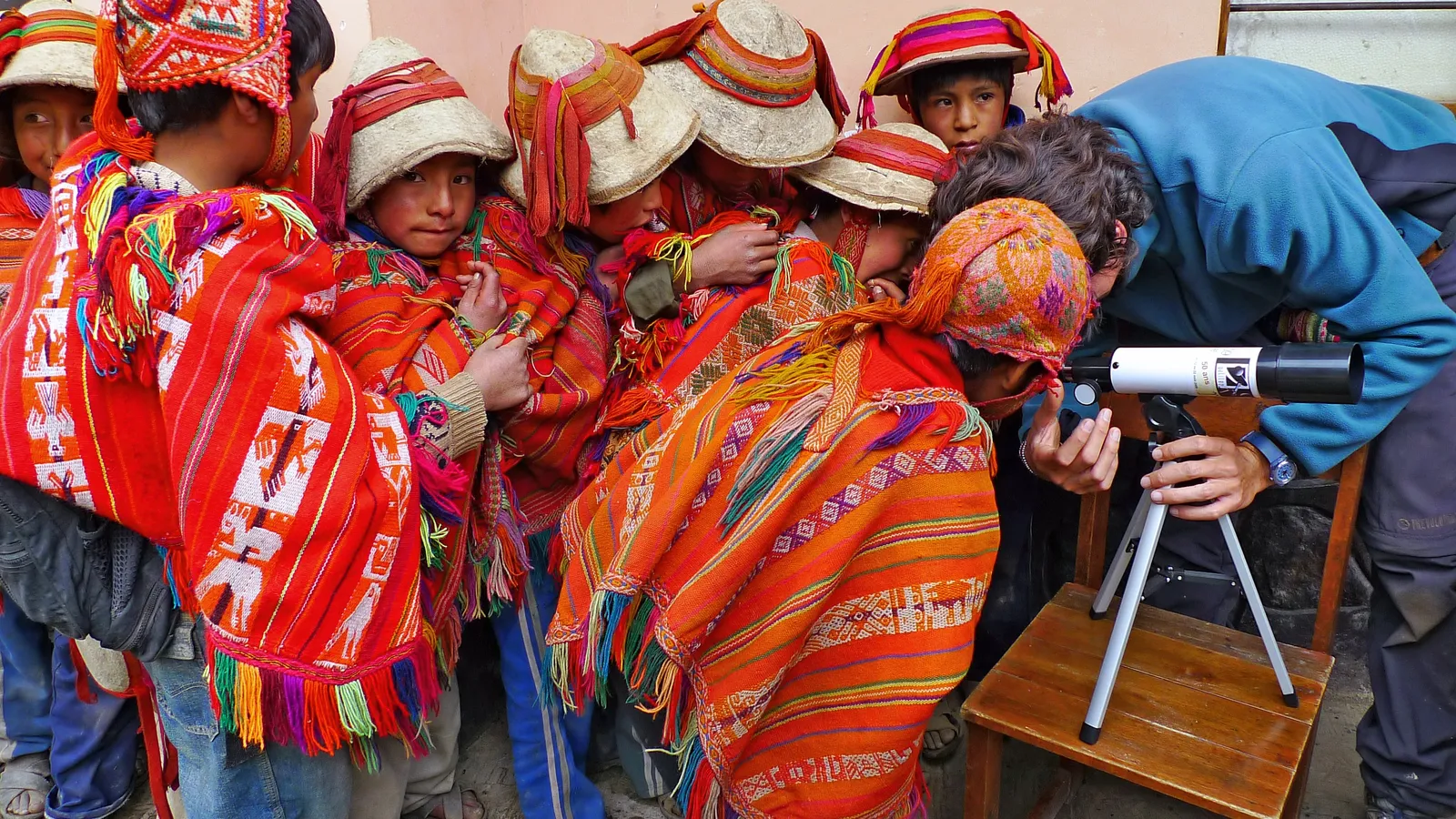
An astronomy club needs less money than most students think: one willing teacher, a regular evening slot, a safe open space and a plan. Here is a script, a session plan and dates to aim for.
How do you get a teacher to support an astronomy club?
A club that looks organised and safe is easier to say yes to. Policy helps: paragraph 4.44 of the National Education Policy 2020/Chapter_4) says "Topic-centered and Project-based Clubs and Circles will be encouraged and supported at the levels of schools, school complexes, districts, and beyond", and it names Science Circles as an example.
Ask your physics or geography teacher first, then go to the principal together with a short pitch:
"We want to start an astronomy club for Classes 8 to 12. We have [number] students interested."
"We would meet once a week at lunch for sky-map practice, and once a month on the school terrace or ground for an hour after sunset."
"Parents will sign a consent form for evening sessions, and at least one teacher will be present."
"We need no money to begin. Later we would ask for one pair of binoculars."
"Our first event would be the Geminid meteor shower on 14 December."
Bring a one-page plan with names, a timetable and a draft consent form. It shows you have thought about safety, which is often a teacher's first worry.
What equipment does a school astronomy club need?
Start with eyes. The Royal Astronomical Society says the first step is "to become familiar with the night sky", using a planisphere (a rotating star wheel), a monthly sky guide or software. Making a paper planisphere is a good first club activity.
Buy binoculars before a telescope. NASA's Night Sky Network calls binoculars "an excellent first instrument" and says a pair from 7x35 to 10x50 gives "great views of the Moon, large open star clusters like the Pleiades" (NASA Night Sky Network). When the club is ready for a telescope, our guide to choosing a first telescope explains what to look for. The Astronomical Society of India's outreach committee also shares sky maps and a guide to making your own telescope.
One rule goes in the club rules and on the consent form: the American Astronomical Society says to look directly at the Sun only through solar viewers meeting the ISO 12312-2 standard, and never through an unfiltered camera, telescope or binoculars.
What happens at a first sky-watching session?
A 60-minute plan for the terrace or ground:
0-10 minutes: attendance, lights off, phones dimmed, eyes start to adjust.
10-25 minutes: the Moon or a bright planet if up, then one constellation such as Orion in winter.
25-40 minutes: pass the binoculars around; each student finds and describes one object.
40-50 minutes: a star count (below).
50-60 minutes: everyone writes one observation in the club logbook, with date, time and sky conditions.
A star count turns a terrace into real science. The citizen-science project Globe at Night asks observers to compare the stars they see in a constellation with charts drawn for different levels of light pollution, then report it online. A 2023 study in Science used more than 51,000 citizen-science observations and found that the loss of visible stars from 2011 to 2022 fits sky brightness rising by 7 to 10% per year (Kyba et al., 2023). An earlier world atlas found that more than 80% of the world's population lives under light-polluted skies (Falchi et al., 2016).
When a member's question needs a picture, the Fermi Simulation Lab has interactive simulations for ideas that are easier to see than to read. For solo practice between sessions, see how to start astronomy as a hobby at home.
Which sky events can your club plan for this year?
Three events worth planning:
Geminid meteor shower, night of 14 December 2026. The International Meteor Organization's 2026 calendar puts the maximum at 14:00 UT on 14 December (7:30 pm in India), with no moonlight to spoil it and a zenithal hourly rate of 150, an idealised figure for a perfectly dark sky. A town sky shows far fewer.
Zero Shadow Day. Places between 23.5 degrees north and south get the Sun directly overhead at noon twice a year, and the Astronomical Society of India's Zero Shadow Day page has activity material and a table of dates for Indian towns. That covers most of India; check whether your town's dates fall in term time.
Olympiad season. The first stage of the astronomy olympiad is run by the Indian Association of Physics Teachers, with later stages by HBCSE (senior level) and NCSM (junior level) (HBCSE olympiads). Older members can read our guide to preparing for astronomy olympiad observation.
Keep one shared logbook from the first night: a year of dated observations is your strongest case when you ask the school for a telescope. If a member wants to go deeper into the physics behind what they see, Fermi's AI tutor can work out what they already know and build a plan for the session. Pitch this week; hold your first session before the Geminids.