On this page
Every operation runs on a team, and two of its members train through their own allied health degree: the operation theatre (OT) technologist and the anaesthesia technologist. In India, one course prepares you for both: the Bachelor (or BSc) in Anaesthesia and Operation Theatre Technology, or BAOTT.
What does an OT and anaesthesia technologist do?
India's National Commission for Allied and Healthcare Professions Act, 2021 lists “Anaesthesia Assistants and Technologists” and “Operation Theatre (OT) Technologists” as recognised professions under surgical and anaesthesia-related technology. The Act describes this professional as a team member who prepares and maintains the operating theatre, assists the anaesthetist and surgical team, and supports patients in the recovery room, including setting up, checking and maintaining anaesthesia equipment and running central sterile services.
The WHO Surgical Safety Checklist, a one-page list surgical teams run through at three points during an operation, shows where this work fits. Here is a routine case:
Before anaesthesia begins: the team confirms the patient's identity, the site and consent. The anaesthesia machine and medication check must be complete, and the pulse oximeter must be on the patient and working. Allergies, a difficult airway or a risk of losing more than 500 ml of blood are flagged in advance. Checking anaesthesia equipment is one of the duties the Act lists for this role.
Before the first cut: everyone introduces themselves by name and role. The team confirms that sterility has been checked, including indicator results, and that essential scans are on display. Sterile instruments come from the central sterile services department, also among this role's listed duties.
Before the patient leaves the theatre: the instrument, sponge and needle counts are confirmed, specimen labels are read aloud, and equipment problems are reported.
In a 2009 study of adults having non-cardiac surgery at eight hospitals in eight cities, including New Delhi, introducing the checklist was associated with deaths falling from 1.5% to 0.8% and inpatient complications falling from 11.0% to 7.0%.
How long is the course, and who can apply?
The Act sets a minimum: an allied health qualification must involve at least 2,000 hours spread over two to four years (NCAHP Act, section 2). A competency-based BAOTT curriculum published by Nagaland University, written “as per the NCAHP Act-2021”, shows what one current version of the degree looks like:
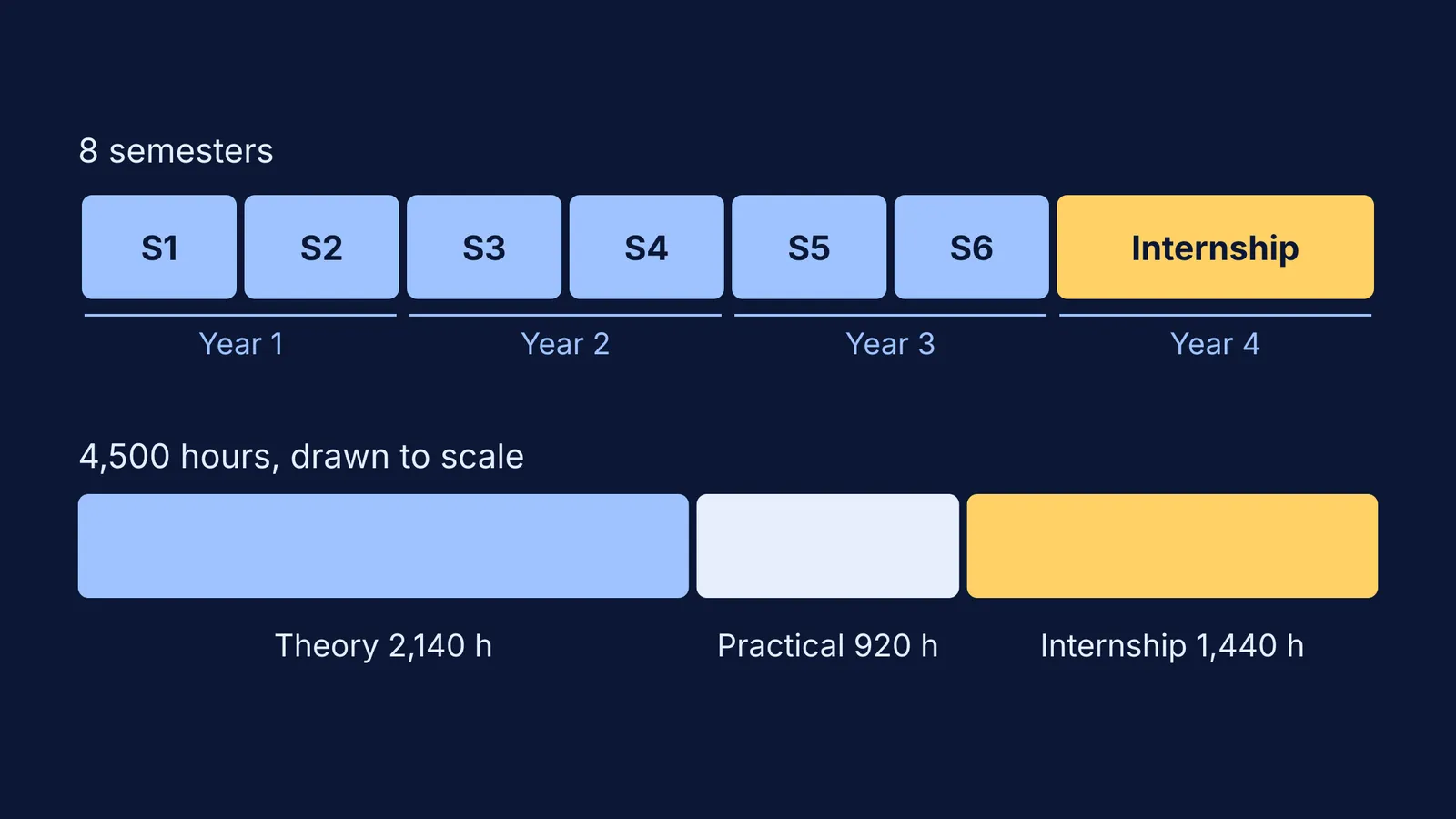
Length: 4 years (8 semesters): 2,140 hours of theory, 920 hours of practicals and at least 1,440 hours of internship, about 4,500 hours in all.
Eligibility: a 10+2 pass with 50% in physics, chemistry and biology; mathematics is optional.
Years 1 and 2: anatomy, physiology, biochemistry, pathology and pharmacology, then basic anaesthesia techniques, surgical procedures and the central sterile supply department.
Year 3: specialised anaesthesia and surgery, plus research methods.
Year 4: a one-year internship in anaesthesia, surgery and specialties.
Attendance: 75% in theory and 80% in skills training to sit the final exam.
Lateral entry: students with a recognised two-year full-time diploma in this field can join in the third semester.
Admission rules differ from university to university. This curriculum admits students through a university entrance test and an interview, so read the current prospectus for every college on your list. If you are taking NEET-UG anyway, our guide to which BSc nursing and allied health courses accept NEET explains how to check.
Is OT technology a good fit for you?
If most of these sound like you, the course is worth a closer look.
Can you stay focused and on your feet through a long procedure?
Do you enjoy equipment: setting it up, checking it, finding out why it isn't working?
Can you follow a strict sterile routine the same way every single time?
Would you speak up if a count didn't match, even in front of a senior surgeon?
Are anatomy and physiology the parts of biology you actually like?
Then test your answers on someone doing the job, at a college open day or a hospital visit: ask what a normal day in their theatre looks like and what was hardest in their first year.
How can you prepare in Class 11 and 12?
Get human physiology solid. Semester one includes anatomy and physiology, so chapters such as breathing and exchange of gases, and body fluids and circulation, come back immediately. If one idea keeps slipping, the Fermi Concept Library gives each biology concept its own lesson.
Keep physics and chemistry going. The curriculum expects graduates to manage medical gases and pipeline systems, so pressure and gas behaviour stop being exam-only topics.
Shortlist three colleges and put the callout's questions to each one.
If you don't know where to begin, Fermi's AI tutor works out what you already know and builds a plan for the session, so you start each evening with a clear next step.
To compare this degree with others, read our guide to allied health science courses after 12th PCB or our explainer on BSc Optometry as an eye care degree.