On this page
Your three-year-old sings rhymes in the car and narrates every cartoon. Then the teacher says they have not spoken in class all week. This split often shows up in the first weeks of nursery or LKG, and many children find their voice once the room feels safe. Here is what to watch, what to ask, and a four-week plan.
Is it normal for a child to talk at home but not at preschool?
Often, yes. Some children jump into new places; others are slow to warm up. Zero to Three, a US early-childhood organisation, describes cautious children who "need time and support from caring adults to feel safe in unfamiliar situations."
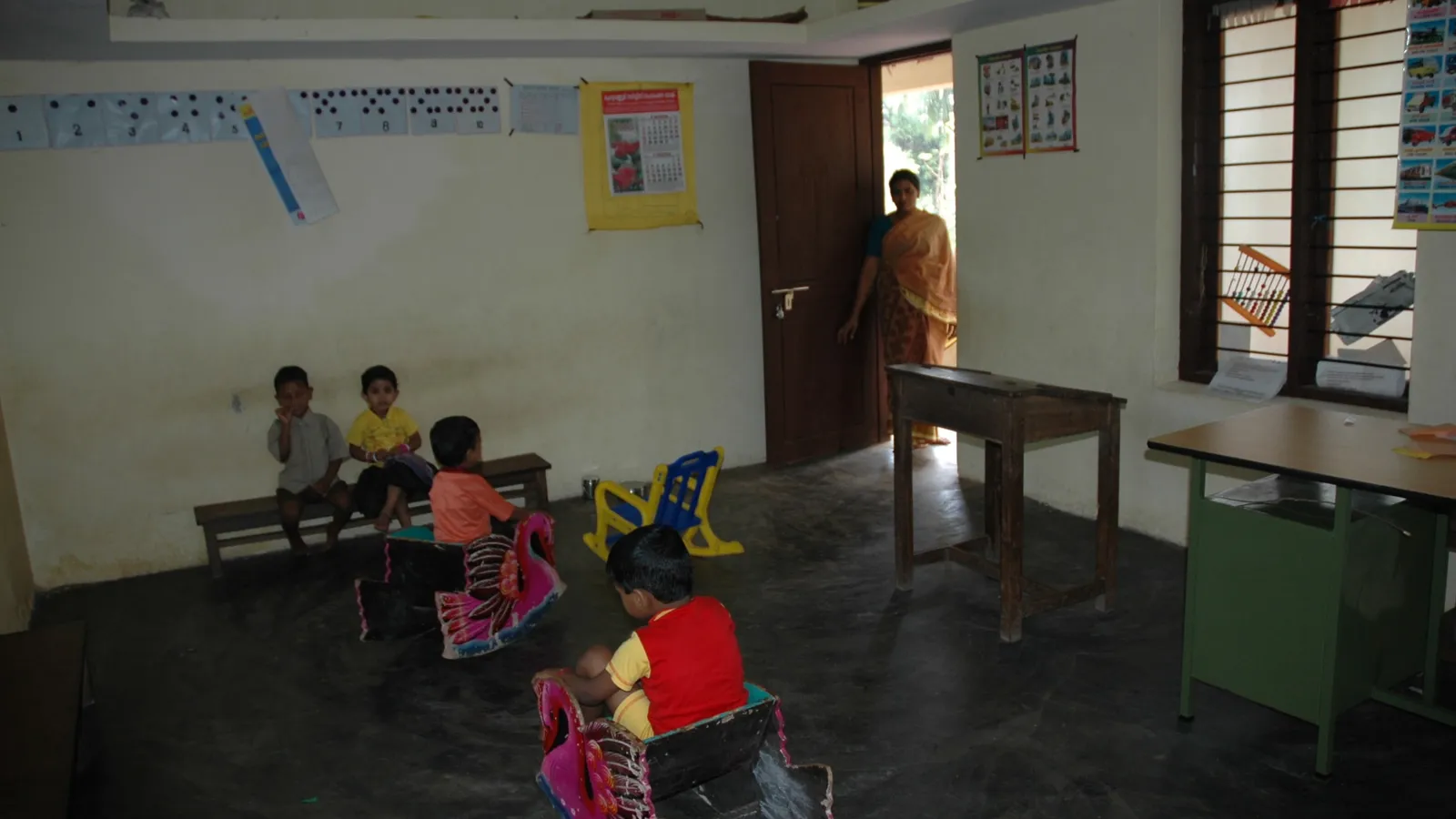
Preschool is also a lot at once, and for many Indian children the classroom language is new. A child who speaks Tamil at home may be listening hard to English before risking a sentence.
How long should you wait before worrying?
Give it at least the first month. The American Speech-Language-Hearing Association says that for selective mutism the silence lasts more than one month, not counting the first month of school, when children are still adjusting.
Selective mutism is an anxiety disorder in which a child is unable to speak in certain social situations, such as with classmates at school, according to the NHS. The NHS says it most often starts between ages 2 and 4 and affects about 1 in 140 young children. In a US public school district, teachers identified it in 16 of 2,256 children from kindergarten to second grade, or 0.71% (Bergman, Piacentini and McCracken, 2002).
That study is also why you should not wait forever: six months on, the children had improved but were still struggling, and the authors concluded that help is better than waiting for the silence to pass on its own.
What should you ask the teacher?
Ask the teacher for observations, not a verdict. Our guide on how to talk to your child's teacher about shyness covers tone.
A short script you can use at pick-up or on WhatsApp:
"At home she talks a lot, but she tells me she doesn't speak in class. Could you tell me what you notice over the next two weeks? Does she whisper to anyone, point or nod, join group games, or eat lunch next to a particular child? Is there a time of day she seems most relaxed?"
The answers point to a likely first friend. Ask the teacher not to call on her to speak in front of the class for now, and to accept nods and pointing as answers.
How can playdates help a quiet child?
Zero to Three suggests small social opportunities for cautious children, such as playtime with one or two other children. A classmate playdate is a simple way to do that.
Pick the child the teacher says your child sits near or watches.
Host at home, where your child already talks, for about an hour.
Choose side-by-side play: blocks, play dough, a ball in the park.
Do not ask your child to "say hi" or "tell Aarav your name". Let talk happen on its own.
Repeat with the same friend before adding a new one.
What should you say, and not say, at home?
The NHS advises against pressuring or bribing a child to speak, and against showing surprise when they do. Praise privately, and treat gestures as real communication.
Say: "New places can feel big. You can talk when you're ready."
Avoid: "Why don't you talk to anyone?" or "Don't be shy" in front of relatives.
Avoid: "I'll buy you chocolate if you answer the teacher."
Warn your child the day before about anything new, such as sports day; Zero to Three notes that knowing what to expect gives a child a sense of control.
A four-week plan
Week 1: Keep drop-offs calm and short, and talk at home about the day without quizzing. If mornings end in tears, see what helps when your child cries at school drop-off.
Week 2: Send the teacher the script above and note what they observe.
Week 3: Host one playdate with the classmate the teacher names.
Week 4: Repeat the playdate and check back with the teacher. Is your child nodding, whispering or playing more?
Small steady progress means keep going. Some children go quiet again for a while at the move from Nursery to LKG.
Tele MANAS is the Health Ministry's free helpline, on 14416 or 1-800-891-4416. The same small-steps idea carries on as children grow: for older brothers and sisters studying science, Fermi's AI tutor works out what a student already knows and builds a plan for the session, so they start from where they are.