On this page
Most families choose school transport on cost and pick-up time. The safer question: does this vehicle, and its crew, meet the rules written for carrying children?
Is a school bus safer than a private van?
Not automatically. A school bus is held to a written standard. A private van is held to whatever you ask of it.
The main national guidance for Indian schools is the Manual on Safety and Security of Children in Schools from the National Commission for Protection of Child Rights (NCPCR). CBSE's Circular No. 01/2022 tells affiliated schools to follow it.
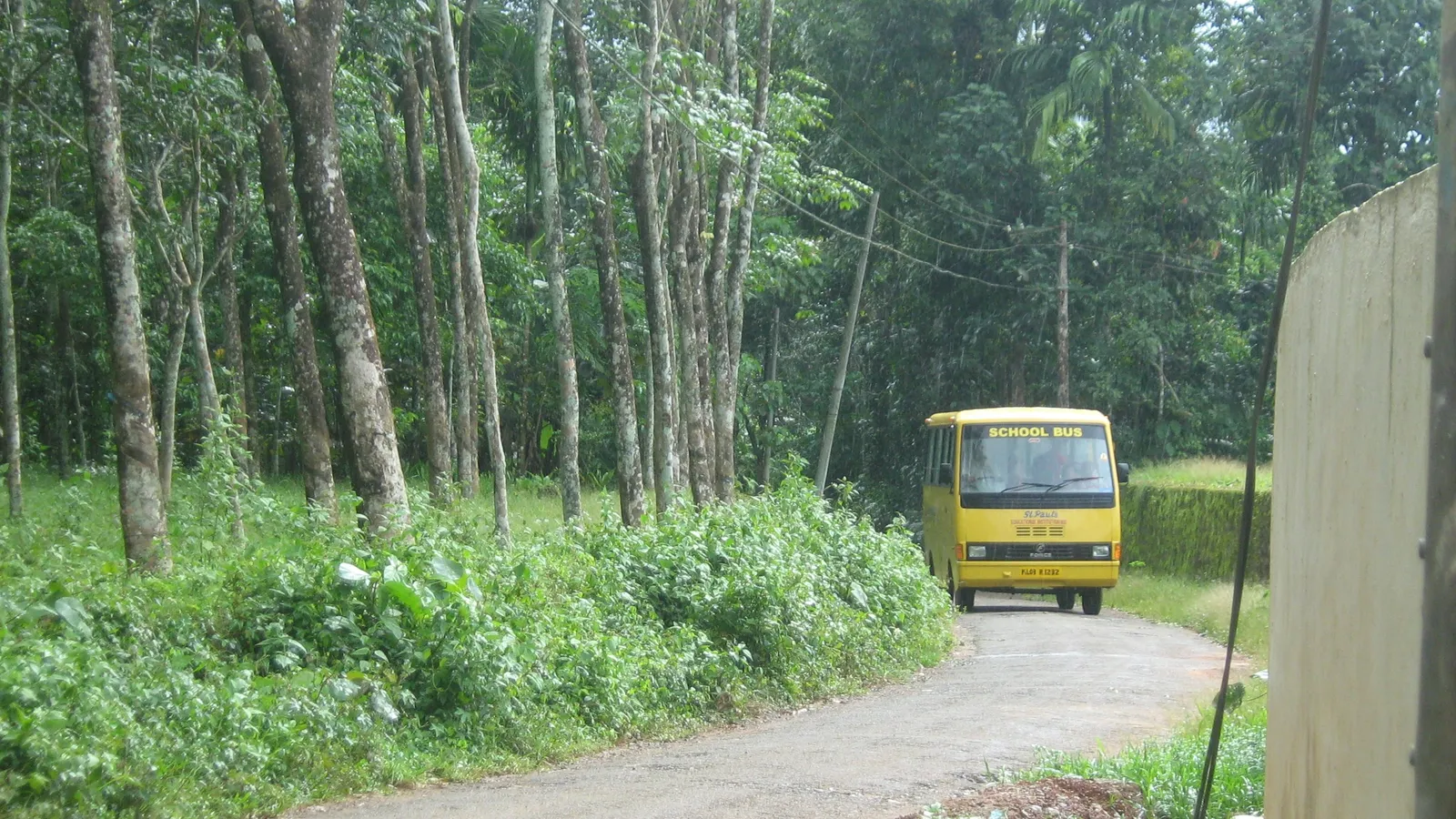
The manual quotes the Ministry of Road Transport and Highways definition: a school bus is a vehicle that seats 13 or more passengers, not counting the driver, designed and built for children going to school. Many private vans seat fewer than 13, so the bus rules below were not written for them. That does not make a van unsafe; it means the checking falls to you.
What rules must a school bus follow in India?
From the transport section of the NCPCR manual:
Speed control devices so the bus does not go faster than 40 km/h.
Police verification of bus staff before they are appointed.
A qualified attendant on board, preferably female, and a named Transport Manager or Coordinator at the school.
A driver with a valid licence, at least 5 years of heavy-vehicle driving, and a yearly medical check including an eye test.
No driver challaned even once for over-speeding or dangerous driving, or more than twice in a year for offences such as jumping a red light.
A first aid box, a fire extinguisher, an alarm bell, grilled windows and lockable doors.
Stops only at designated points, doors shut while moving, and nobody boarding except the conductor, an authorised teacher or a person the guardians authorise.
Do school vans need GPS and a panic button?
It depends on registration. The Ministry of Road Transport and Highways announced that all new public service vehicles registered on or after 1 January 2019, except auto-rickshaws and e-rickshaws, must carry a vehicle location tracking device with emergency buttons. For older vehicles, each state or union territory sets its own deadline. Ask the van owner whether the van is registered as a public service vehicle and has a working tracker.
What should you ask before you pay?
The bus rules above are a fair benchmark for a van too.
Who drives, and may I see their licence and how long they have driven heavy vehicles?
Have the driver and the attendant been police verified?
Is there an adult other than the driver on every trip, and who is it?
Is a speed limiter fitted, and what is it set to?
Is there a tracker with an emergency button, and can parents see the live location?
How many children ride, and does every child get a seat?
Who may collect my child at the stop, and what happens if nobody is there?
Whom do I call if the vehicle is late, and how quickly will they answer?
When does a parent drop make more sense?
Your own drop costs time every day but tends to make sense when:
the school is close and the route is simple, which our guide on how far is too far for a school commute helps you judge;
the only van on offer cannot answer most of the eight questions;
your child is young and the van would leave them waiting at a stop alone.
A mix also works: bus in the morning, parent pick-up after a late class. As children grow, the question shifts to the right age for a child to travel to school alone.
A worked example
Take a hypothetical Class 5 child whose school is across town, with three options scored on the eight questions built from the NCPCR rules.
School bus: speed limiter, attendant, tracker, a transport manager to call. Six of eight answered well, but a long ride.
Neighbourhood van: a shorter ride, but no attendant, no tracker and a driver who will not show a licence. Two of eight.
Parent drop: short, but one parent is late for work every day.
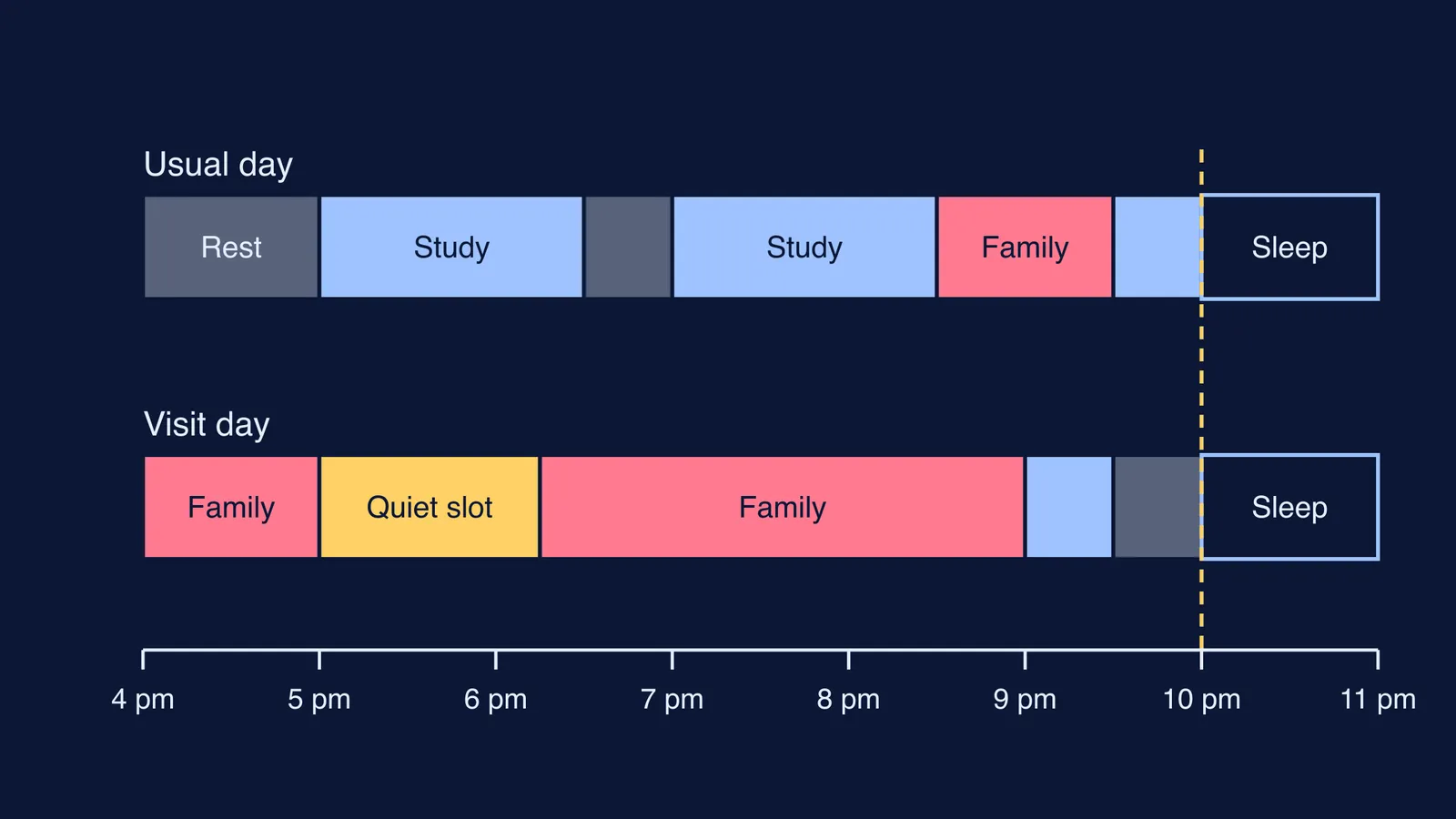
The family picks the bus. A long ride is tiring, but none of the eight questions flags it as a safety gap. If it leaves less time in the evening, Fermi's AI tutor can work out what your child already knows and build a plan for the session, so a shorter study slot still has a clear next step.
Once your child is riding, keep checking with our school transport safety questions. If a journey ever frightens your child, tell the transport manager at once.