On this page
Your child spends Sunday evening on a colour-coded timetable: a 5 a.m. wake-up, six subjects, no gaps. By Wednesday it is buried under coaching notes. The fix is not more discipline but a smaller plan with rules for bad days built in.
Why does my child make a timetable but never follow it?
Most timetables are written for the best possible week. Psychologists call the habit of underestimating how long our own tasks will take the planning fallacy, a term studied in depth by Roger Buehler, Dale Griffin and Michael Ross in 1994.
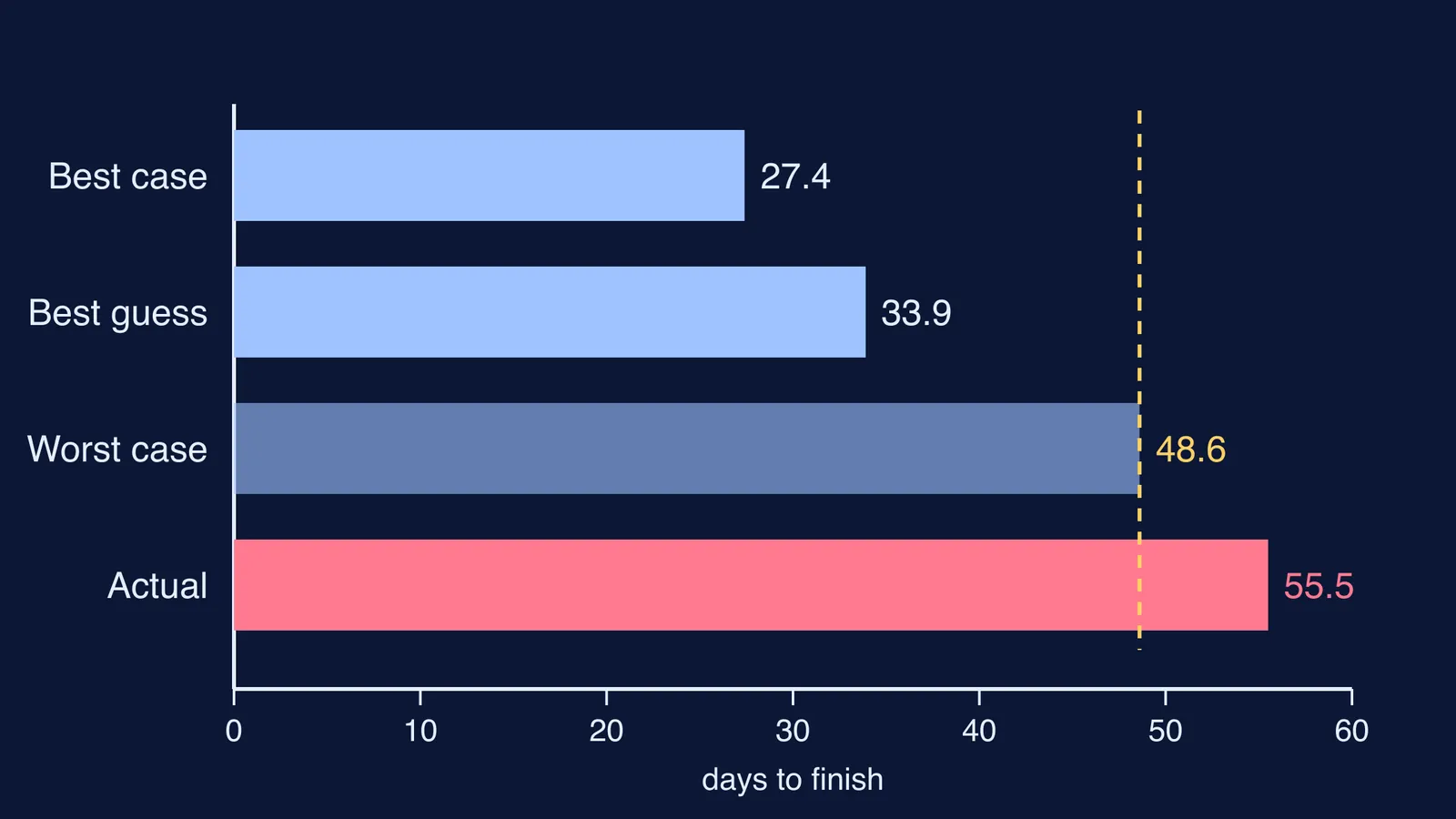
In their best-known study, 37 psychology students predicted they would finish their final-year theses in 33.9 days on average; they actually took 55.5 days, longer than their own worst-case estimate of 48.6 days (Buehler, Griffin and Ross, 1994; figures as summarised in this overview of the planning fallacy). People predict from their plan and forget how similar tasks went before.
A teenager's timetable assumes no late coaching class, no surprise test, no cousin's wedding, no tired evening. The first ordinary day breaks it, it feels like failure, and the whole plan goes in the bin.
What makes a study plan survive a bad day?
Tie each session to a cue. An if-then plan names a situation and an action: "If it is 7 p.m. and dinner is done, then I open the physics problem set." Peter Gollwitzer and Paschal Sheeran pooled 94 independent tests of these plans, called implementation intentions, and found a medium-to-large effect on reaching goals (d = 0.65) (Gollwitzer and Sheeran, 2006).
Expect misses. In a study of how habits form, 96 volunteers repeated one daily behaviour in the same setting for 12 weeks. Among those whose progress could be modelled, the time to reach 95% of their own peak automaticity ranged from 18 to 254 days (Lally and colleagues, European Journal of Social Psychology). The same study found that missing one opportunity did not materially affect habit formation. One skipped evening does not undo a routine. Abandoning the plan does.
Keep it small. A plan your child can follow on a bad day beats one that works only on a perfect day. Leave slack, too: see how much buffer time to keep in a study timetable.
How do you help your child build a smaller plan?
Sit together for 20 minutes. Your child writes; you ask.
Start from last week, not the ideal week. Ask: "How many evenings did you actually study, and for how long?" Plan from that number, plus a little.
Choose two or three anchor sessions a day. Everything else is a bonus.
Tie each to something that already happens: getting home, dinner, the coaching bus.
Add one bad-day rule: a 10-minute version for days when nothing goes right.
Leave one evening a week empty.
Worked example: a Class 11 student with coaching four evenings a week. Old timetable: "Study 6 to 11 p.m. daily, all subjects." New plan:
If I get home from coaching and have eaten, then I do 30 minutes of physics problems at my desk before I touch my phone.
If it is a non-coaching day, then I do 45 minutes of maths after tea and 20 minutes of chemistry revision after dinner.
If it is Sunday morning, then I do one timed mixed test before lunch.
If I miss a session, then I do the 10-minute version (one problem, or one page of notes) and I do not add the missed time to tomorrow.
The last rule matters most: piling missed hours onto tomorrow is how one bad Tuesday kills the plan by Friday. For more, see if-then study plans that stick.
If your child sits down and cannot decide what a session should cover, Fermi's AI tutor can work out what they already know and build a plan for the session, so they start with a clear next step.
What should a weekly review look like?
Fifteen minutes every Sunday, plan on the table. Count sessions done, not hours. Then ask:
"Which rules worked this week?"
"Where did one break, and what was happening just before?"
"What is one change for next week?"
Change one rule at a time. If physics failed because coaching ran late, move it, shrink it, or give it a new cue.
What to say: "You did four of seven sessions. Which one felt easiest?" What not to say: "You made this timetable yourself and still didn't follow it." The first keeps your child planning; the second teaches them to hide the plan. See also a weekly check-in that helps your child notice small study wins.
When is it more than a planning problem?
If weeks of avoided study come with low mood, poor sleep or worry that will not settle, talk to the school counsellor or a doctor. You can also call Tele MANAS, the government's toll-free mental health helpline, on 14416 or 1800-89-14416 (Directorate General of Health Services).
Otherwise, start this Sunday: one small plan, one bad-day rule, and fifteen minutes next week to fix what broke.