On this page
A new follower with a friendly face messages you. They're your age, like the same music and are also preparing for boards. Then the asks start: move to another app, send a photo, keep this between the two of you.
That face may not belong to anyone at all. Here is how to check safely, and what to do if it's fake.
Can you tell an AI-made face just by looking?
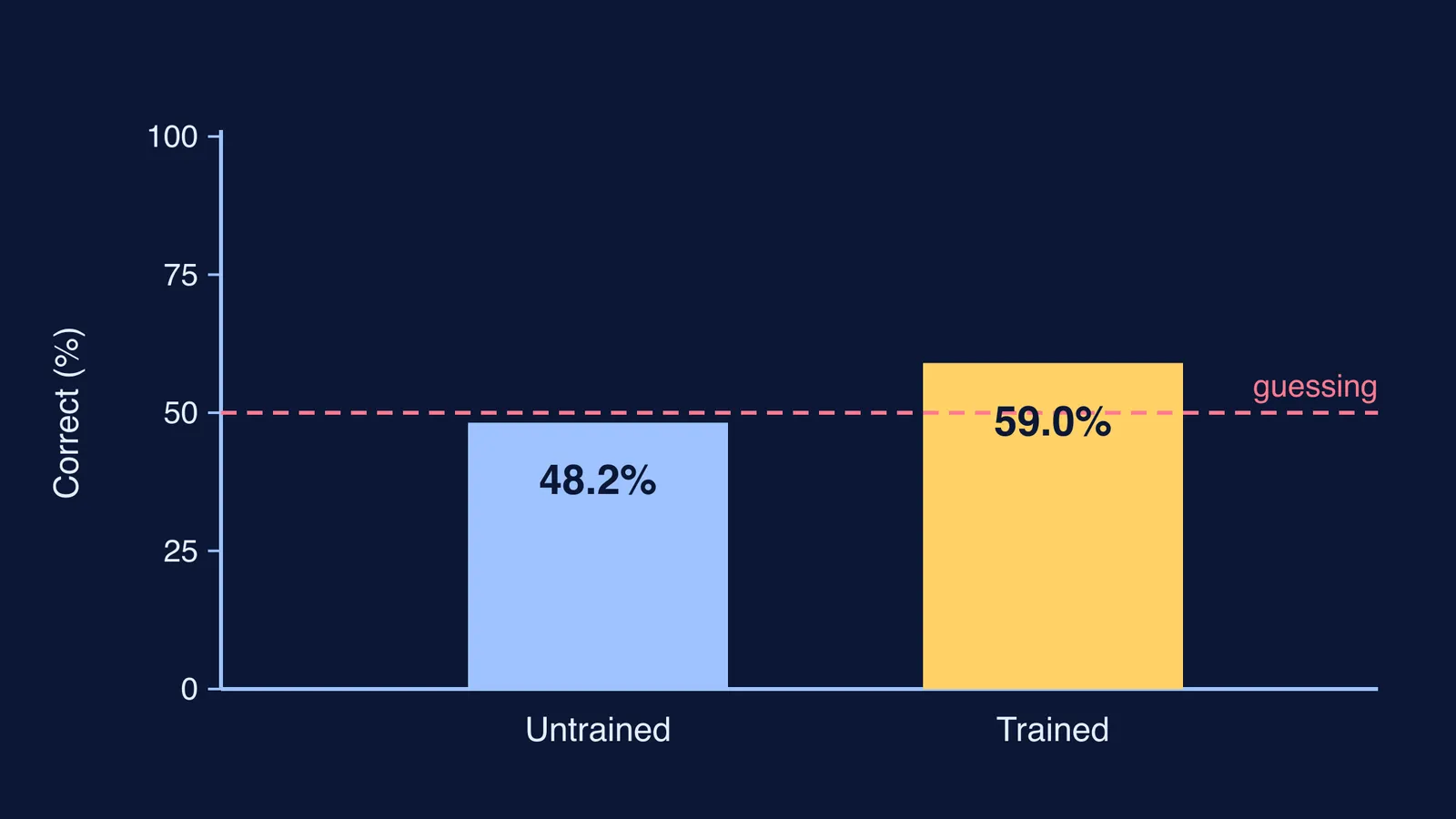
Mostly, no. In a 2022 study in PNAS, Sophie Nightingale and Hany Farid showed 315 people a mix of real faces and AI-made faces, and their average accuracy was 48.2%, close to the 50% you would get by guessing (Nightingale and Farid, PNAS, full text on PubMed Central). A second group of 219 people was first shown examples of the glitches AI faces can have and got feedback after each answer, and still reached only 59.0%. In a third group, people rated the AI faces as slightly more trustworthy than real ones: 4.82 against 4.48 on a 1-to-7 scale.
So "the photo looks real" tells you very little. Check how the person behaves instead.
What are the red flags of a fake online friend?
The US Federal Trade Commission's guide to romance scams lists patterns that fit fake "friends" too: they have reasons they can't meet in person, and they ask for money, often through gift cards, money transfer apps or cryptocurrency (FTC). Also watch for:
They found you, not the other way round, and seem to like everything you like.
The account is new, has few posts, or the photos look like a different person's life.
There is always a reason the camera won't work.
They push you to move to a private or disappearing-message app.
They ask for photos, OTPs, passwords, your school name or home address.
They ask you to keep the friendship secret from your parents.
They get upset or urgent when you hesitate.
One flag can be innocent. Two or three together is a reason to stop and check.
How do you check if an online friend is real?
None of these needs you to share anything about yourself.
Reverse-search the photo. Save their profile picture and upload it to Google's search by image, Google Lens (Google Search Help). The FTC suggests the same check: a photo linked to another name, or to details that don't match, is a sign of a scam. An AI-made face may return no matches, so "nothing found" is not proof they are real.
Ask for a short live video call. Ask for something they could not have prepared: wave, turn their head to the side, say your name. Excuse after excuse ("camera broken", "bad network", "I'm shy") is your answer. AI video exists too, so a call is a strong check, not a perfect one.
Ask about specific details. Fake friends go vague or change the story.
A script for questions about specific details
Ask casually, over a few days, and compare the answers with what they said before:
"Which school are you at again? What's the best thing in the canteen?"
"What did you do last Sunday?"
"Send me a photo of your desk right now with a note that says today's date." You ask for a fresh picture; you never send one back.
Red flags: dodging, copy-pasted replies, or details that don't match earlier messages.
If the "friend" first got talking by offering help with homework, you don't need a stranger for that: the Fermi Problem Library has worked problems with a step-by-step solver that explains the reasoning.
What should you do if the profile is fake?
Stop replying. You don't need to tell them you've worked it out.
Don't pay and don't send anything, even if they threaten you.
Screenshot the profile, the username and the chats before you block.
Report the account in the app, then block it.
Tell a parent or another adult you trust. You are not in trouble; the person who lied is.
In India, report it on the National Cyber Crime Reporting Portal at cybercrime.gov.in or call the toll-free National Cyber Crime Helpline, 1930; the portal has a special focus on cyber-crimes against women and children (PIB).
If a nude or sexual image of you taken when you were under 18 is being shared, the free Take It Down service makes a digital fingerprint of it on your device, without uploading it, so participating platforms can spot copies and act on them.
If this has left you scared, ashamed or low, talk to someone. Tele MANAS, the government's toll-free 24/7 mental-health helpline, is on 14416 (PIB, Ministry of Health and Family Welfare).
Agree on the three checks as a family, and go through what your child should never share online. See also our response plan for AI fakes used to bully and how to check fake scholarship offers made with AI.