On this page
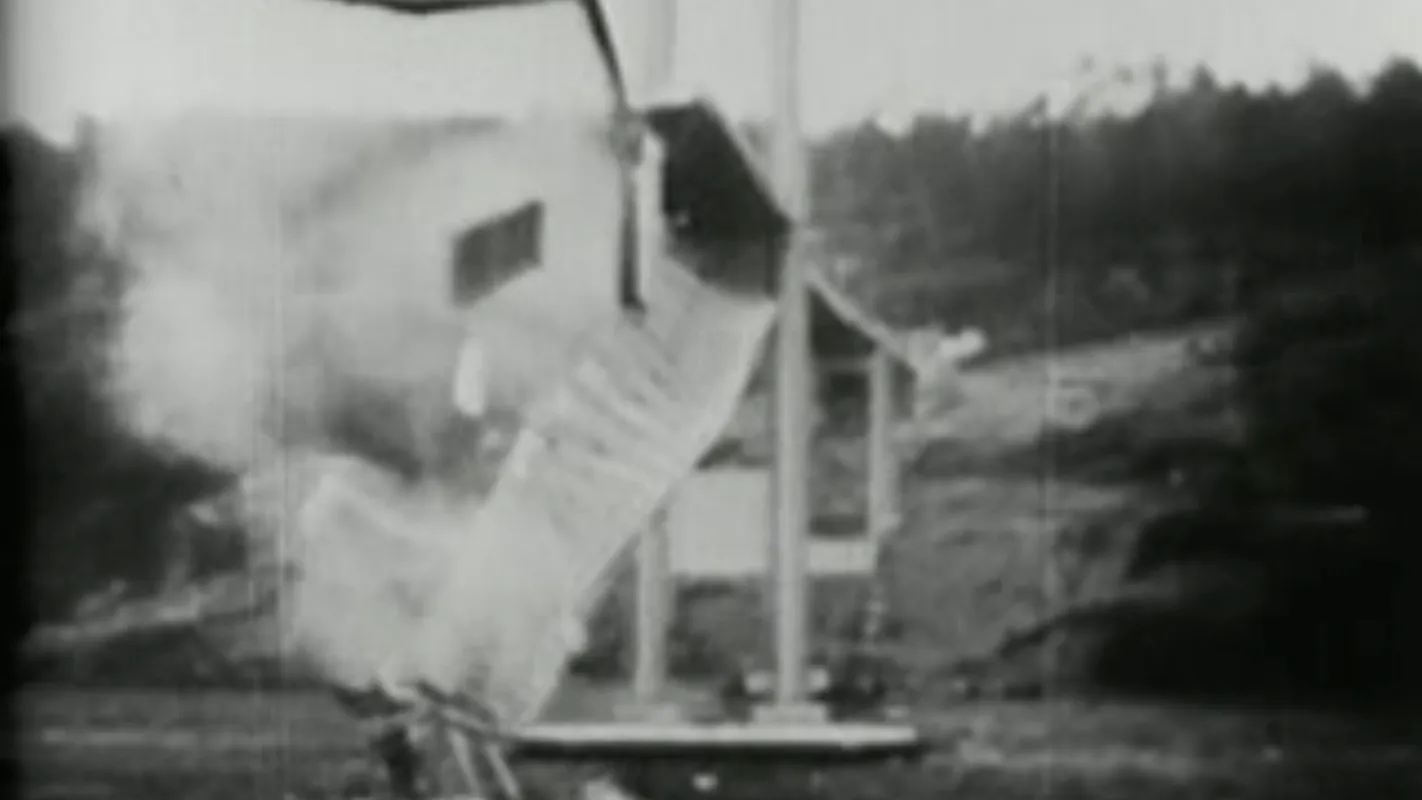
On 28 March 1979, Unit 2 of the Three Mile Island nuclear plant in Pennsylvania partially melted down. It began with a small valve failure, a control room that showed the wrong picture, and a series of reasonable-looking decisions that made things worse. If you are studying physics, it is a clear lesson in why you must know exactly what an instrument measures.
What happened at Three Mile Island, step by step?
The US Nuclear Regulatory Commission's backgrounder on the accident gives the sequence. The accident began at about 4 a.m. on Wednesday, 28 March 1979, at Unit 2 near Middletown, Pennsylvania.
The main feedwater pumps stopped sending water to the steam generators, which remove heat from the reactor core.
The turbine-generator and then the reactor shut down automatically.
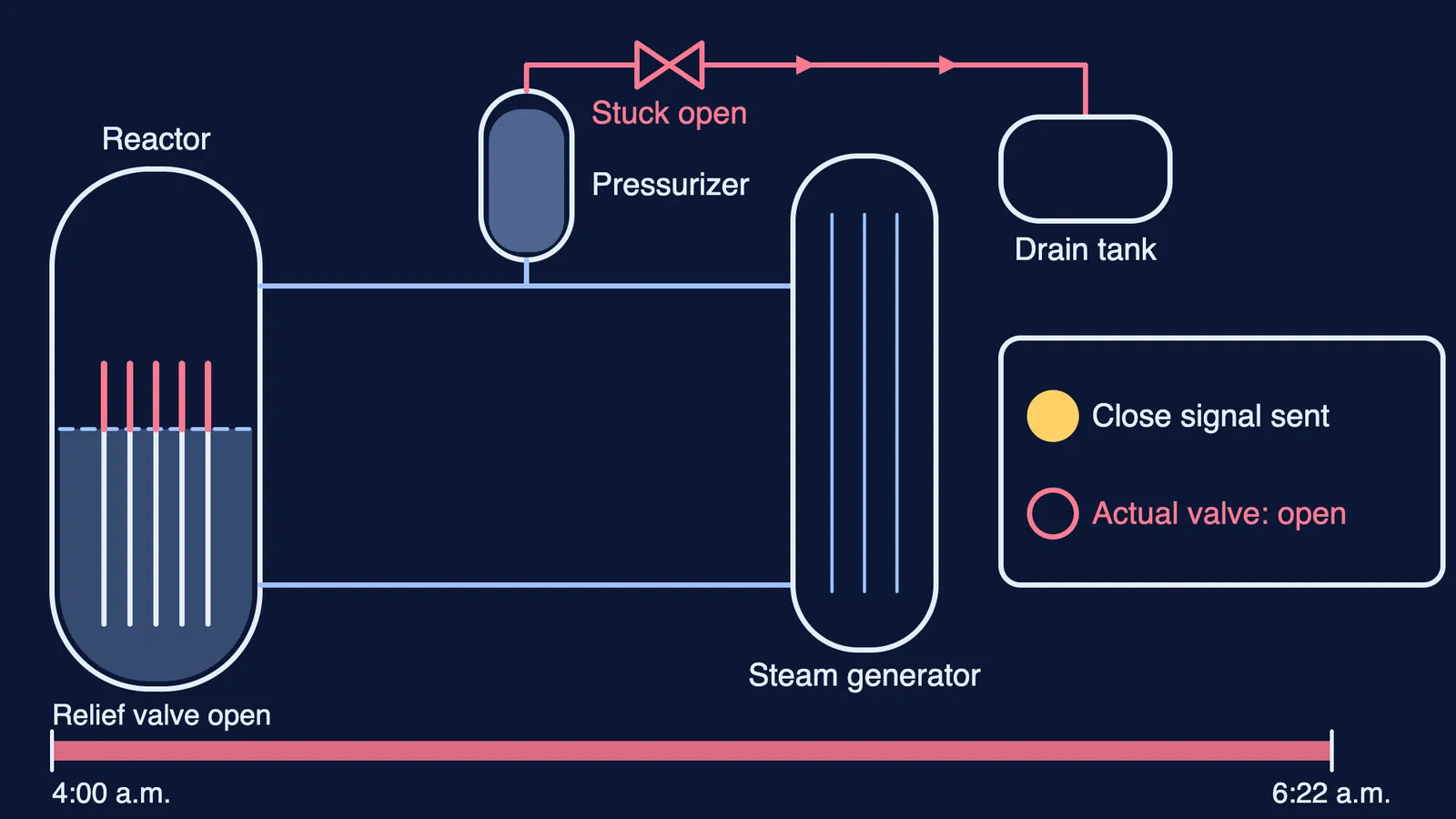
Pressure in the primary system rose, and a pilot-operated relief valve at the top of the pressurizer opened to control it.
The valve should have closed again. It stuck open, and coolant kept escaping as steam.
Instruments in the control room indicated the valve was closed, so the staff did not realise they were losing coolant.
Pressure fell so far that the reactor coolant pumps started to vibrate, and they were turned off.
Worried that the emergency cooling water would fill the pressurizer completely, the staff cut back its flow. The water level in the reactor vessel dropped and the core overheated.
According to the World Nuclear Association, the valve should have shut about 10 seconds after opening, and operators closed a block valve behind it at 6:22 a.m. That is roughly two hours and twenty minutes of coolant escaping through a valve the operators believed was shut.
Why did the operators think the valve was closed?
This is the heart of the story. The World Nuclear Association explains that the operators believed the valve had shut because their instruments showed a "close" signal had been sent to it, but they had no instrument showing the valve's actual position (World Nuclear Association).
A second reading misled them too. The NRC notes that the reactor vessel was always full in normal operation, so it had no water-level instrument. Staff assumed that as long as the pressurizer level was high enough, the core was covered. It was not (NRC).
How much of the core melted, and why did it stay contained?
The World Nuclear Association reports that at least 45% of the core, about 62 tonnes, melted. Most of the molten material stayed in the core region, and about 19 tonnes reached the lower part of the reactor vessel without seriously damaging it (World Nuclear Association). The same source says the reactor vessel kept its integrity and contained the damaged fuel, and the containment building worked as designed.
Two other reactor accidents unfolded very differently: read about what happened inside the Chernobyl reactor and Fukushima's loss of cooling.
Did people near Three Mile Island get a harmful radiation dose?
The NRC estimates that the approximately 2 million people around the plant received an average of about 1 millirem above their usual background dose. For comparison, it puts a chest X-ray at about 6 millirem and the area's natural background at about 100 to 125 millirem a year (NRC). It adds that investigations by organisations such as Columbia University and the University of Pittsburgh concluded the release had negligible effects on people's physical health or the environment.
What changed after Three Mile Island?
The NRC lists the changes that followed, including revamped operator training, improved instrumentation and controls, stronger emergency preparedness with regular drills, at least two resident inspectors at every US plant, and the creation of the Institute of Nuclear Power Operations (NRC). The cleanup took nearly 12 years and cost about $973 million, according to the World Nuclear Association.
For the basics of the loop that failed here, read our explainer on how a nuclear reactor works, with control rods and moderators.
A checklist you can use: is this reading the signal or the state?
The Three Mile Island trap turns up in physics labs and exam questions too. Before you trust any reading, ask:
What does this instrument actually report? The valve indicator reported the command signal, not the valve's position.
Is the quantity measured directly or inferred? Vessel water level was inferred from the pressurizer, a different place.
What else could produce the same reading? A high pressurizer level looked like a full vessel; the vessel was not full.
Which reading would change first if I were wrong? Look for one that disagrees, and take it seriously.
Try it on a lab ammeter: does it show the current through your resistor, or through the whole branch? Pressure, water level and flow are easier to reason about when you can change one thing and watch the rest; the Fermi Simulation Lab has interactive simulations for ideas that are easier to see than to read. If the underlying physics feels shaky, the Fermi Concept Library gives each concept its own lesson.