On this page
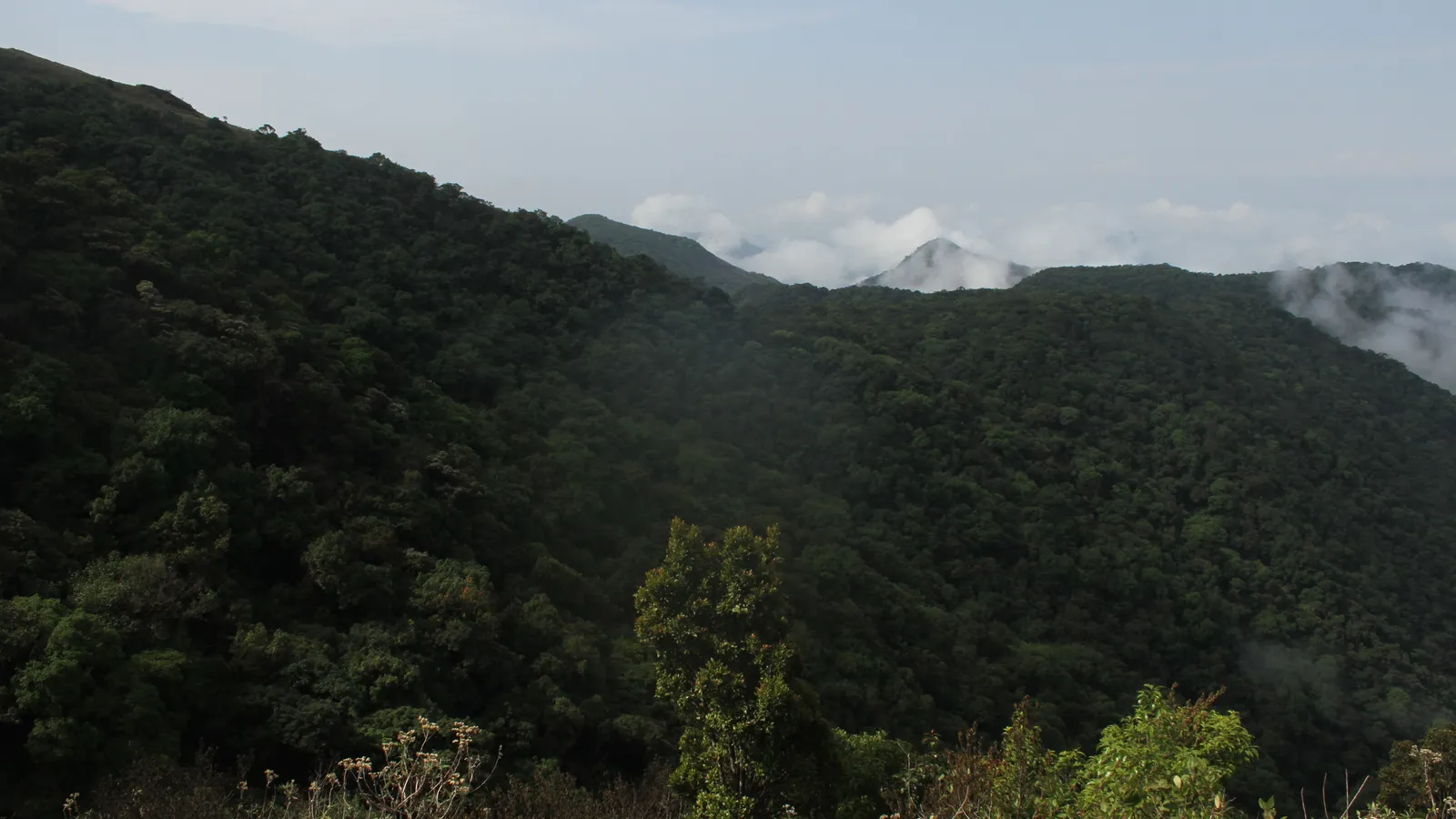
Silent Valley is a stretch of rainforest in Kerala's Western Ghats that the state planned to flood for electricity in the 1970s. It is famous because that never happened: students, scientists and a people's science movement put field evidence in front of the government, and the government listened.
What was the Silent Valley dam debate about?
In 1973 the Kerala State Electricity Board wanted to build a hydropower project on the Kunthipuzha river, and the Planning Commission had already cleared it before environmentalists learned of the damage, Down To Earth reported. The project was to have an installed capacity of 120 megawatts, according to a Mongabay-India history republished by The News Minute.
According to Down To Earth, the campaign began with the zoological club of Payyannur College in Kannur district and was taken up by the Kerala Sastra Sahitya Parishad (KSSP), a people's science movement; by 1979 it had gained momentum.
The politics swung back and forth. Prime Minister Morarji Desai gave the dam conditional clearance in 1978 (The News Minute). After Indira Gandhi became prime minister in 1980, she asked Kerala to halt work until the ecological effects were studied (Down To Earth).
What did the ecological surveys find?
The argument was settled by evidence gathered on the ground. After touring the valley in October 1978, M. S. Swaminathan, then agriculture secretary, reported that 23 mammal species, including three endangered ones (the tiger, the lion-tailed macaque and the Nilgiri langur), had been recorded there (The News Minute). He also pointed the government to a Kerala Forest Research Institute report that the tract was unique and relatively undisturbed.
The decisive study came from a multidisciplinary committee chaired by the scientist M. G. K. Menon, with Madhav Gadgil and Dilip K. Biswas among its members (Save Silent Valley overview). Its report said the project "would submerge 830 hectares of a genuinely intact riparian ecosystem and will result in loss in biological diversity" (Down To Earth).
Indira Gandhi refused permission for the dam on 18 October 1983 (The News Minute). The same account says Silent Valley was notified as a national park on 15 November 1984, a fortnight after her assassination, and that Rajiv Gandhi inaugurated it on 7 September 1985.
Why did the lion-tailed macaque matter?
The lion-tailed macaque is a monkey found only in the Western Ghats, listed as Endangered on the IUCN Red List (lion-tailed macaque overview, citing the 2020 IUCN assessment). From 1977 to 1980, public concern for it was the focal point of the Save Silent Valley campaign, and a 1993-1996 survey later counted 14 troops in the park (same source, citing Ramachandran and Joseph, 2001).
In his 1985 book Temples or Tombs, the journalist Darryl D'Monte called the American primatologist Steven Green "one of the unknown figures in the Silent Valley saga", because Green's studies of the macaque indirectly helped focus international attention on the controversy (The News Minute).
A rare, appealing animal that stands for a whole habitat is what biologists call a flagship species; our explainer on flagship and umbrella species shows the tiger playing the same role. Protecting the macaque's forest also protected the other species living in it.
How do you weigh a dam against a forest?
Work out the key number as you would in a biology answer.
Convert units: 830 hectares is 8.3 square kilometres, because 1 km² is 100 hectares.
Find a comparison: the original national park, now its core zone, is 89.52 km² (The News Minute).
Divide: 8.3 ÷ 89.52 ≈ 0.093, so the drowned forest equals about 9% of the park's core area.
Nine per cent sounds small. The committee's word "riparian" is the catch: riparian land is the strip along the river itself, which a reservoir drowns first and which cannot be moved uphill. A share of area understates the loss when the part lost is the valley floor.
Use these five questions on any development-versus-nature debate:
What exactly would be lost: how many hectares, and of what kind of habitat?
Which species live there, and are any found nowhere else?
Who surveyed it, and was the survey independent of the project's backers?
What does the project give, and could that benefit come from somewhere else?
Can the loss be undone if the decision turns out to be wrong?
If words like endemic, riparian or biodiversity are hazy, the Fermi Concept Library covers every concept in biology, each with its own lesson and its place in the map, so you can fill the gap before you argue the case.
What happened to Silent Valley after 1984?
The park grew. In November 2009 the central and Kerala governments decided to add 147 km² of adjoining forest as a buffer zone (The News Minute). As part of the Western Ghats, the park is on the UNESCO World Heritage list (Kerala Forest Department).
To place Silent Valley on the bigger map, read about India's biodiversity hotspots and how they are chosen, and for the other side of the argument, see how hydroelectric dams make power from falling water.