On this page
Suppose your child's EVS worksheet asks: "Where does a polar bear live, and how does it survive there?" To answer it, they need two ideas: a habitat and an adaptation. This guide covers five habitats, gives one animal and one adaptation for each, and ends with a short game you can play at the dinner table.
What is a habitat?
A habitat is a place where an organism makes its home, according to National Geographic Education. The same page lists the main parts of a habitat as shelter, water, food and space.
For a Class 4 child, put it this way: a habitat is an animal's house, kitchen and water tap, all in one place. If one of these is missing, the animal cannot live there for long.
An adaptation is a body part or habit that helps an animal live in its habitat. The camel did not choose the desert because it had a hump. Over a very long time, the animals with useful features survived in that habitat and passed those features on.
Which animals live on land, in water and in the air?
Land: the tiger and its stripes
Researchers at the Universities of Exeter and Bristol tested camouflage patterns in an online game played by over 1,000 people. They found that high-contrast markings like tiger stripes are harder to see in sunshine and in complex habitats such as tall grass or forest undergrowth, as the University of Exeter reported. So stripes can help a hunter stay hidden until it is close to its prey.
Water: the fish and its gills
Fish gills are organs that let fish breathe underwater, taking in oxygen and giving out carbon dioxide, as explained on Wikipedia's fish gill page. Gills are made of thin threads called gill filaments, which give a large surface for this exchange. Older children who want more can read how deep sea animals survive darkness and pressure.
Air: the bird and its hollow bones
An essay on adaptations for flight from Stanford explains that a flying body needs strength with light weight, and that some bird bones, unlike ours, are hollow. Not every bone is lighter, though: a bird's leg bones are heavier than a mammal's. It also notes that the skeleton of a frigatebird with a seven-foot wingspan weighs less than its feathers.
How do desert and polar animals survive?
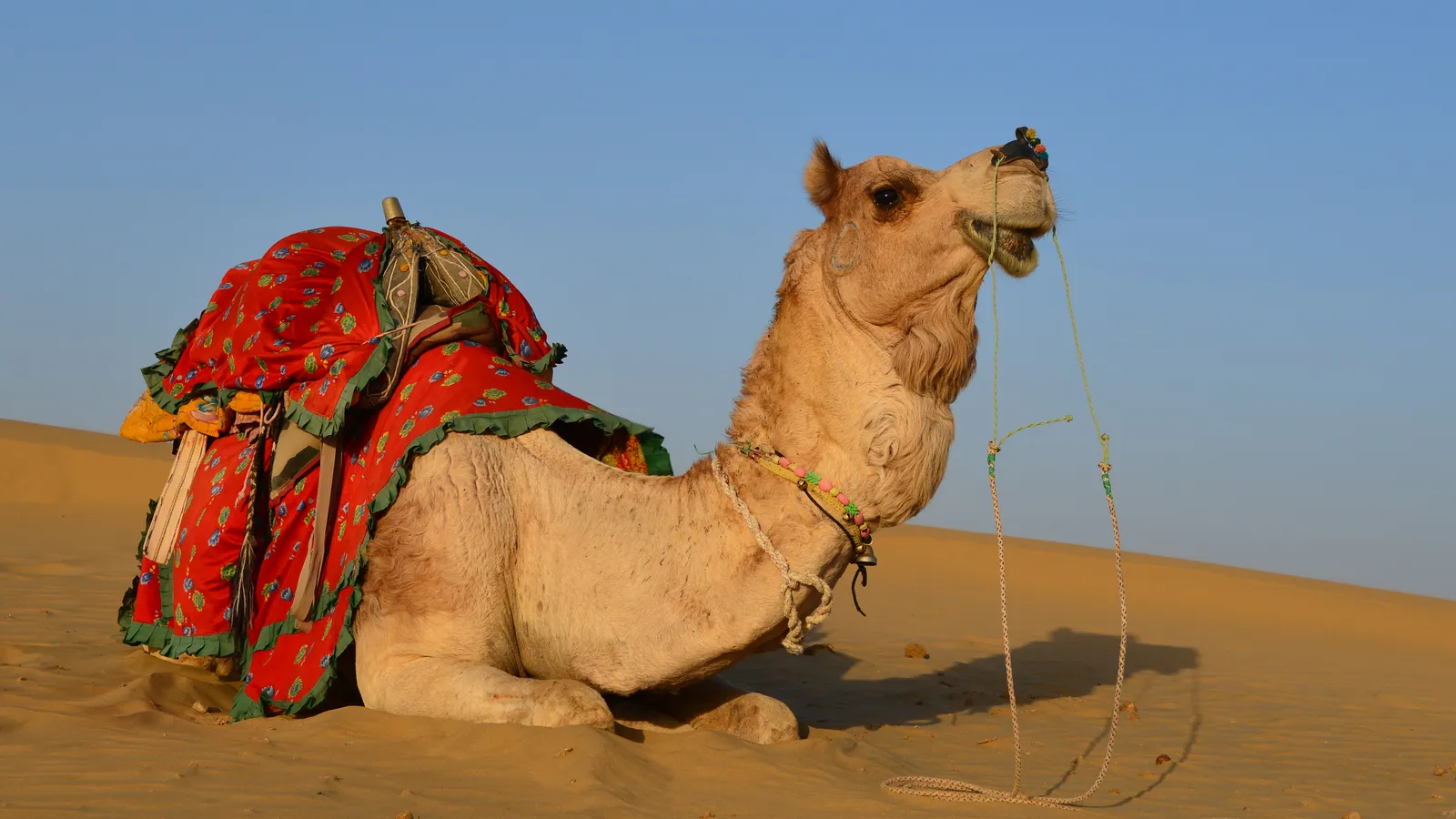
Desert: the camel and its hump
The desert is hot by day, has little water, and is full of blowing sand. The San Diego Zoo says a camel's hump stores fat, not water, and the fat becomes an energy source. The zoo also says a camel can go a week or more without water, can close its nostrils to keep sand out, and has double rows of long eyelashes to protect its eyes.
For rats, snakes and other desert animals, see how desert animals survive heat and little water.
Polar: the polar bear and its fur
The Arctic is freezing for much of the year, so the problem is keeping heat in. Polar Bears International says polar bears have two layers of fur that prevent almost all heat loss, and black skin under their white fur. National Geographic adds that the fur covers a warming layer of fat.
Some animals use behaviour as well as body parts to get through harsh seasons. This is explained in our post on hibernation and aestivation.
How can you test your child on habitats at home?
Use three questions for any animal. We call it Home, Problem, Trick:
Home: where does it live?
Problem: what is hard about living there (cold, heat, no air, little water, being seen)?
Trick: which body part or habit solves that problem?
Here is the worked example to show your child first, using the camel:
Home: the desert.
Problem: little water, hot sand, blowing dust.
Trick: a fat-storing hump for energy, nostrils that close, and long eyelashes.
Now turn it into a game. You say a problem, and your child names an animal and its trick. Then swap roles.
"I live where there is no air to breathe." (Fish: gills.)
"I must be light enough to fly." (Bird: hollow bones.)
"Everything around me is white and freezing." (Polar bear: two layers of fur over black skin.)
"I must sneak up on my food in tall grass." (Tiger: stripes.)
Listen for the word "because". "A polar bear lives in the Arctic" is a fact. "A polar bear can live in the Arctic because its fur and fat keep heat in" shows that your child understands the idea.
When an older sibling in Class 6 or above reaches adaptations in more depth, the Fermi Concept Library gives every concept in biology its own lesson, so a gap can be closed one idea at a time.