On this page
Visitors to Machu Picchu photograph its walls, but the engineering that has kept it standing is mostly out of sight. Angkor, in Cambodia, solved a different water problem: collecting monsoon rain and releasing it when needed.
How was Machu Picchu built?
A 2021 radiocarbon (AMS) dating study found Machu Picchu was occupied from about AD 1420 to 1532, with activity beginning two decades earlier than written sources had suggested (Burger et al., Antiquity).
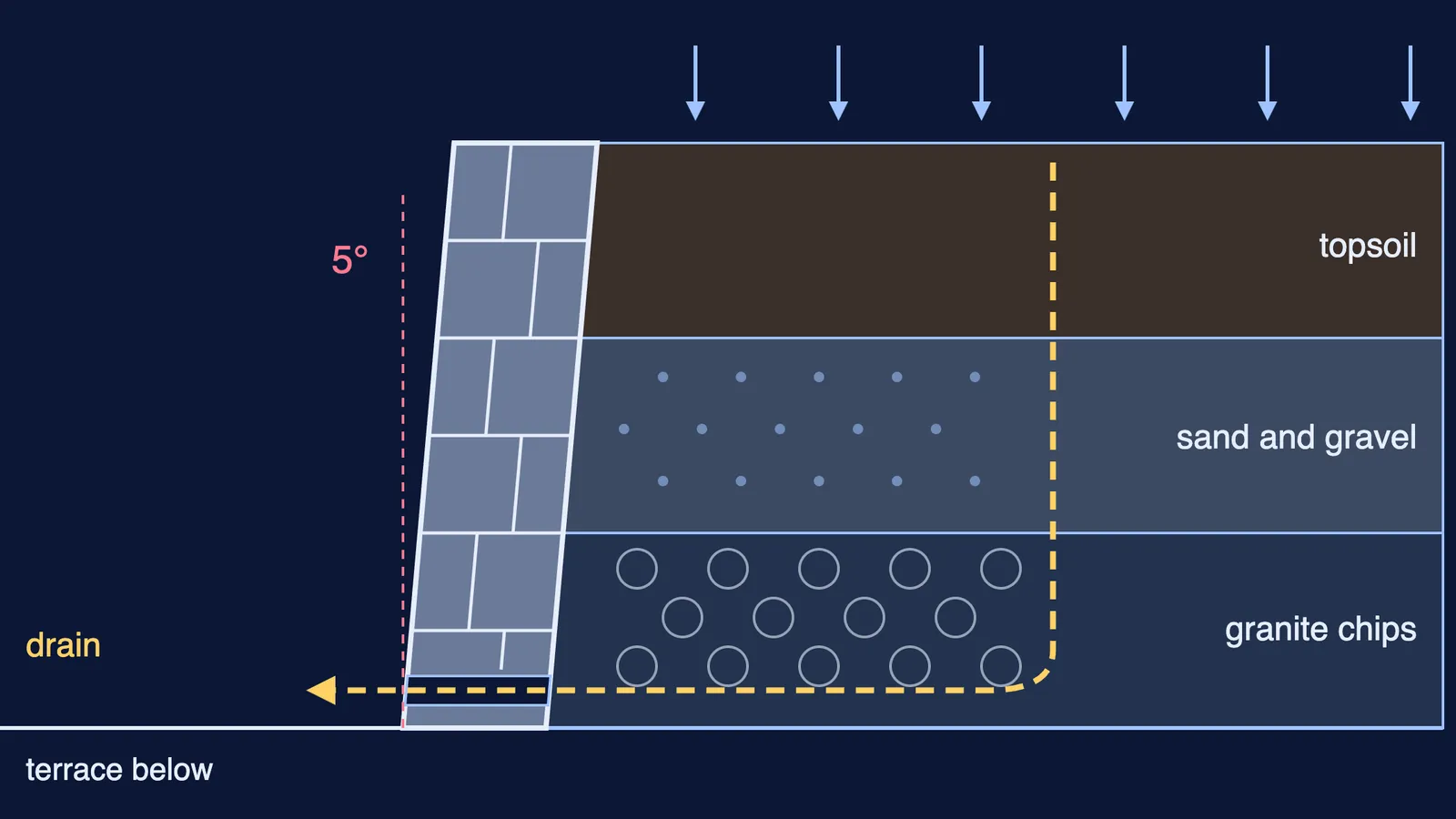
The Inca builders started underground. Kenneth Wright, a hydrologist and civil engineer who has studied the site's waterworks since 1994, told NOVA that Inca engineers spent “about 50 percent, maybe 60 percent” of their overall effort underground, on foundations and site preparation (PBS NOVA interview). An excavation in the main plaza went down about nine feet: roughly three feet of topsoil, then sandy, gravelly soil, then a drainage system made of white granite waste rock left over from cutting building stone.
On top sit granite blocks that were laid, removed, re-cut and re-laid until they fitted so precisely that no mortar was needed (World History Encyclopedia).
Why didn't Machu Picchu wash away in the rain?
The site gets about 76 inches (1.9 m) of rain a year, mostly in the wettest seven months or so (PBS NOVA interview). Wright counts about 700 terraces, built with high permeability so water sinks in and is carried away underground. His team also found some 130 drainage holes planned during the initial construction of the walls, not added later.
Drinking water was kept apart from the drains. A canal about 2,500 feet long, at an average slope of about three percent, carried spring water to a chain of 16 fountains designed to handle about 25 gallons per minute at most.
Geology helped too. Geologist Rualdo Menegat told the Geological Society of America's 2019 meeting that the site sits where sets of faults cross in an X shape, that the fractured rock broke easily along those planes, and that the fractures helped drain the site (ScienceDaily). He put the share of the building effort spent on subsurface drainage at “about two-thirds”.
How do mortarless walls survive earthquakes?
Inca exterior walls commonly lean inward by about 5 degrees as they rise, and doorways, windows and niches repeat the same trapezoid shape (World History Encyclopedia). The same source says interlocking blocks and sloping walls make Inca buildings “extremely resistant, but not immune” to earthquake damage.
The physics is classroom physics. A wall that narrows as it rises keeps its centre of gravity low and well inside its base, so a larger sideways push is needed to tip it. Without mortar, blocks can shift slightly during shaking, and friction at the joints can turn some of that energy into heat rather than cracking a rigid wall. Modern engineers chase the same goal, as we explain in how earthquake-resistant buildings are made. The Romans bet on concrete instead: see why Roman concrete lasts so long.
If toppling and centre of gravity are easier to see than read, the Fermi Simulation Lab has interactive simulations for ideas like these.
How did Angkor manage water for a whole city?
Angkor, seat of the Khmer Empire from the 9th to the 15th century, had to contend with seasonal monsoon rain. A network of reservoirs, channels, moats and embankments extended over about 1,000 km², letting the Khmer collect, store and release water as needed; the large reservoirs are called barays (Day et al., PNAS).
The West Baray, about 8 km by 2 km, is the largest of the four barays built at Angkor and is generally assumed to date from the first half of the 11th century. Filled to its current maximum it would hold 53 million m³. About 65% of its water and sediment comes from the Siem Reap River and 35% from rain falling directly on it. Day's team links changes in water management to Angkor's decline, at a time of monsoon failures in the late 14th and early 15th centuries.
Water moved the stone as well. A 2012 study found 50 quarries at the foot of Mount Kulen and a network of canals linking them to the temple, which likely carried Angkor Wat's 5 million to 10 million sandstone blocks, some weighing up to 1,500 kg (Live Science). India met the same seasonal problem by digging down: see how stepwells work.
Try it: three estimates from these numbers
Use the figures from Day et al. and the NOVA interview:
How deep is the West Baray when full? Treat it as a rectangle: 8 km × 2 km = 16 km² = 16 million m². Average depth ≈ 53 million m³ ÷ 16 million m² ≈ 3.3 m.
How much rain falls on one square metre of terrace a year? 1.9 m × 1 m² = 1.9 m³, about 1,900 litres to drain away.
How much water could the fountains deliver in a day? 25 US gallons is about 94.6 litres, so 94.6 L/min × 1,440 min ≈ 136,000 litres a day at the design maximum.
Then ask the engineer's question: where does each litre go?
If unit conversions trip you up, the Fermi Problem Library has worked problems with a step-by-step solver that explains the reasoning rather than printing an answer.
Next time you see an old wall, look for the drain before you look at the stones.