On this page
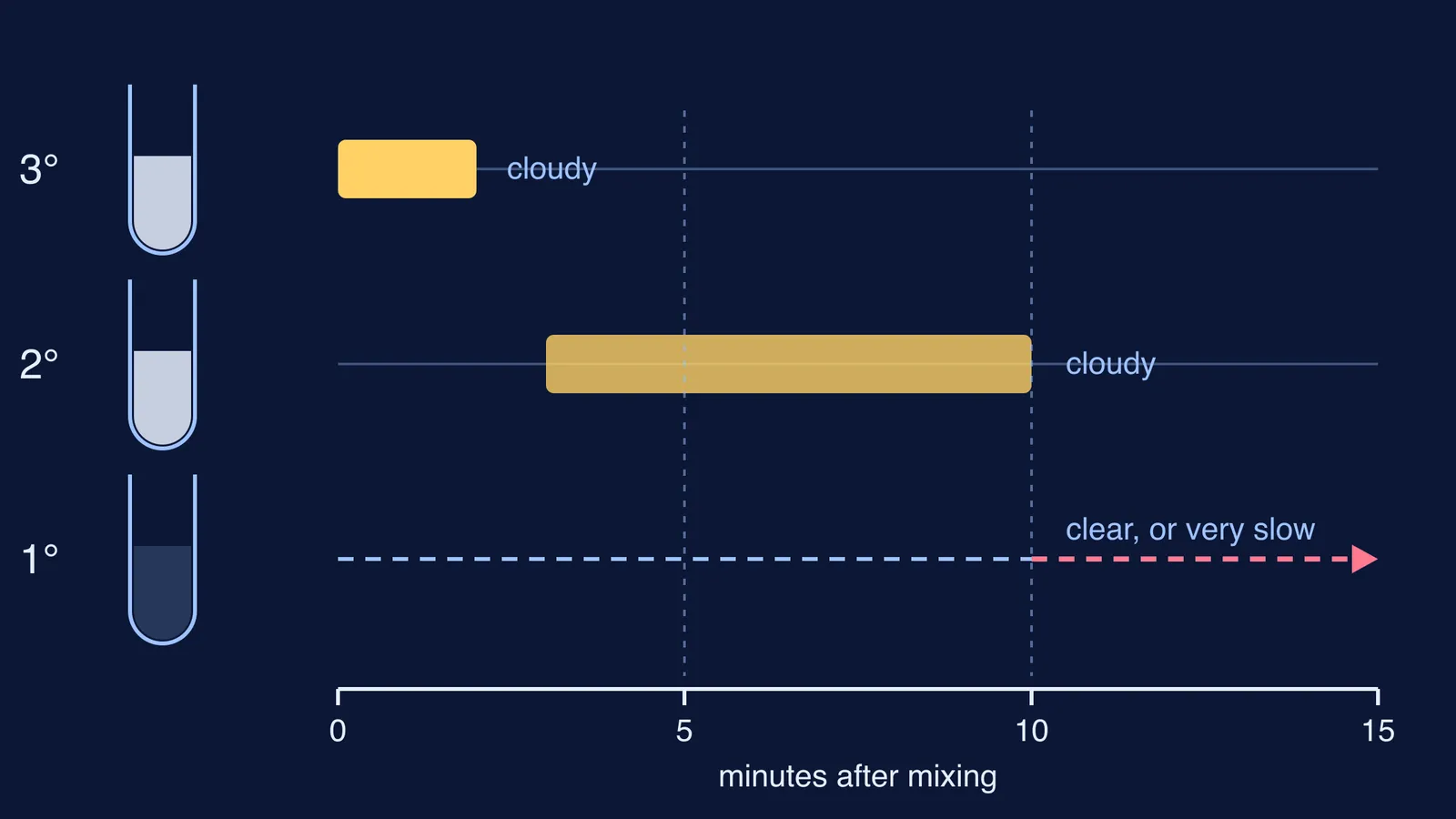
Most Class 12 students meet the Lucas test as one line in a table: tertiary, immediate; secondary, after a few minutes; primary, no cloudiness at room temperature. The name on that line belongs to a real person, a Caltech teacher who spent most of his career training other chemists. Knowing why his test works turns a line you memorise into one you can work out on the spot.
Who was Howard Lucas?
Howard Johnson Lucas was born in Marietta, Ohio, on 7 March 1885, and earned his B.S. in 1907 and M.A. in 1908 at Ohio State University, according to the National Academy of Sciences biographical memoir by William G. Young and Saul Winstein. He started a Ph.D. at the University of Chicago but left after his father died, and worked as an assistant chemist for the U.S. Department of Agriculture from 1910 to 1913.
A 1953 profile in Caltech's Engineering and Science magazine says much of his work there involved analysing commercial food preparations and testing them for adulterants. In 1913 he joined Throop College of Technology, the school that became Caltech, as one of three chemistry instructors for a student body of 55 or 60, the same profile reports.
The magazine says he ran Caltech's undergraduate organic chemistry courses for 38 years, and that his 1935 textbook was the first in the field to relate organic chemistry to modern chemical theory; the NAS memoir, more cautiously, calls the book one of the first to do so. The memoir records his election to the National Academy of Sciences in 1957 and his death in Pasadena on 22 June 1963. It also describes his teaching aim as getting "the student to think" and having students "conduct experiments with the utmost accuracy and with carefully purified chemicals."
What did Lucas publish in 1930?
His paper, "A new test for distinguishing the primary, secondary and tertiary saturated alcohols", appeared in the Journal of the American Chemical Society, volume 52, pages 802 to 804, in February 1930. The memoir calls qualitative organic analysis "an interesting sideline" for Lucas, and says his hydrochloric acid and zinc chloride reagent "is commonly known among organic chemists as the 'Lucas reagent.'"
How does the Lucas test work?
A lab handout from Texas Christian University gives a typical recipe: 16 g of anhydrous zinc chloride dissolved in 10 mL of concentrated hydrochloric acid. You add a few drops of the alcohol and watch. The alcohol dissolves in the reagent, but the alkyl chloride it turns into does not, so the moment product forms, the clear liquid turns cloudy or splits into two layers.
The same handout gives the timings: tertiary alcohols turn cloudy immediately to about 2 minutes, secondary alcohols in 3 to 10 minutes, and primary alcohols show no reaction or a very slow one, beyond 10 minutes.
Why does a tertiary alcohol turn cloudy first?
The reaction runs by the SN1 route: the acid protonates the OH group, water leaves, and a carbocation forms before chloride attacks it, as the Wikipedia entry on Lucas' reagent sets out. Tertiary carbocations are far more stable than secondary ones, and primary carbocations are the least stable, so the rate of cloudiness tracks how easily that carbocation forms. For the story of how chemists finally observed carbocations directly, read our post on George Olah and the superacids that let chemists see carbocations.
How do you use it on an exam question?
Take three of the alcohols with formula C4H10O. Work through them like this:
Find the carbon carrying the OH group.
Count the carbons attached to it: one means primary, two secondary, three tertiary.
Predict the speed from the carbocation it would form.
So 2-methylpropan-2-ol (tertiary) turns cloudy almost at once, butan-2-ol (secondary) clouds within minutes, and butan-1-ol (primary) stays clear at room temperature. For a full walk-through with more examples, see our guide to the Lucas test for primary, secondary and tertiary alcohols, and compare it with the Victor Meyer test, which sorts alcohols by colour.
If the carbocation step is the part that feels shaky, the Fermi Concept Library has a lesson for each concept in chemistry, so you can fill that gap before the next question. And when you keep picking the wrong test for a pair of compounds, the Fermi Problem Library has worked problems with a step-by-step solver that explains the reasoning rather than printing an answer.
Where does the Lucas test fail?
The TCU handout lists two practical limits worth knowing:
The test only works for alcohols that dissolve in the reagent: single-OH alcohols smaller than hexyl, plus some with more than one OH group.
Some secondary alcohols, such as isopropyl alcohol, may not visibly form a layer, because their alkyl chloride boils so low it can evaporate.
The Lucas' reagent entry on Wikipedia notes that spectroscopy and chromatography have made the test somewhat obsolete. It survives in teaching because it makes a hidden idea, carbocation stability, visible in a test tube. The reagent is strongly acidic, so run it only in a school lab, with gloves and a teacher present.