On this page
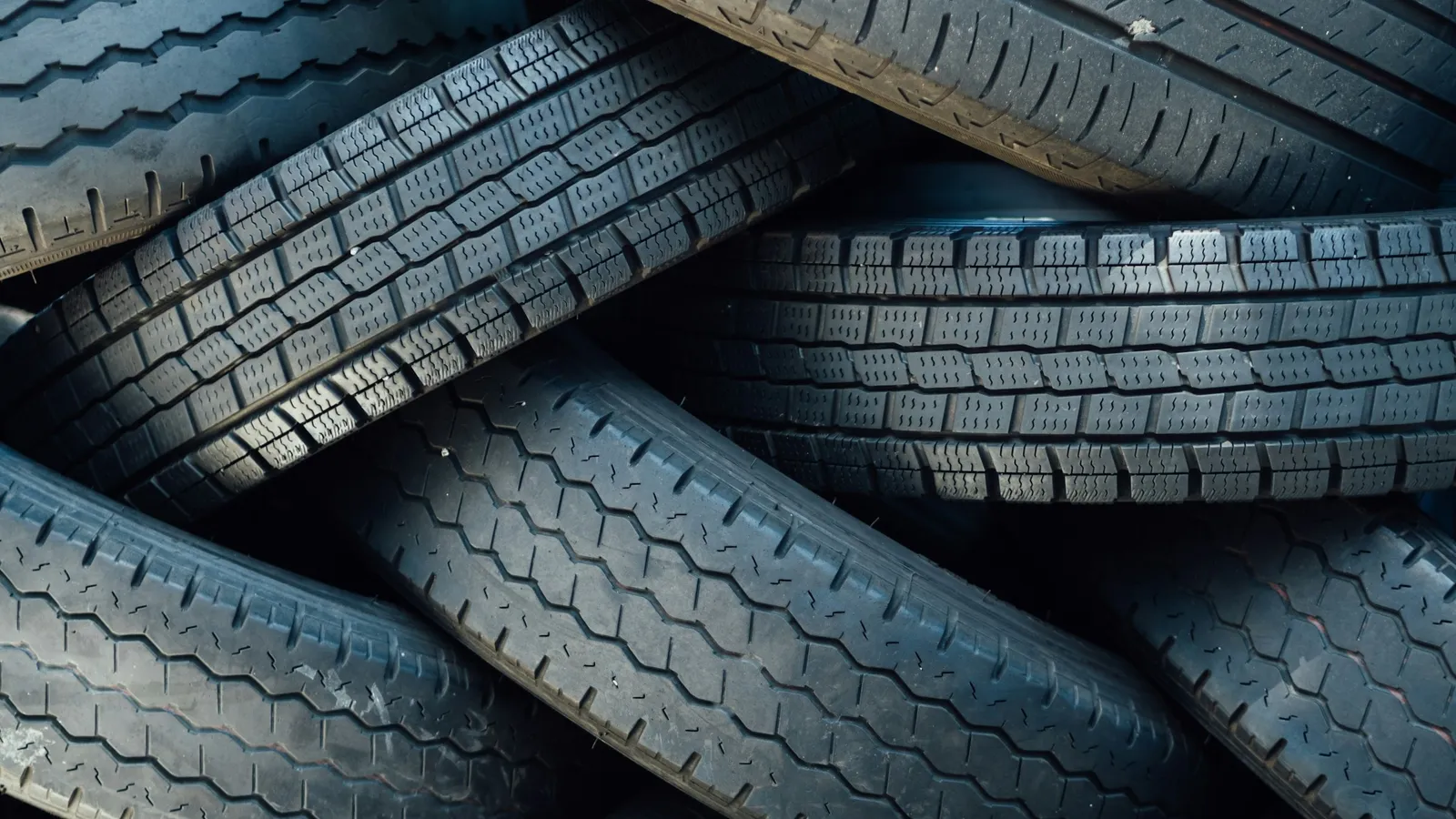
Look closely at a new scooter or car tyre and you will see deep grooves cut into the rubber in a pattern. Each groove is a drain, and it decides whether your tyre stays on the road in the monsoon or rides on top of the water.
Why do tyres have treads and grooves?
A tyre can only push on the road if it touches the road. Friction is what lets the tyre push the road backwards so the vehicle moves forwards, push sideways so it turns, and push forwards so it stops. Friction needs rubber pressed against the road surface.
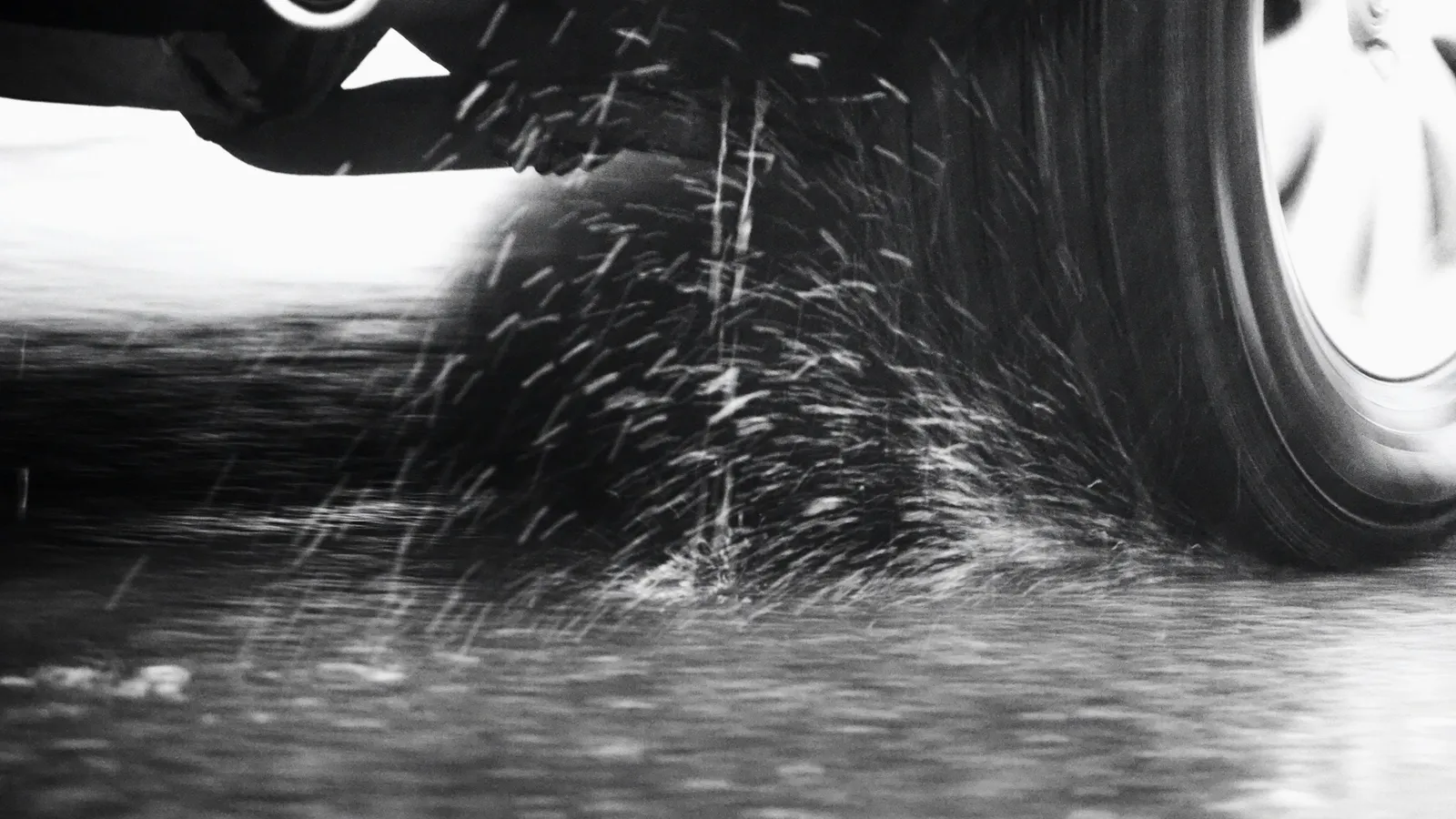
On a wet road, a film of water sits between the two. Water is nearly incompressible: it will not squash thinner, so it has to be moved out of the way. The grooves are the escape channels. As each part of the tyre comes down onto the road, the water in front of it is squeezed into the grooves and thrown out to the sides and behind, so the blocks of rubber between the grooves can press on a nearly dry patch.
What is aquaplaning, and why does speed matter?
Aquaplaning (called hydroplaning in the US) is when a tyre rides on a layer of water instead of the road. W. B. Horne and R. C. Dreher of NASA's Langley Research Center summarised the physics in their 1963 report, Phenomena of Pneumatic Tire Hydroplaning. When a moving tyre hits standing water, it changes the water's momentum, and that creates a pressure pushing up on the tyre. They wrote that this force tends to build up as the square of the speed.
At some speed the upward push of the water equals the load on the tyre, and the tyre lifts clear of the road. When that happens, the report says, "the ability of tires to develop braking or cornering traction for stopping or guiding vehicle motion is almost completely lost."
Here is the fluid-pressure link. NASA's simple rule is that the tyre lifts when the average water pressure under it roughly matches the tyre's inflation pressure. That gives the hydroplaning speed in miles per hour as 10.35 times the square root of the inflation pressure in psi (NASA TN D-2056, equation 5). The authors found reasonable agreement with tests on tyres inflated from 24 to 150 psi, and they state its limit plainly: it applies to smooth tyres and closed tread patterns with no escape paths for water, and to ribbed tyres when the water is deeper than the grooves.
Worked example: at what speed would a car tyre aquaplane?
Use the NASA formula from the same 1963 report for a bald car tyre, or water deeper than its grooves, at 32 psi.
Square root of the pressure: the square root of 32 is about 5.66.
Multiply by 10.35: about 58.6 miles per hour.
Convert (1 mile per hour is 1.609 km/h): about 94 km/h.
Now let the same tyre fall to 26 psi. The square root of 26 is about 5.10, which gives about 52.8 miles per hour, or about 85 km/h. A soft tyre loses grip at a lower speed, because the water needs less pressure to hold it up.
This is not a safe speed. The same report notes that free-rolling wheels can start slowing down on water at speeds considerably lower than the full hydroplaning speed.
How much tread depth is enough?
Grooves only work while they are deep enough to hold the water. Apollo Tyres says the legal minimum in India is 1.6 mm of tread across the central three-quarters of the tyre. Small ridges called tread wear indicators sit inside the grooves; the closer the tread surface is to them, the more worn the tyre. The same page recommends replacing tyres below 2.3 mm rather than waiting for the legal limit.
A monsoon checklist for your family's vehicle:
Find the tread wear indicator ridges in the grooves and check whether the tread is close to them.
Check tyre pressure when the tyres are cold, against the figure the vehicle maker gives.
Look for uneven wear, where one edge is smooth while the middle still has grooves.
In heavy rain, slow down early and avoid sudden braking or sharp turns through standing water.
How does this connect to what you study?
This one tyre uses three chapters. Friction needs contact, which is why treads, like the other ways to increase and decrease friction, are a design choice. Pressure is force spread over area, the same idea behind why a sharp knife cuts better. And the air inside sets the inflation pressure that NASA's formula uses; see how tubeless tyres hold air.
Try it yourself: work out the number for your family's car from its recommended tyre pressure.
The Fermi Simulation Lab has interactive simulations for the ideas that are easier to see than to read, and the Fermi Concept Library gives every physics concept, including friction and pressure, its own lesson.
Next time it rains, watch the spray behind a car's wheels: that is the water the grooves just moved.