On this page
At 11am on 21 June 1948, a machine at the University of Manchester ran a program held in its own electronic memory, a first. The machine was the Small-Scale Experimental Machine, nicknamed the Baby, and it was built by Freddie Williams, Tom Kilburn and Geoff Tootill, as the University of Manchester records. On the same page Dr James Sumner, a lecturer in the history of technology at the university, calls it "the first ever real-life demonstration of electronic stored-program computing, the fast and flexible approach used in nearly all computers today."
What was the Manchester Baby?
The Baby was a test rig for a new kind of memory. According to Manchester's Science and Industry Museum, Williams's team found a way to store computer data electronically on a cathode-ray tube, the kind of tube more commonly used to display television pictures, and they built Baby "to test that their new computer memory worked". The museum calls this Williams-Kilburn tube the world's first electronic computer memory and an ancestor of today's RAM chips.
The SSEM programmer's reference kept by the University of Manchester gives the details:
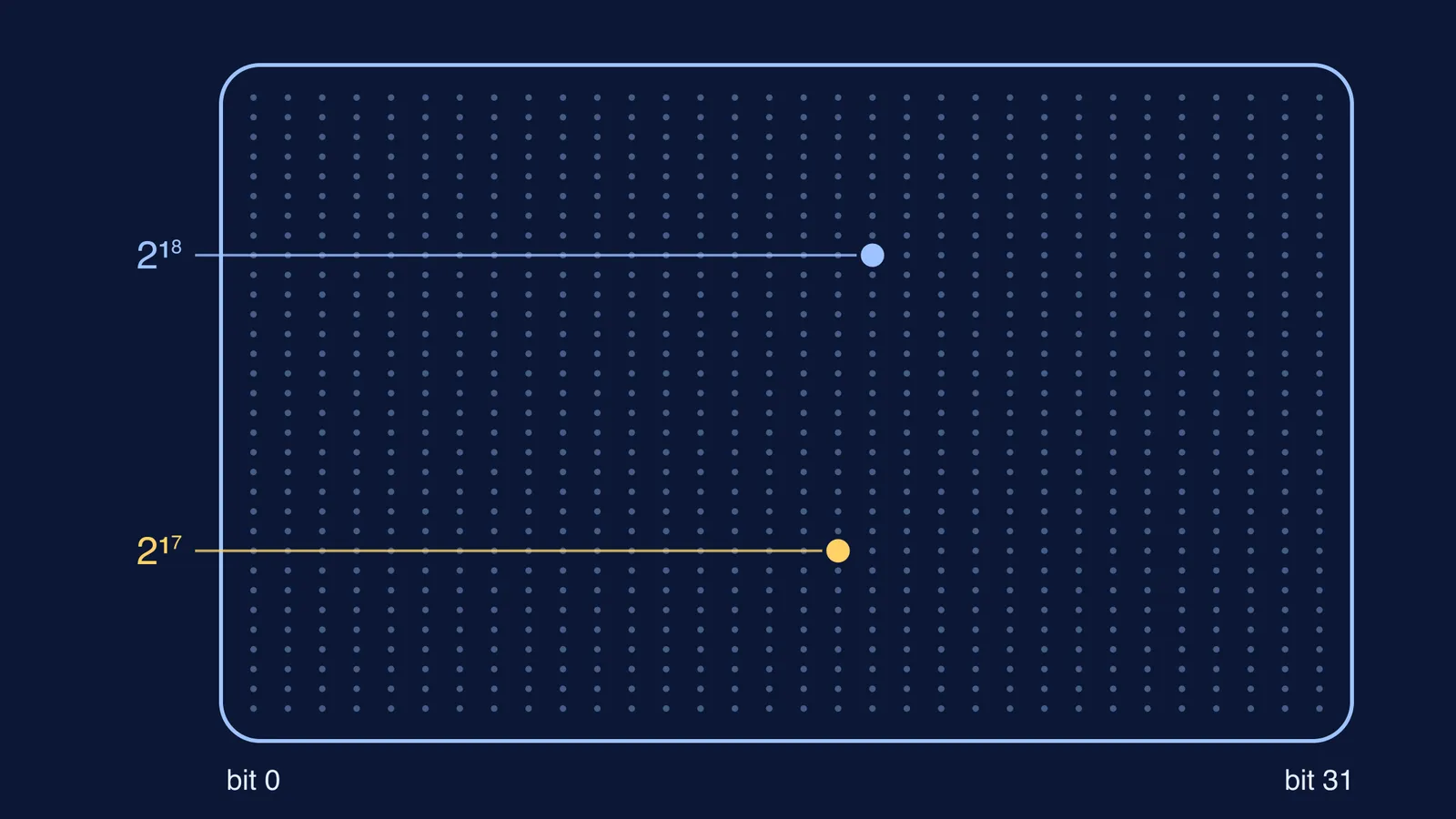
The store held 32 lines of 32 binary digits: 1,024 bits, or 128 bytes.
There were 7 instructions: jump, relative jump, load negated, store, subtract, skip if negative, and stop.
There was no add instruction until August 1948, so the machine did arithmetic by subtracting.
Why did a stored program matter?
Earlier machines took their instructions from punched tape or from cables and switches, so changing the task meant new tape or rewiring. The Baby kept its instructions in the same electronic store as its numbers, so a new program was just a new pattern of bits. The museum marks 21 June 1948 as the day "a computer ran a program from memory for the very first time" (Science and Industry Museum).
Williams and Kilburn reported the machine to the world in a short letter, "Electronic Digital Computers", in Nature on 25 September 1948 (Nature 162, 487, record checked at Crossref).
What did the first program actually do?
Tom Kilburn wrote it. It found the highest proper factor of a number a by trying every integer b from a − 1 downward until one divided exactly into a, according to the University of Manchester's Digital 60 history. The same source gives the facts of the famous run:
The number tested was 2^18, which is 262,144.
The program was only 17 instructions long.
It checked about 130,000 numbers, from 262,143 down to 131,072.
That took about 2.1 million instructions and 3.5 million store accesses.
The whole run lasted 52 minutes, and the answer, 131,072, was correct.
That works out to roughly 670 instructions a second (2.1 million over 3,120 seconds), each read from electronic memory.
How do you find a factor using only subtraction?
The Baby had no divide instruction, so the program subtracted b again and again (Digital 60). One way to trace it: keep subtracting until the result goes negative. If the last result before that was exactly 0, b divides a. Try it on a = 12:
b = 11: 12 − 11 = 1, then 1 − 11 is negative. The last result was 1, so 11 is not a factor.
b = 10: 12 → 2 → negative. Not a factor.
b = 9: 12 → 3 → negative. Not a factor.
b = 8: 12 → 4 → negative. Not a factor.
b = 7: 12 → 5 → negative. Not a factor.
b = 6: 12 → 6 → 0 → negative. The result hit 0, so 6 is the highest proper factor. Stop.
That took 13 subtractions. Traced the same way for 2^18, every b from 262,143 down to 131,073 needs two subtractions and the last needs three; the loop's bookkeeping around each test brings the total to millions of instructions.
To repeat Kilburn's test, write these steps as a loop in any language you know and run it on 12, then on 2^18.
If binary, complement numbers or loops are still shaky, the Fermi Concept Library covers every concept in computing, each with its own lesson and its place in the map.
What happened after the Baby?
The University of Manchester notes that the Baby drew Alan Turing to the university and inspired a long partnership with Ferranti Ltd, which produced the Ferranti Mark 1, described there as the world's first computer to be sold commercially, in 1951. The original Baby was taken apart for parts of later computers, and a working replica built in 1998 with guidance from the original designers is demonstrated by volunteers at the Science and Industry Museum in Manchester.
Other early firsts are often confused with it. The Atanasoff-Berry Computer was electronic but not stored-program, the Harvard Mark I read its instructions from tape, and ENIAC, which ran the first computer weather forecast, was set up with cables and switches.
For ideas that are easier to see than to read, try the interactive simulations in the Fermi Simulation Lab.