On this page
A kadhai of oil left on a high flame can catch fire while you answer the doorbell. The instinct is to grab a mug of water, and that one move can turn a pan fire into a fireball. Here is why, using your Class 8 combustion chapter, and what to do instead.
What happens when water hits burning oil?
Three things happen, very fast.
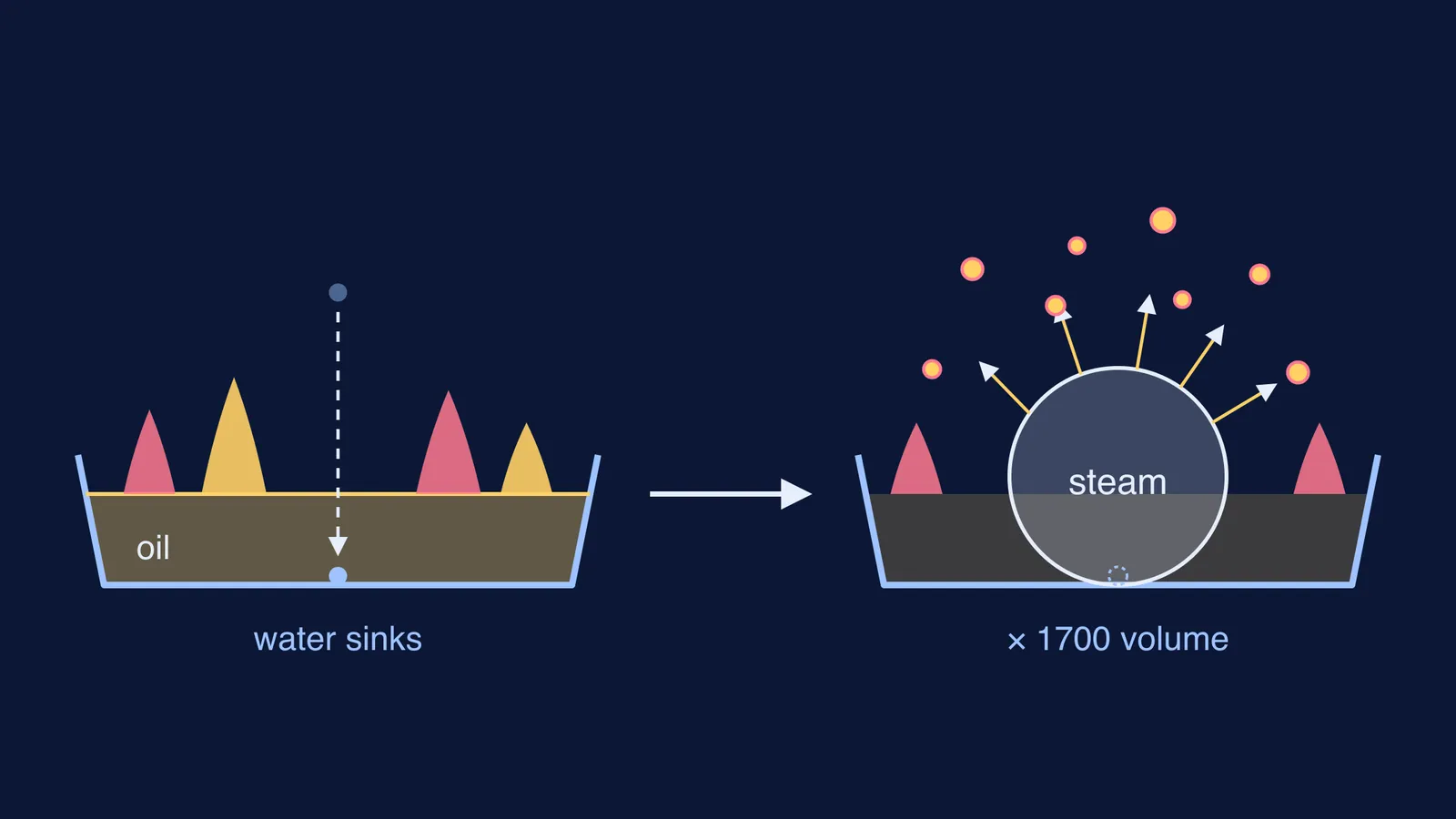
The water sinks. The NCERT Class 8 chapter Combustion and Flame puts it plainly: water is heavier than oil, so it sinks below the oil, and the oil keeps burning on top.
It flashes to steam. The bottom of a pan of burning oil is far above water's boiling point, so the water boils almost at once.
The steam throws the oil out. The Phoenix Fire Department's fire behaviour reference says water added to burning fuel sinks to the bottom and, under certain conditions, turns into steam that expands more than 1,700 times in volume, forcing the fuel up and out of the container as a large plume of burning liquid.
The Phoenix reference calls this a boilover, and says it commonly happens in home kitchens when someone adds water to a grease or oil fire to put it out.
Why does water put out a wood fire but not an oil fire?
NCERT lists three things a fire needs: fuel, air to supply oxygen, and heat to raise the fuel above its ignition temperature. Take away one or more and the fire can be controlled. The chapter defines ignition temperature as the lowest temperature at which a substance catches fire.
On burning wood or paper, water does two jobs, according to the same NCERT chapter. It cools the fuel below its ignition temperature, and the water vapour around the fuel helps cut off the air.
On oil, neither job gets done. The water ends up under the fuel, so the burning surface stays hot and open to the air; the Phoenix reference notes that water at the bottom has little effect on flames at the surface. For fires involving inflammable materials like petrol, NCERT names carbon dioxide instead: being heavier than oxygen, it covers the fire like a blanket and cuts off the oxygen. A pan lid cuts off the air in a similar way.
How much steam can one spoonful of water make?
Here is a worked example, using the 1,700 figure from the Phoenix Fire Department reference.
A tablespoon of water is about 15 mL.
15 mL × 1,700 = 25,500 mL, or about 25.5 litres of steam.
That is more than a large bucket of gas, made under a layer of burning oil.
The steam has to go up, and it carries the oil with it. That is why even a little water is dangerous.
What should you do if oil catches fire in a pan?
The US Consumer Product Safety Commission's cooking safety advice is to smother the flames by sliding a lid over the pan, turn off the burner, and never use water on a grease fire. Turned into a kitchen checklist:
Switch off the gas. This removes the heat feeding the fire.
Slide a lid over the pan. Push it on from the side, keeping your arm out of the flame. The US Fire Administration's cooking fire page says a baking sheet also works.
No water. Not a splash, not a mug.
Leave the lid on and the pan where it is. Lifting the lid lets air back in while the oil is still hot. Carrying the pan sloshes burning oil, and the sink is where the water is.
If the fire grows, get everyone out. NCERT says that if a fire breaks out at home, the first thing to do is call the fire service, so save the number now.
How do you stop oil catching fire in the first place?
NCERT asks whether you have ever seen cooking oil catch fire when a frying pan is kept for long on a burning stove. In US home cooking fires that spread beyond the cooking vessel, unattended equipment was the leading factor in ignition, at 37%, according to the US Fire Administration. The CPSC says 45% of US residential fires each year are cooking-related.
Stay at the stove while oil heats, and turn the flame down if it starts to smoke. See what the smoke point of oil means.
Keep the kadhai's lid within reach before you start.
Pat wet food dry before frying. Why deep frying makes food crisp shows the same water-to-steam jump on a small scale.
Learn which extinguisher suits which fuel in how different fire extinguishers work.
If the fire triangle or ignition temperature still feels hazy before a science test, the Fermi Concept Library gives every chemistry concept its own lesson and shows its place in the map.