On this page
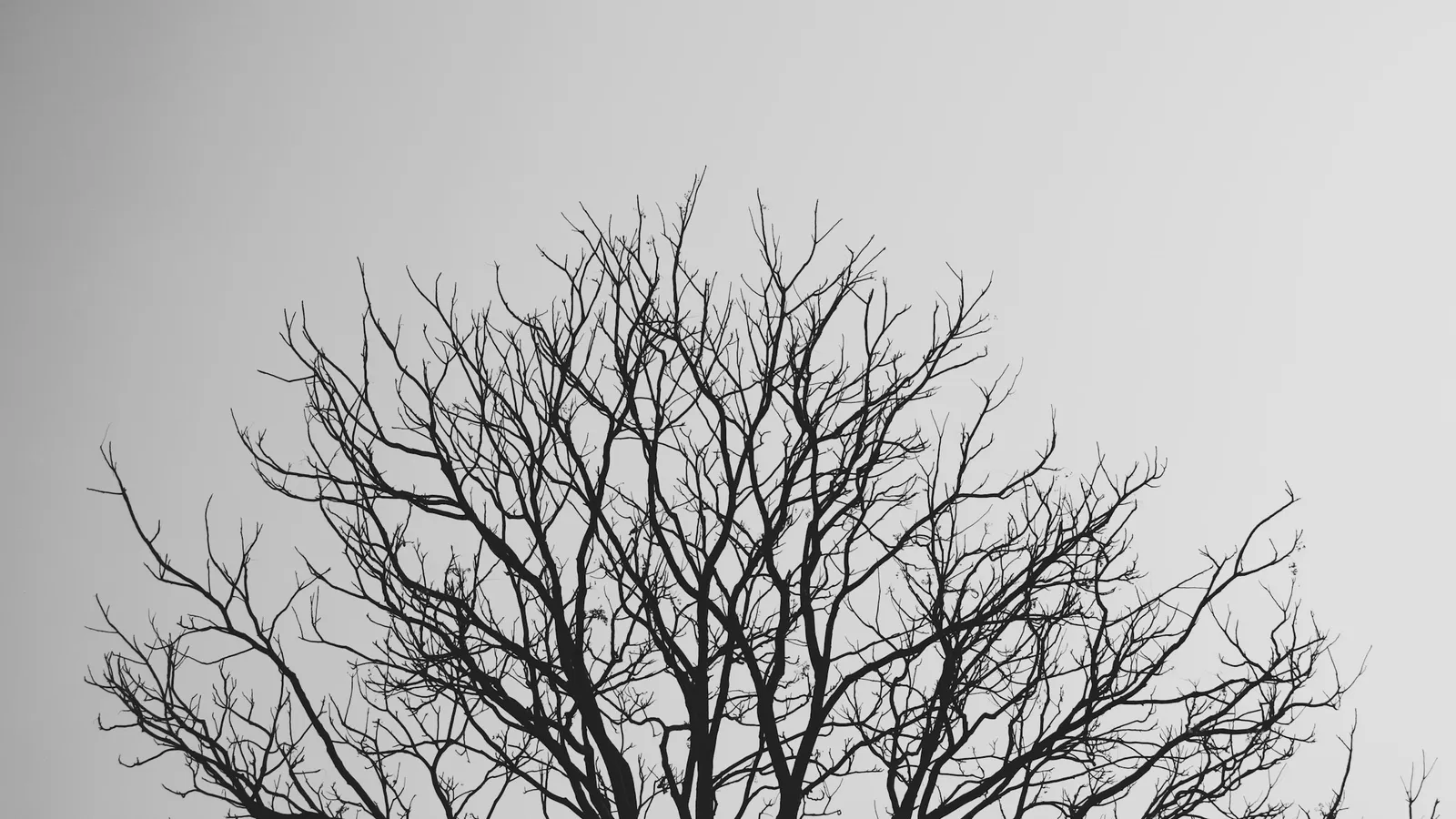
Walk through a forest in central India in April and many trees stand bare, in some of the hottest, sunniest weeks of the year. It looks like a mistake. It is actually a decision about water.
Why do some trees shed leaves in the dry season?
Because leaves are where a tree loses most of its water. NCERT's Class 10 science textbook gives the definition in one line: "The loss of water in the form of vapour from the aerial parts of the plant is known as transpiration" (NCERT Class 10 Science, Life Processes).
The same chapter explains that water lost through the stomata is replaced by water pulled up through the xylem, "provided that the plant has an adequate supply of water". That condition is the whole story.
In the dry months before the monsoon, the soil has little water to give. A tree in full leaf keeps losing water through its stomata, but its roots cannot replace it. It can close its stomata, but those pores also let in the carbon dioxide needed for photosynthesis. Or it can drop its leaves, removing the main exit for water until the rains return.
Many Indian trees take the second route. That is what being deciduous means: losing all leaves for part of the year. For the two strategies side by side, see our explainer on deciduous vs evergreen trees.
How does dropping leaves cut transpiration?
Strong evidence comes from tropical dry forests, which face a wet-dry rhythm similar to much of India's. Rolf Borchert followed more than 150 trees of 37 species through two dry seasons in Guanacaste, Costa Rica, and published the results in Ecology in 1994 (Borchert 1994, Ecology).
He found that leaf shedding, flowering and new shoot growth were strongly correlated with the tree's water status. In most trees, shedding leaves eliminated transpirational water loss, and together with leftover stored water this let the stems rehydrate. That helps explain why many dry-forest trees can flower or put out new shoots on bare branches before the rains come.
The study also sheds light on why some trees stay green. Water stored in the subsoil or in tree trunks buffered trees against drought, and evergreen species were confined to moist lowland sites.
How much of India's forest is deciduous?
A lot. The Forest Survey of India's India State of Forest Report 2019, Chapter 4 maps forests into 16 type groups using the Champion and Seth classification.
Tropical dry deciduous forests cover 3,13,617 sq km, or 40.86% of the mapped total, making them the largest group in that table (ISFR 2019, Table 4.1).
Tropical moist deciduous forests add 17.65%, so the two deciduous groups together make up 58.51% of India's mapped forest area, close to three-fifths (ISFR 2019, Table 4.1).
A study of 24 key tree species in the Vindhyan dry tropical forest found that the leafless period ranged from about a week to seven months (Kushwaha et al. 2010, Annals of Forest Science). The authors linked these differences to traits such as wood density and leaf mass per area.
Is this the same as autumn leaf fall?
The way the leaf separates, called abscission, is the same; our post on abscission and autumn leaf fall explains it. The trigger is different. In cold countries, trees shed leaves before winter. In much of India, the stress that matters is the dry season, so the bare months come before the monsoon.
How do you explain it in a biology exam?
Use this four-step frame for any question on leaf fall as an adaptation.
Process: name transpiration and say it happens mainly through stomata in leaves.
Problem: in the dry season, soil water is low, so lost water cannot be replaced through the xylem.
Adaptation: shedding leaves removes most of the transpiring surface, so water loss falls sharply.
Trade-off: the tree gives up photosynthesis for those months, and regrows leaves when water returns.
Here is a model answer for a three-mark question, "Why do many trees in dry deciduous forests shed leaves in summer?":
"Plants lose water as vapour mainly through the stomata of leaves, a process called transpiration. In summer the soil is dry, so the water lost cannot be replaced from the roots. By shedding their leaves, these trees cut transpiration and conserve water until the monsoon, at the cost of stopping photosynthesis for that period."
Before you submit, check your answer against this list:
Did you use the word transpiration and mention stomata?
Did you link the leaf fall to dry soil, not just to heat?
Did you state the cost (less photosynthesis) as well as the benefit?
Transpiration is easier to understand when you change one factor and watch the result; our post on factors that change transpiration rate shows how. The Fermi Simulation Lab has interactive simulations for ideas that are easier to see than to read, and the Fermi Concept Library has a lesson for each concept, if you want to revise stomata and xylem first.
Next time you see a bare tree in May, you will know it is not dying. It is waiting for the rain.