On this page
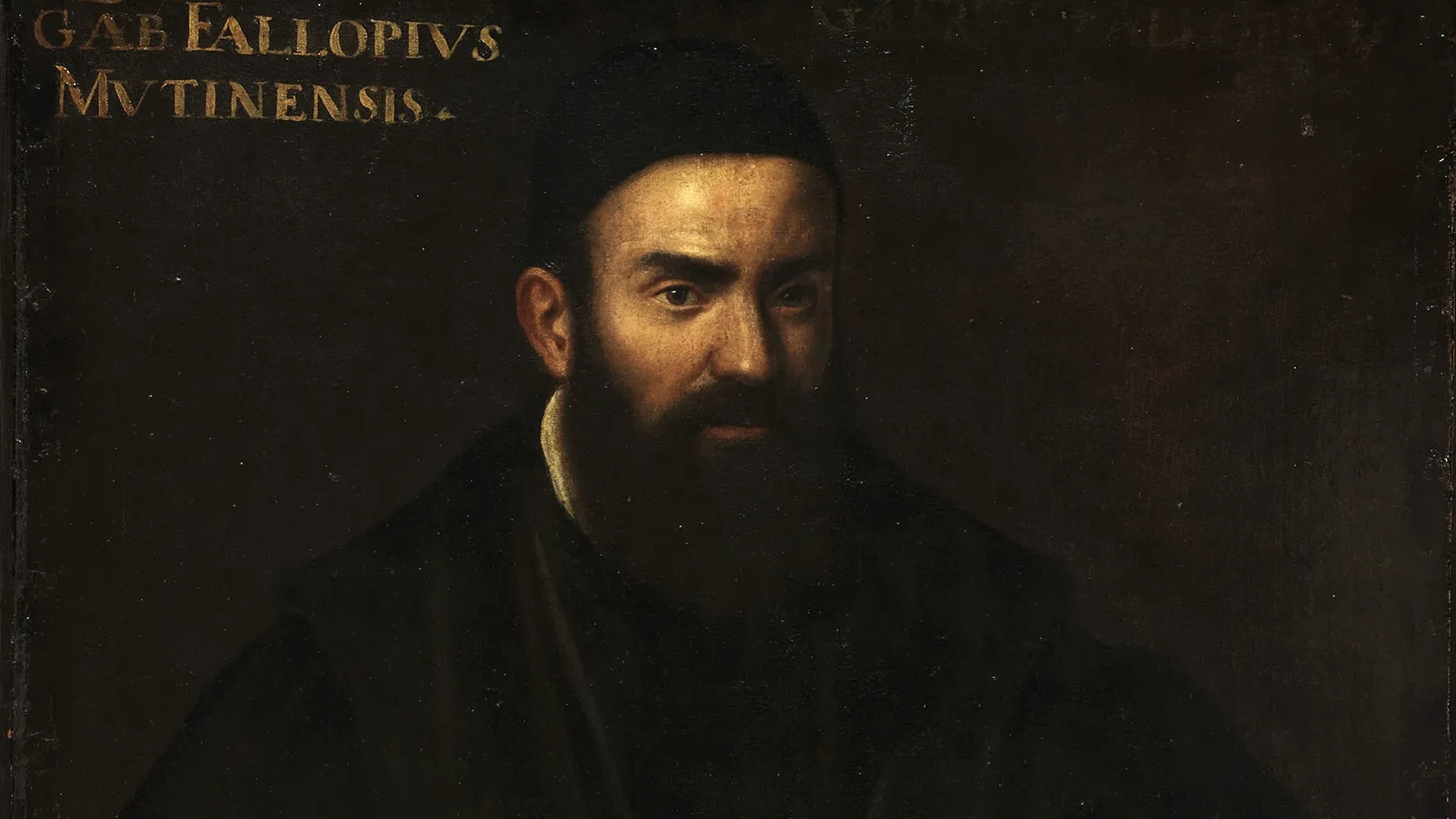
If you are revising human reproduction for your boards or NEET-UG, you have labelled the fallopian tubes many times. The name belongs to Gabriele Falloppio, a 16th-century anatomist at Padua in Italy, and the trumpet he saw in the tube, a word still found in its Latin name, is a useful way to learn its parts.
Who was the fallopian tube named after?
Gabriele Falloppio (1523-1562), often written in Latin as Fallopius, was first educated as a priest in his home town of Modena before becoming a physician, according to a short history by van Gijn and Gijselhart in the Nederlands Tijdschrift voor Geneeskunde. The same paper says he became professor of anatomy at Pisa, and then at Padua, in the post that Andreas Vesalius had held not long before him.
For his predecessor's story, read our post on Andreas Vesalius and the Fabrica. Falloppio was invited to the Padua chair of anatomy and surgery in 1551 and died in Padua in October 1562, as recorded in Wikipedia's article on Falloppio. The Encyclopedia.com biography says he taught at Padua until his death from pulmonary tuberculosis at the age of 39.
What did Falloppio describe in 1561?
The only major work Falloppio published in his lifetime, Observationes anatomicae, was printed in Venice in 1561, and a copy held by the US National Library of Medicine is free to read on the Internet Archive. The library's catalogue calls it a commentary and friendly critique of Vesalius's Fabrica: Falloppio went through his predecessor's work, adding to it and sometimes correcting it.
One of his observations was about the female reproductive tract. As van Gijn and Gijselhart summarise it, he described the "semen-conveying ducts", as they were then called, widening gradually towards the female "testes" and only loosely attached to them by a fringe. When that fringe was folded back, the opening looked like that of a brass trumpet, a tuba. Vesalius published a courteous reply but still denied that such an opening existed. The tubes were eventually named after Falloppio.
The tube was not his only find. The Encyclopedia.com biography credits him with the first clear account of the round and oval windows of the ear, the cochlea and the semicircular canals. Other structures carry his name too: the Fallopian canal (the facial canal in the skull) and the Fallopian ligament (the inguinal ligament), as listed on Wikipedia's Falloppio page.
Why is it called a tube and not a trumpet?
In Latin, tuba meant a long trumpet, especially a war trumpet, and its plural is tubae, according to Wiktionary's Latin entry for tuba. The formal anatomical name today is tuba uterina, so the organ's official name still uses the same word Falloppio reached for. The same structure is also called the uterine tube, the oviduct or the salpinx, as listed in Wikipedia's fallopian tube article. Treat them as one structure with four names.
How can the Latin names help you remember the parts?
Each part of the tube has a picture hidden in its name. Wikipedia's fallopian tube article lists the parts from the uterus outwards: the intramural part, the isthmus, the ampulla, then the infundibulum with its fimbriae. Read them the other way, from the ovary inwards, and you follow the egg:
Fimbriae: the Latin fimbria means a fringe or border (Wiktionary). This is the fringe Falloppio folded back.
Infundibulum: Latin for a funnel (Wiktionary). The fringe surrounds its opening.
Ampulla: a small flask with a swollen middle (Wiktionary). It is the widest part of the tube and the primary site of fertilisation (Wikipedia).
Isthmus: from the Greek for a neck or narrow passage (Wiktionary). It is the narrow stretch near the uterus.
Intramural part: the short section that runs through the wall of the uterus.
So the chain to learn is: fringe, funnel, flask, neck, wall. Then picture the whole thing as a trumpet, with the bell at the ovary end.
When you check your drawing, ask yourself three questions:
Is the widest part, the flask, between the funnel and the neck?
Did you mark fertilisation in the ampulla, not in the uterus?
Can you give the tube's other three names: uterine tube, oviduct, salpinx?
For the functions of each part, read our guide to the four parts of the fallopian tube and where fertilisation happens. To see what happens in the ovary before the egg reaches the fringe, read about Regnier de Graaf and the ovarian follicles.
If a term in this chapter still feels like a label without a picture, the Fermi Concept Library covers every concept in biology, each with its own lesson and its place in the map. And if you are not sure where to start on reproduction, Fermi's AI tutor can work out what you already know and build a plan for the session.
Next time you label a diagram, remember Falloppio's trumpet from 1561.