On this page
Every field has plants nobody sowed. NCERT's Class 8 science chapter Crop Production and Management gives them a whole section and ends with an exercise you may meet in a test: 'What are weeds? How can we control them?' Here is the full answer.
Why are weeds harmful to crops?
Weeds are undesirable plants that grow naturally in a field along with the crop, according to NCERT's Class 8 science textbook. The same chapter gives the core reason they matter: weeds compete with crop plants for water, nutrients, space and light, so they hold back the growth of the crop.
Each resource is a shared account with a fixed balance:
Water: every litre a weed's roots pull from the soil is water the crop cannot use.
Nutrients: the nitrogen, phosphorus and potassium in the topsoil are shared by every root in it, sown or not.
Light: a weed that grows taller than young seedlings shades them, so they make less food by photosynthesis. Our post on why shade plants need less light explains the balance a leaf has to hit.
Space: crowding leaves each plant less room for roots and leaves.
NCERT adds two more harms: some weeds interfere with harvesting, and some may be poisonous for animals and human beings. For one weed's effect on people, read our post on carrot grass and pollen allergy.
How much crop do weeds destroy in India?
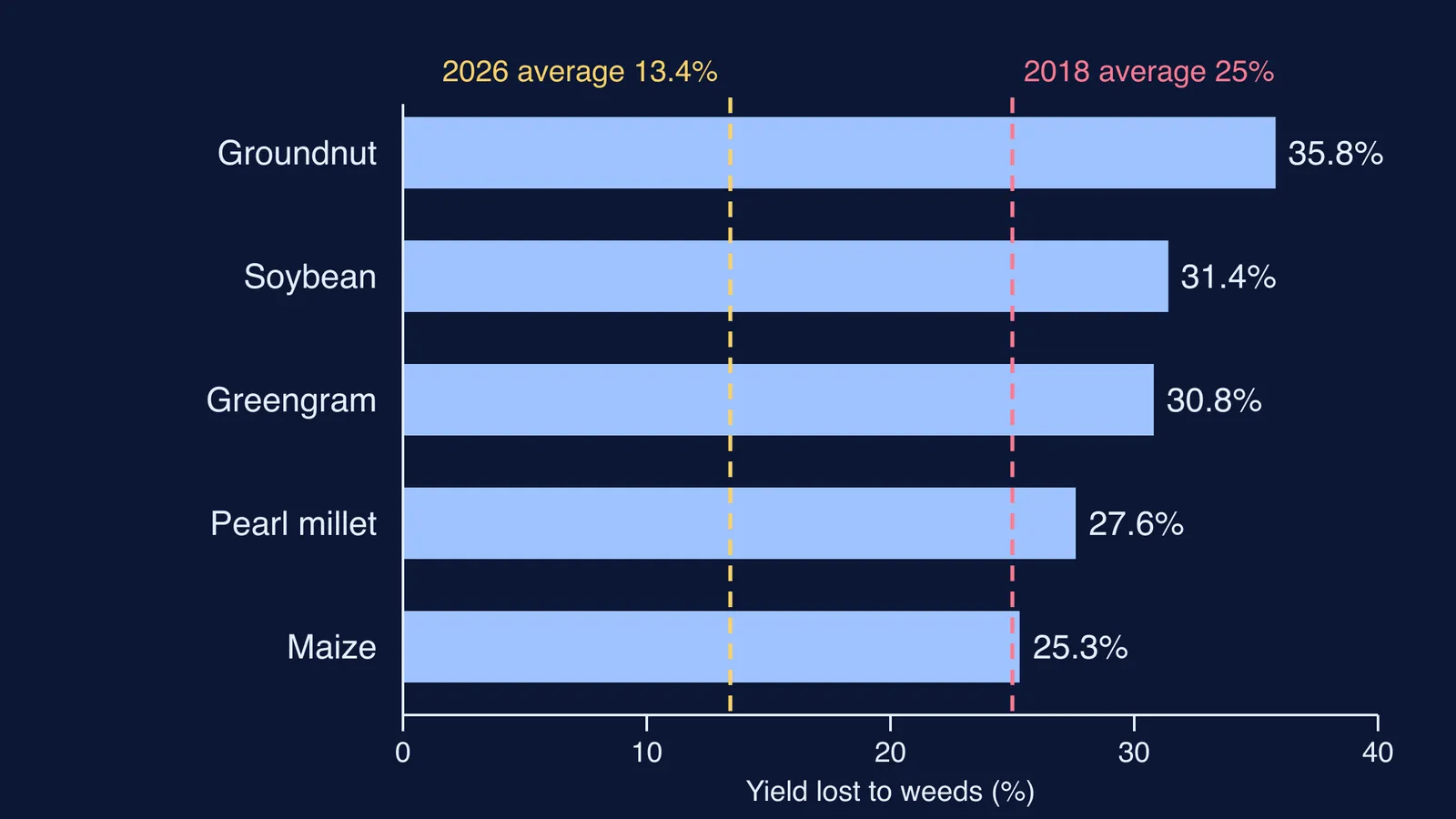
From 1,581 on-farm trials run during 2003-2014, ICAR's Directorate of Weed Research in Jabalpur estimated in 2018 an average actual yield loss of about 25% in India's major field crops, worth nearly US$11 billion a year, as summarised on the ICAR website. The study, with Yogita Gharde as first author, appeared in the journal Crop Protection.
ICAR says losses were particularly high in groundnut (35.8%), soybean (31.4%), greengram (30.8%), pearl millet (27.6%) and maize (25.3%), according to the same ICAR summary.
There is good news too. A newer ICAR assessment in 2026, based on 1,622 on-farm trials from 2014-2024, put the average loss at 13.43%, still worth about US$10.58 billion a year. ICAR credits better technology and wider access to weed-management methods, including herbicides where labour is scarce.
When is the best time to remove weeds?
NCERT's answer is before weeds produce flowers and seeds, because a weed that sets seed restocks the soil for next season. Tilling before sowing also helps: it uproots and kills weeds, which then dry up and mix with the soil (NCERT).
Agronomists add a second idea. The critical period for weed control is the stretch of a crop's growth cycle during which weeds must be controlled to prevent yield losses, as defined by Stevan Knezevic and colleagues in Weed Science in 2002.
The window depends on the crop and the field. In a University of Nebraska example for maize, it ran from about 8 to 45 days after emergence with no nitrogen fertiliser, but narrowed to about 20 to 39 days with 210 lb of nitrogen per acre (UNL CropWatch).
What are the methods of weed control?
The methods in NCERT's chapter fall into three groups:
Manual: pulling weeds out or cutting them close to the ground from time to time with a khurpi.
Mechanical: using implements. NCERT names the hoe for removing weeds and loosening soil, and notes that a seed drill is also used to uproot weeds.
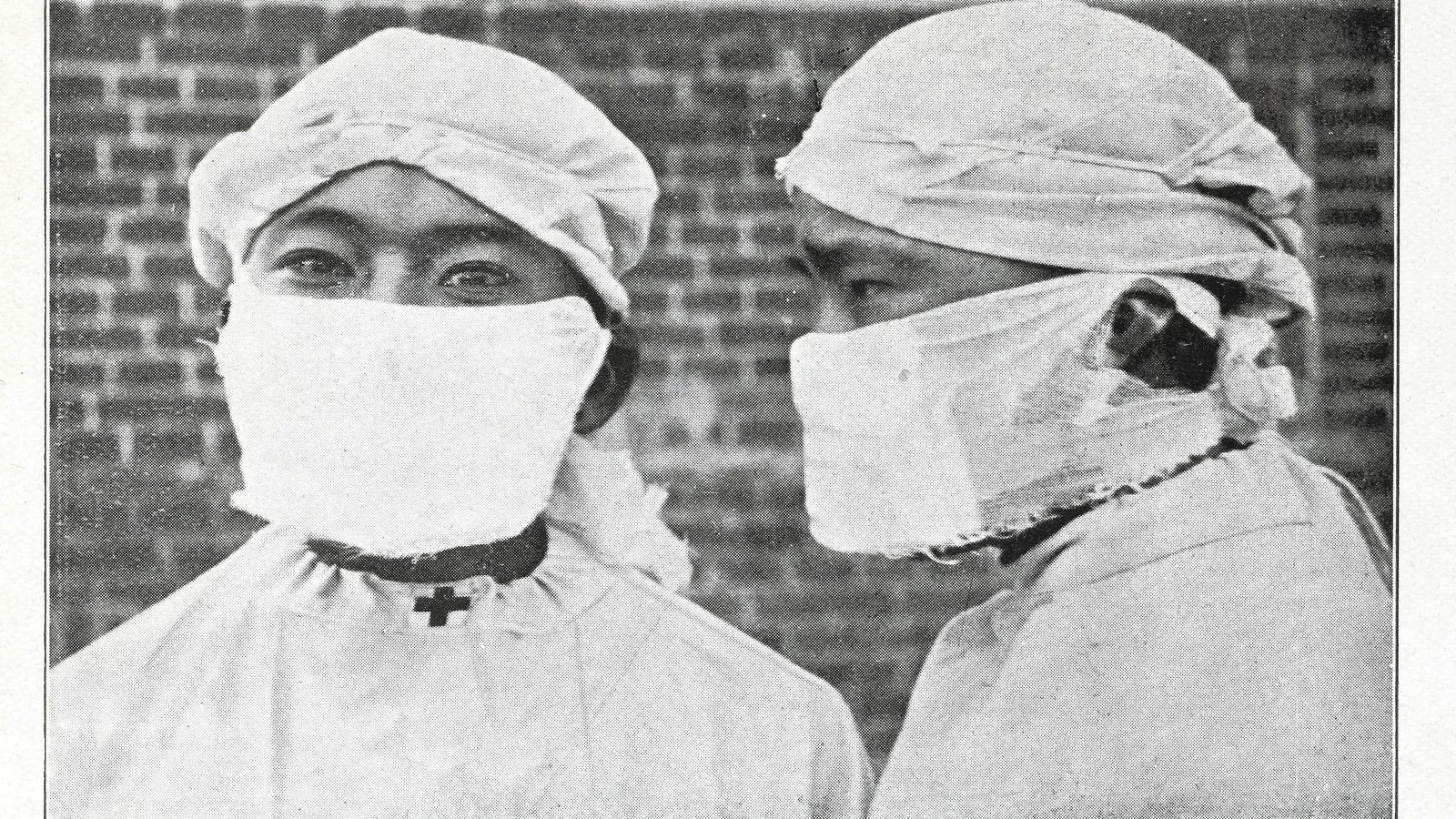
Chemical: spraying weedicides such as 2,4-D, diluted with water, during the vegetative growth of weeds before flowering and seed formation. Spraying may affect farmers' health, so NCERT says they should cover their nose and mouth.
The ICAR summary adds cultural practices to the list and recommends integrated weed management: combining methods, using herbicides judiciously and controlling weeds on time.
How do you choose a weeding method?
Use these four questions, in an exam answer or on a family farm.
How big is the field? A kitchen garden or small plot suits hand weeding with a khurpi. Several acres call for a hoe or tractor implements.
Is labour available at the critical time? If not, a weedicide may be the practical choice, which is the situation ICAR describes.
Have weeds started flowering? If yes, act now; each seed head is next season's problem.
Who will spray, and with what protection? No cloth or mask over nose and mouth, no spraying.
Worked example: a family grows soybean, a kharif crop, on two acres, and the rains bring a flush of weeds three weeks after sowing. Soybean lost 31.4% of its yield to weeds in the 2018 ICAR estimate (ICAR), so waiting is costly. They hand-weed some rows, hoe between others, and if labour runs short, spray a weedicide with protection. The answer is a mix, which is what integrated weed management means.
Weeding is only half of looking after a field; our post on crop rotation with legumes covers keeping the soil fertile. If ideas like competition for light still feel fuzzy, the Fermi Concept Library has a lesson for every concept in biology, each with its place in the map.