On this page
A worm bin is a school biology project you can run on a balcony with a plastic box, old newspaper and vegetable peels. It takes longer than most students expect, so the timeline matters as much as the setup.
What is vermicomposting, and how do red worms make compost?
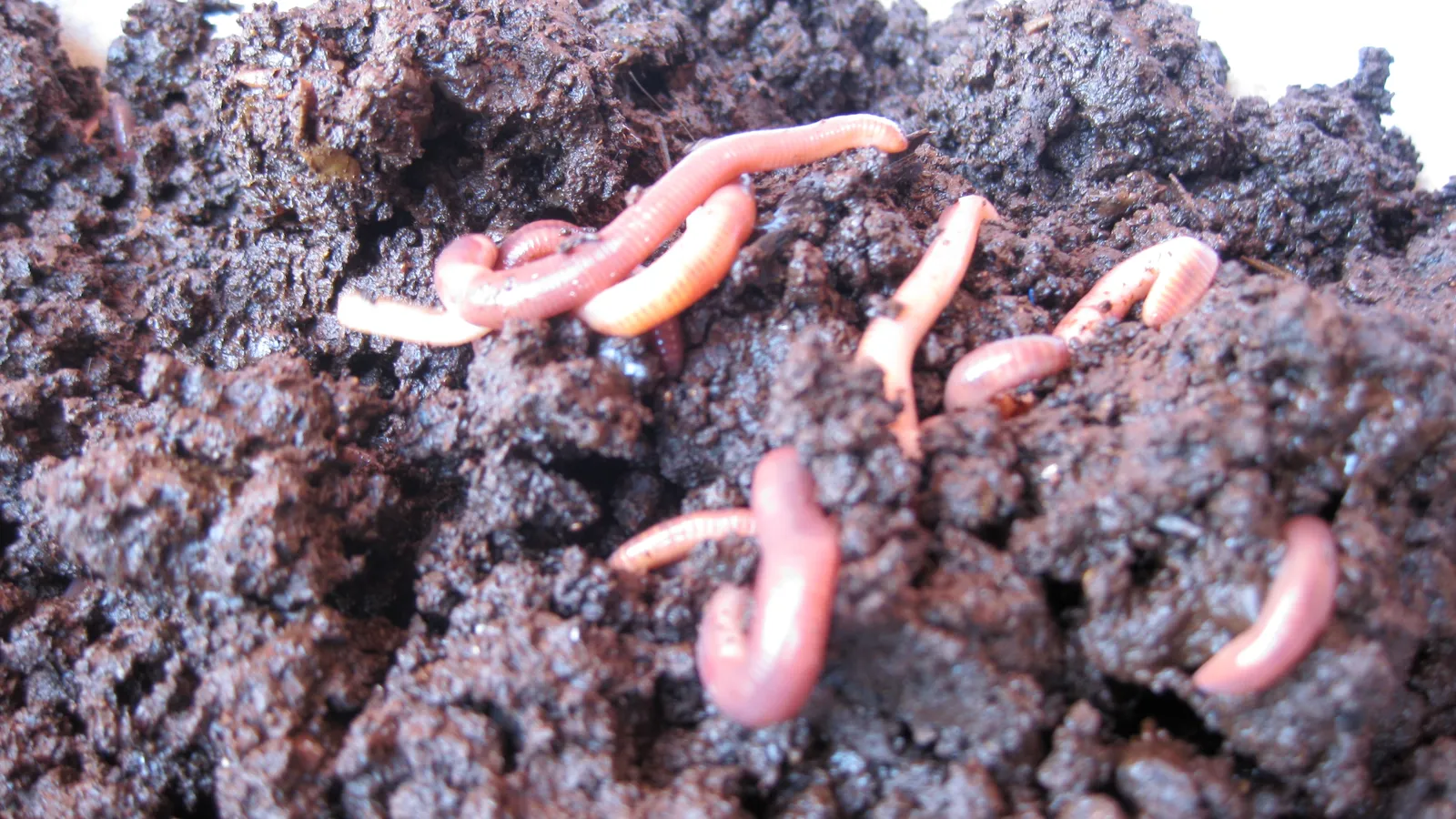
Vermicomposting is the process of turning organic debris into worm castings, according to Tamil Nadu Agricultural University's agritech portal, which describes vermicompost as earthworm excreta rich in humus and nutrients. The usual species is the red wiggler, Eisenia fetida, also called the manure worm, red worm or tiger worm (Oregon State University Extension). TNAU also lists the African earthworm (Eudrilus eugeniae) and Perionyx excavatus as composting worms.
The worm does not work alone. Oregon State's guide says the red worm's intestinal tract holds about 1,000 times more microbial life than the food it eats (OSU Extension). Worms and microbes break the scraps down together, and what passes out of the worm is the casting. The bin is a small ecosystem, with the worm as the visible decomposer and microbes as the invisible ones. Our explainer on the role of decomposers in an ecosystem covers the theory.
What do you need to set up a worm bin?
Oregon State's guide uses these numbers (OSU Extension):
Bin: about 1 cubic foot of bin space for each pound of worms. A box 1 foot deep, 1 foot wide and 2 feet long holds 2 to 2.5 pounds of worms.
Bedding: shredded newspaper or recycled printer paper (not glossy), corrugated cardboard, straw, coir (coconut fibre) or shredded leaves.
Moisture: worms need 75% to 85% moisture in their bedding, which feels like a wrung-out sponge.
Temperature: 55 to 77°F (about 13 to 25°C) is best; worms tolerate 40 to 90°F (about 4 to 32°C).
That upper limit matters in an Indian summer. TNAU advises a shaded, humid, cool spot and covering the material with moist gunny bags (TNAU). Keep your bin out of direct sun.
What can red worms eat, and what should you never add?
Feed chopped vegetable and fruit peels. Start small. Oregon State suggests about a quarter to half a pound of food scraps per pound of worms per week until the worms get used to their diet, then increasing gradually as the population grows (OSU Extension).
Never add:
meat, poultry or fish
dairy products such as curd, paneer or ghee
oils and greasy food, including leftover fried snacks
highly acidic or spicy food, such as citrus peel or onions
bones, pet waste and woody twigs
The first four come from Oregon State; bones, pet waste and twigs are on UGA's list. Bury scraps under the bedding and do not overfeed; uneaten food is what starts to smell.
How long does vermicomposting take for a school project?
Oregon State gives three to six months from setup to finished worm compost (OSU Extension). UGA gives 2 to 5 months (UGA Extension). A six-week project will not end with a full bin of compost, and that is fine: make it about what you measure. Here is a 10-week plan for a science fair or internal assessment:
Week 0: Weigh the worms, set up moist bedding, and record the bin temperature and a photo.
Weeks 1 to 2: Feed a weighed amount of scraps once a week, starting at a quarter of the worms' weight. Note how long each feed takes to disappear.
Weeks 3 to 6: If food is vanishing within the week, raise the feed slowly. Log temperature, moisture (squeeze test) and smell.
Weeks 7 to 9: Stop adding food on one side and feed only the other. UGA notes that worms migrate to the new food within 1 to 2 weeks (UGA Extension).
Week 10: Harvest the castings from the empty side, weigh them, and compare total food added with castings collected.
That gives you a data table, a graph and a discussion question: why is the castings' mass less than the food you added? Add a control, such as the same scraps in a covered box without worms, and you have a real experiment. Our guide to why experiments need a control group shows how to set one up, and if a younger sibling wants in, this compost bin project for children is a gentler version.
If terms like humus, decomposition or respiration still feel fuzzy when you write the report, the Fermi Concept Library has a lesson on every concept in biology and chemistry, each placed in a map of related ideas.
Start this weekend: find a box, shred some newspaper and save a week of peels.