
On this page
A bucket of vegetable peels on a balcony can be a better biology lesson than a worksheet. Over four weeks your child can watch decomposition happen, measure it with a thermometer and their nose, and connect what they see to the chapter they will meet in Class 10. You need a bin, some dry leaves and a notebook.
What does a composting project teach kids?
The big idea is decomposition. NCERT's Class 10 science chapter Our Environment explains that microorganisms, comprising bacteria and fungi, break down dead remains into simple inorganic substances that go back into the soil and are used again by plants. A compost bin lets your child see that process instead of just memorising it.
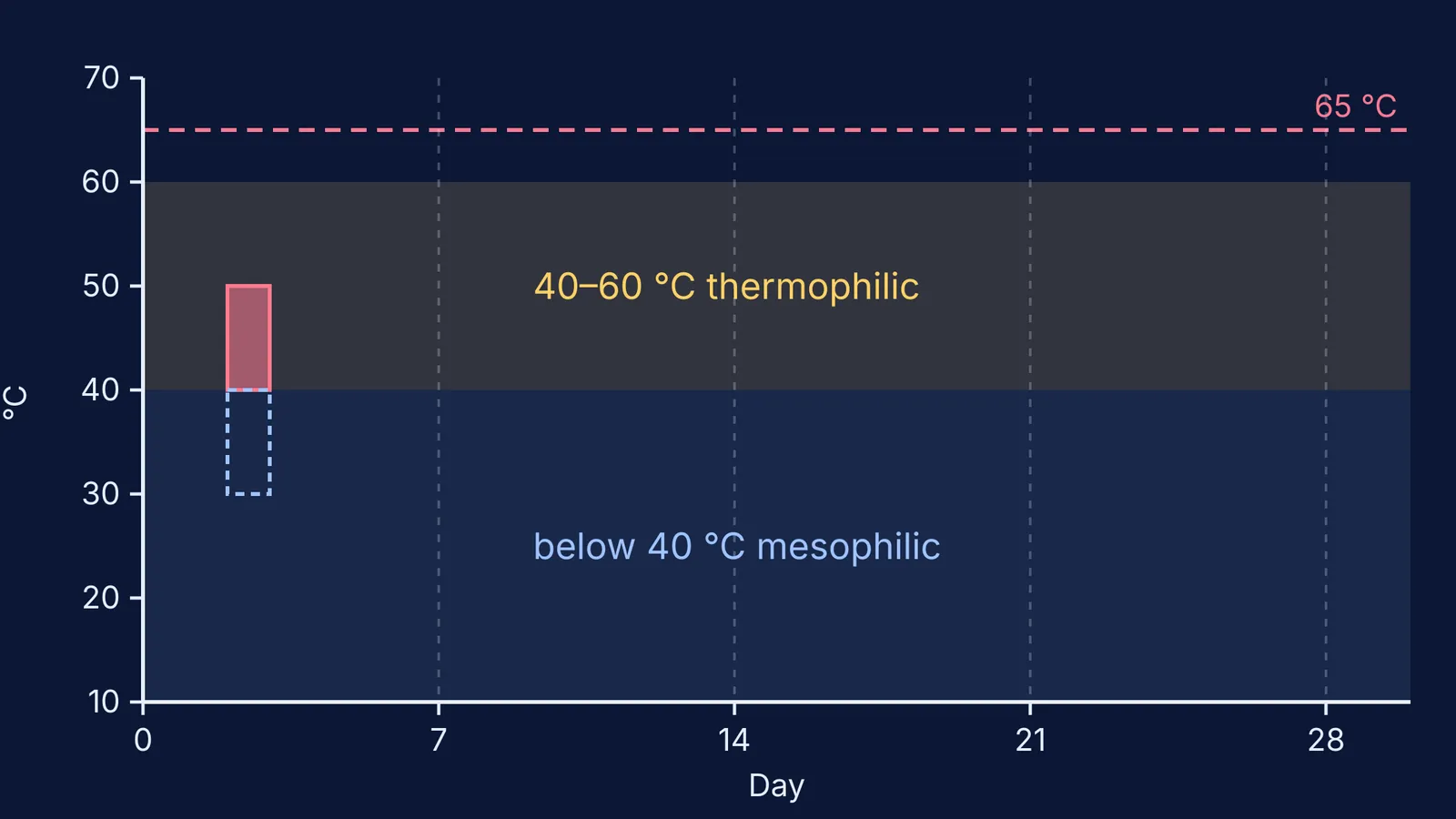
It also teaches measurement. Composting has numbers your child can check against real data. Cornell University's composting guide says the ideal carbon-to-nitrogen ratio is about 30:1 by weight, and that oxygen levels above 10% are best for aerobic composting. The same guide's physics page says well-designed indoor systems larger than 10 gallons (about 38 litres) heat up to 40-50°C in two to three days, while small bioreactors more often peak at 30-40°C.
So a small balcony bin may never get very hot, and working out why is real science.
How do you set up a balcony compost bin for the project?
The US Environmental Protection Agency's home composting guide gives three rules that suit a balcony:
Use two to three times the volume of browns (dry leaves, shredded paper, cardboard) to greens (fruit and vegetable scraps).
Keep the mix about as damp as a wrung-out sponge.
Leave out meat, fish, bones, dairy and pet waste.
A lidded bucket with small holes drilled in the sides and base works, with a tray underneath. Start with browns, then alternate scraps and browns. A long-stem soil thermometer is the one thing worth buying.
This also fits India's new national waste rules. According to a Press Information Bureau release of 30 March 2026, the Solid Waste Management Rules, 2026 require waste to be separated at source into four streams: wet, dry, sanitary and special care waste. Your child's bin handles part of the family's wet waste.
What should you record each day?
Use one line per day in a notebook:
Date and time.
Air temperature on the balcony.
Core temperature: thermometer pushed into the middle of the bin.
Smell score from 0 (earthy or nothing) to 3 (strong), plus one word: earthy, sour, ammonia, rotten egg.
Squeeze test: dry, sponge-damp or dripping.
What went in, and whether the bin was turned.
Smell is data too. LSU AgCenter's guide to compost odours says excess nitrogen can cause an ammonia smell, and that greens which are not mixed in with dry, carbon-rich material can produce a rotten or sulfurous smell. The fix in both cases is more browns and more mixing.
What does a month-long plan look like?
Week 1: set up and baseline. Build the bin and record temperatures for two days before adding scraps, so your child has a "before" reading to compare against.
Week 2: look for heat. Compare the core temperature with the air temperature every day. Is the middle warmer? Does it change after turning?
Week 3: run one experiment. Change a single thing, such as adding a big batch of greens or skipping a turn, and predict what will happen to smell and temperature first.
Week 4: cool-down and write-up. Draw a graph of core temperature minus air temperature over the 28 days, then write one page: what we expected, what happened, what we would change.
Do not expect finished compost in a month. Cornell's composting guide notes that after the hot phase, mesophilic microbes take over through a long process of curing. A month gives your child the active, measurable phase; the dark crumbly soil comes later.
How does it link to school biology?
Ask questions rather than giving answers. Try these at the dinner table:
"Who is eating the peels?" (decomposers: bacteria and fungi)
"Why might the middle be warmer than the edges?"
"What changed when we added more leaves?"
"Where does the food from the peels go next?" (back into soil and plants, as the NCERT chapter describes)
These questions lead into food chains, nutrient cycles and respiration, which come up again in later biology. If your child gets curious about a word like "aerobic" or "decomposer", the Fermi Concept Library covers every concept in physics, chemistry, biology, mathematics and computing, each with its own lesson and its place in the map.
Start this weekend with one bucket, one bag of dry leaves and one notebook, and let the data do the teaching.