On this page
The Address is the second story in Snapshots, the Class 11 supplementary reader, and it is on the CBSE English Core (301) syllabus for 2026-27. It looks like a story about furniture. It is really about what a war leaves behind when the people are gone. Read the NCERT Snapshots chapter first; this guide helps you organise what you notice.
What happens in The Address?
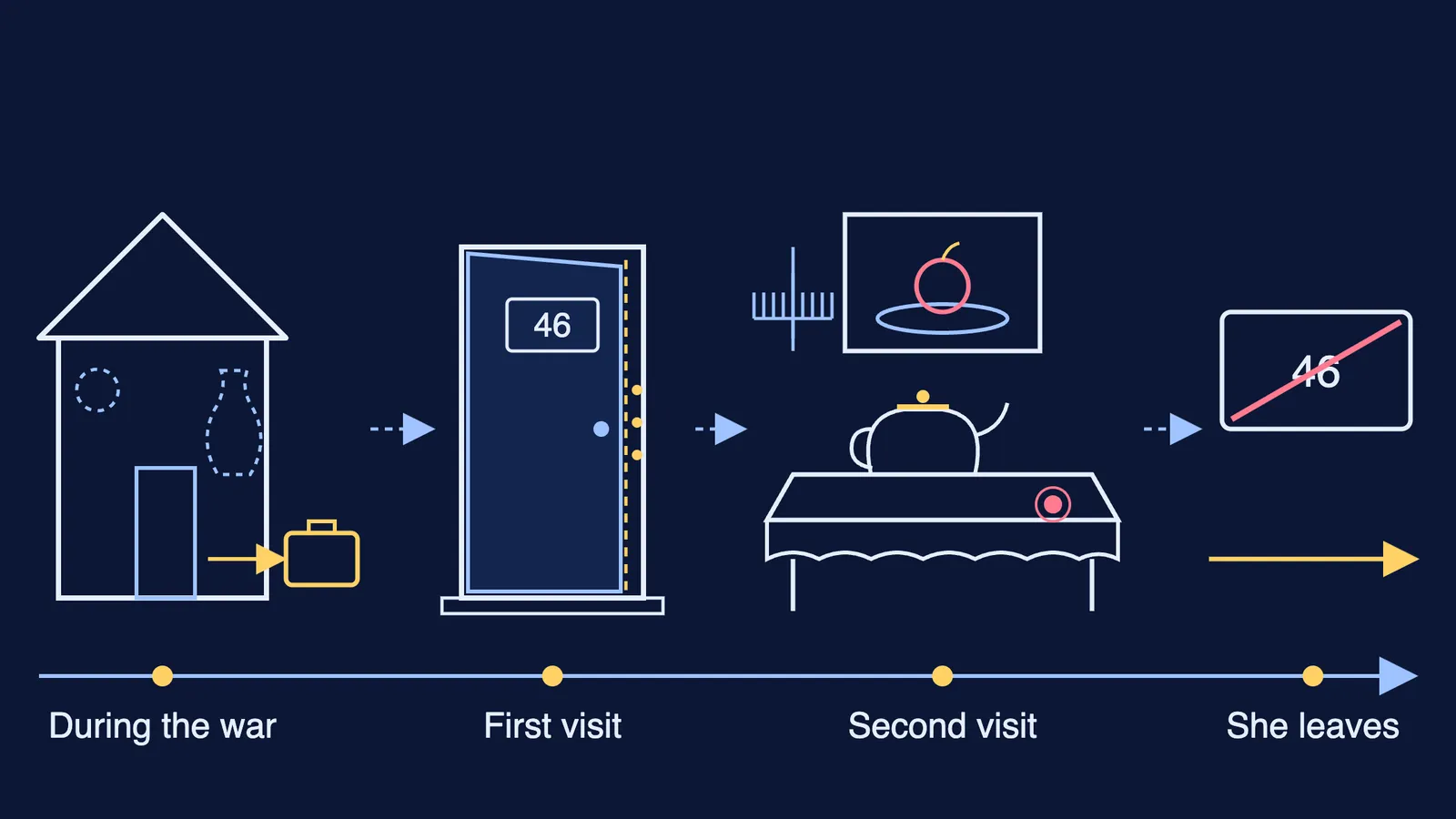
The narrator is a young Jewish woman in Holland, the daughter of Mrs S. During the first half of the war she comes home and notices things missing from the house. Her mother explains that an old acquaintance, Mrs Dorling, has been carrying away the silver, plates and vases, offering to keep them safe in case the family has to leave. The narrator sees Mrs Dorling once, leaving with a heavy suitcase, and learns the address: 46 Marconi Street.
Years later, after the Liberation, the narrator goes to that address. Mrs Dorling opens the door a little, wearing the mother's green cardigan, and refuses to let her in. The woman's surprise that anyone has returned, and the narrator's two-word reply, "Only me", tell us her family did not survive.
On a second visit, Mrs Dorling's teenage daughter lets her wait inside. The narrator sits among her mother's things: the woollen tablecloth with its old burn mark, the teapot, the still life with an apple on a pewter plate. In this badly arranged room they feel strange. When the girl goes to open the cutlery drawer, the narrator leaves. Cut off from the life they belonged to, the objects have lost their value, and she resolves to forget the address.
What was happening in Holland during the war?
The story never names the camps. According to the United States Holocaust Memorial Museum, Germany invaded the Netherlands on 10 May 1940. The same source says the Germans and their Dutch collaborators deported some 107,000 Jews, mostly to Auschwitz and Sobibor, where they were murdered, and that less than 25 percent of Dutch Jewry survived.
DutchNews reported that Marga Minco escaped deportation, spent the rest of the war in hiding, and that none of her immediate family came back from the camps. She died in 2023, aged 103.
Who is Mrs Dorling, and is she a friend or a thief?
The story lets you decide, but it leaves clues. Mrs Dorling reappeared after years away, insisted on taking things, and made no agreement about returning them. After the war she wears the cardigan, hides behind the door and says she cannot help. Her daughter says they use the things for everything.
A fair answer: she may have taken a risk carrying the goods, but she kept them as her own and was unsettled to see a survivor. She can be read as standing for people who quietly profited when Jewish families were deported.
What are the main themes of The Address?
Loss after war. The war ends, but the family and the old life do not return. Peace shows in small things: lighter bread, a bed safe to sleep in.
Memory and objects. Things carry meaning only inside the life they belonged to. Seen in a stranger's room, they become just things.
Greed and betrayal. Mrs Dorling turns rescue into ownership.
Moving on. She lets go because the past cannot be put back in place.
For how cues trigger recall, see our guide to human memory for Class 11 psychology. For another wartime voice from Holland, read From the Diary of Anne Frank for Class 10.
How is The Address tested in the Class 11 exam?
The CBSE 2026-27 syllabus sets three Snapshots questions: one prose extract out of two (4 marks), one short answer out of two in 40-50 words (3 marks), and one long answer out of two in 120-150 words (6 marks). The Address can appear in any of them.
Practice questions:
What does the narrator's reply at the door tell us about her family? (short answer)
How do the objects in Mrs Dorling's room change their meaning for the narrator? (short answer)
Is Mrs Dorling a protector or an opportunist? Argue with evidence. (long answer)
How does the story show that the end of a war is not the end of its damage? (long answer)
A 6-mark answer plan you can reuse
Claim (20 words). Answer the question in one sentence.
First visit (35 words). The cardigan, the half-open door, the refusal.
Second visit (45 words). Two objects and how they feel to her now.
Meaning (30 words). Tie it to a theme: loss, memory, or betrayal.
Close (15 words). Why she chooses to forget.
That is about 145 words. For another Class 11 chapter, see our guide to The Portrait of a Lady.
If physics or maths is what eats most of your Class 11 study time, Fermi's AI tutor can work out what you already know and build a plan for the session, so English revision is not the subject that gets squeezed out.