On this page
The Portrait of a Lady is the opening chapter of the NCERT Hornbill textbook (2026-27 reprint), and it is on the CBSE English Core curriculum for 2026-27. It is Khushwant Singh's short memoir of his grandmother. Little dramatic happens, so the key is to read it as a relationship that changes shape over time.
What happens in The Portrait of a Lady?
The narrator cannot imagine his grandmother ever being young: to him she was always old, bent, dressed in white and praying, yet beautiful in a peaceful way.
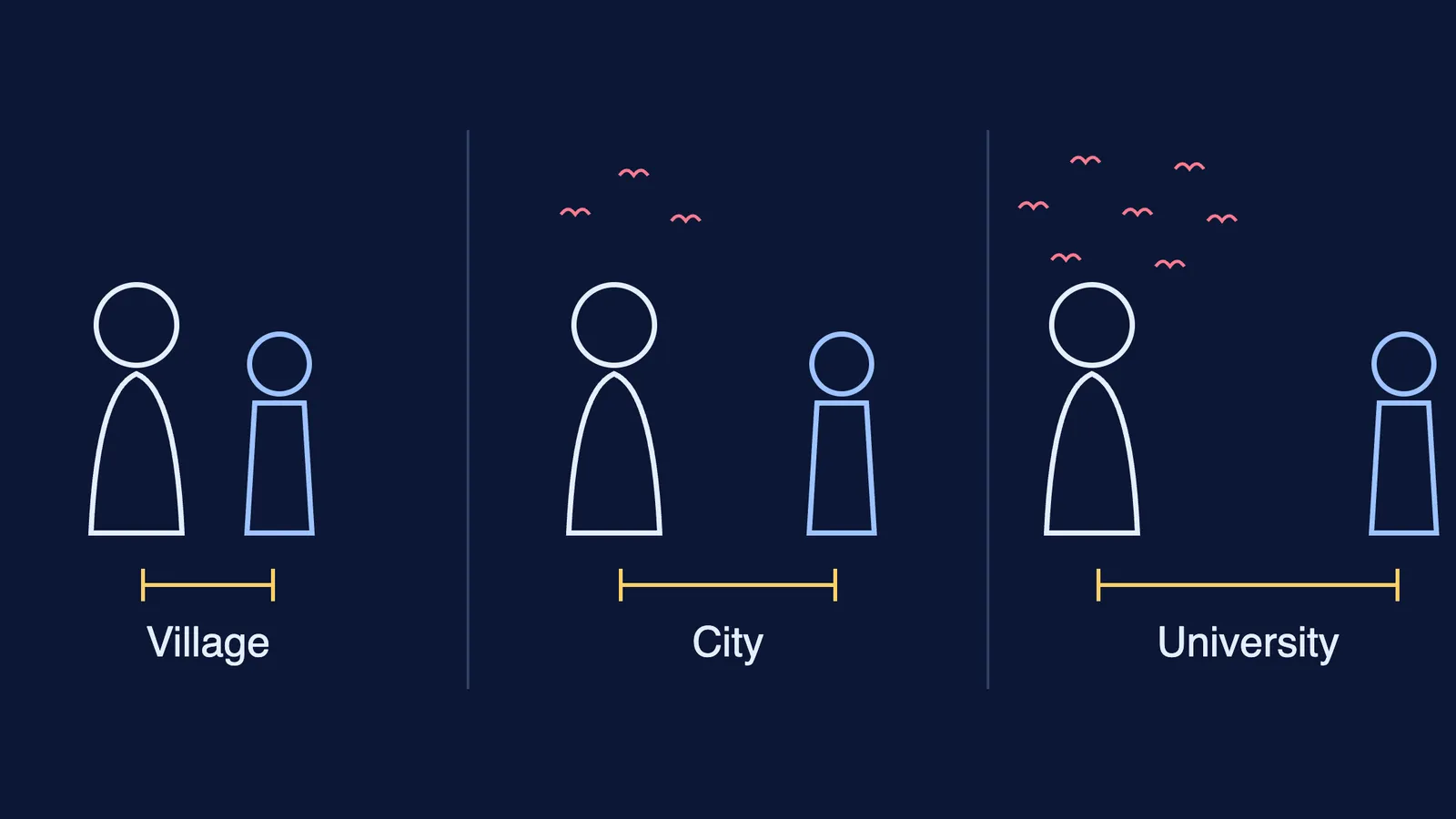
Stage 1: the village. His parents leave him with her while they settle in the city. She gets him ready each morning and walks him to the temple school, reading scripture while he learns; on the walk home they throw her stale chapattis to the village dogs. They are constant companions.
Stage 2: the city. When the family reunites in the city, the narrator calls the move "a turning-point". He now goes to an English school by bus, and she can no longer help with lessons. She is unhappy that the school teaches science but nothing about God, and when music lessons begin she disapproves silently and talks to him less. She now feeds sparrows instead of dogs.
Stage 3: university and the goodbye. At university he gets his own room and their shared routine ends. She spends her days spinning and praying; feeding the sparrows is her happiest time. When he leaves to study abroad she sees him off at the station without a word or any show of emotion, still praying, and kisses his forehead.
The return and her death. He returns to find her looking no older. That evening, for the first time he can remember, she does not pray: she gathers neighbourhood women, beats an old drum and sings about warriors coming home. Next morning she has a mild fever. She is sure the end has come, refuses to waste time talking, and dies peacefully while praying. Thousands of sparrows gather silently around her body, ignore the bread offered to them, and fly away only when she is carried out.
What is the grandmother's character like?
Deeply religious: prayer and the rosary fill her day, and missing one evening of prayer is what she regrets at the end.
Kind to living things: dogs in the village, sparrows in the city.
Strong and self-controlled: she shows no emotion at the station and accepts loneliness without complaint.
Rooted in tradition: she distrusts English schooling and music lessons.
Loving in her own way: she shows affection through actions, not words.
Calm about death: she sees it coming and meets it praying.
What are the main themes?
Love that changes form, not depth. The two drift apart in daily life, yet her joy at his return shows the bond never broke.
The generation gap. English-medium, Western schooling pulls him into a world she cannot share.
Loneliness in old age. She is left with her wheel and her birds.
Faith and acceptance. Prayer frames her life and death.
Bonds beyond humans. The sparrows' silent mourning.
If you are studying loss and ageing across your English books, the Class 12 poem in our guide to My Mother at Sixty-six handles the same fear from a child's side, and The Ball Poem treats loss as something each person learns alone.
How do you answer exam questions on this chapter?
The CBSE 2026-27 English Core curriculum sets one long answer from Hornbill prose or poetry for 6 marks, to be written in 120-150 words, and two short answers from Hornbill (one prose, one poetry) for 3 marks each in 40-50 words. Long answers test analysis, so retelling the story earns little.
Here is a worked plan for a question in our own words: "Was the grandmother's last evening out of character, or the truest picture of her?"
Position (1-2 lines): It looks out of character, but it shows a side she had always hidden.
Point 1: She skips prayer for once, drumming and singing of homecoming.
Point 2: Singing for hours shows a love she never spoke during the quiet years.
Point 3: Her faith returns at once; she regrets the missed prayer and dies praying.
Close: Her love and her faith were both real; that evening, love simply came first.
Practise with these questions of our own:
How do the dogs and the sparrows mark the change from village to city?
Is the narrator fair to his grandmother? Give two pieces of evidence.
Why might the author have ended with the sweeper and the breadcrumbs?
Answer them from memory first, then check the chapter. Our one-week rereading vs practice testing experiment compares the two ways to revise.
English rewards your own voice. If Class 11 physics or maths is eating your revision time, Fermi's AI tutor can work out what you already know and build a plan for the session, so you get your English hours back.