
On this page
Roughage is the part of your food that your own enzymes cannot digest. You eat it in every roti, bowl of dal and guava. Here is why it still matters, and how to check your own plate.
What is roughage?
NCERT's Class 6 science textbook says that dietary fibres, also known as roughage, do not provide any nutrients to our body, but are an essential component of our food. The same chapter says roughage helps the body get rid of undigested food and ensures smooth passage of stools, and that it comes mainly from plant products.
Scientists use a stricter definition. The food-standards body Codex Alimentarius defines dietary fibre as carbohydrate polymers of 10 or more units that are not broken down by the body's own enzymes in the small intestine, as quoted in a 2014 paper in Nutrition Journal.
A familiar example is cellulose, the material of plant cell walls; see why humans cannot digest cellulose, but cows can.
Why is roughage important if we cannot digest it?
In the stomach and small intestine, enzymes break starch, protein and fat into small molecules that enter the blood (see digestive enzymes for Class 10: where each one acts). The fibre has no matching enzyme, so it travels on into the large intestine, which absorbs water and salt from what is left.
There, fibre holds water and adds bulk, so the waste stays soft and easier to push along. Bacteria in the colon ferment some types of fibre; others resist fermentation and pass through largely intact.
A 2016 review of intervention trials by De Vries and colleagues in Nutrients measured these effects in healthy people. Cereal and vegetable fibre added more to stool weight than fruit fibre, and fibres that bacteria ferment less added more than those they ferment readily, which the authors link to their higher water-binding capacity. In people whose gut transit time was already under 48 hours, extra fibre did not change it; in people at 48 hours or more, transit time fell by about 30 minutes per gram of fibre.
The benefits reach beyond the gut. A 2019 series of meta-analyses in The Lancet by Reynolds and colleagues31809-9) pooled 185 prospective studies and 58 clinical trials. People who ate the most fibre had a 15 to 30% lower risk of death from all causes and from cardiovascular disease than those who ate the least, and the largest risk reductions came at 25 to 29 g of fibre a day. Most of that evidence is observational and from adults: a strong pattern, not a promise.
How much fibre do you need each day?
The WHO's 2023 guideline on carbohydrate intake sets these minimums for naturally occurring dietary fibre:
Ages 2 to 5: at least 15 g a day
Ages 6 to 9: at least 21 g a day
Ages 10 and older: at least 25 g a day
The same guideline asks people aged 10 and over to eat at least 400 g of vegetables and fruit a day. The ICMR-NIN Dietary Guidelines for Indians advise including more fibre-rich foods such as whole grains, millets, pulses, nuts and vegetables in the diets of children and adolescents.
Which foods are high in roughage?
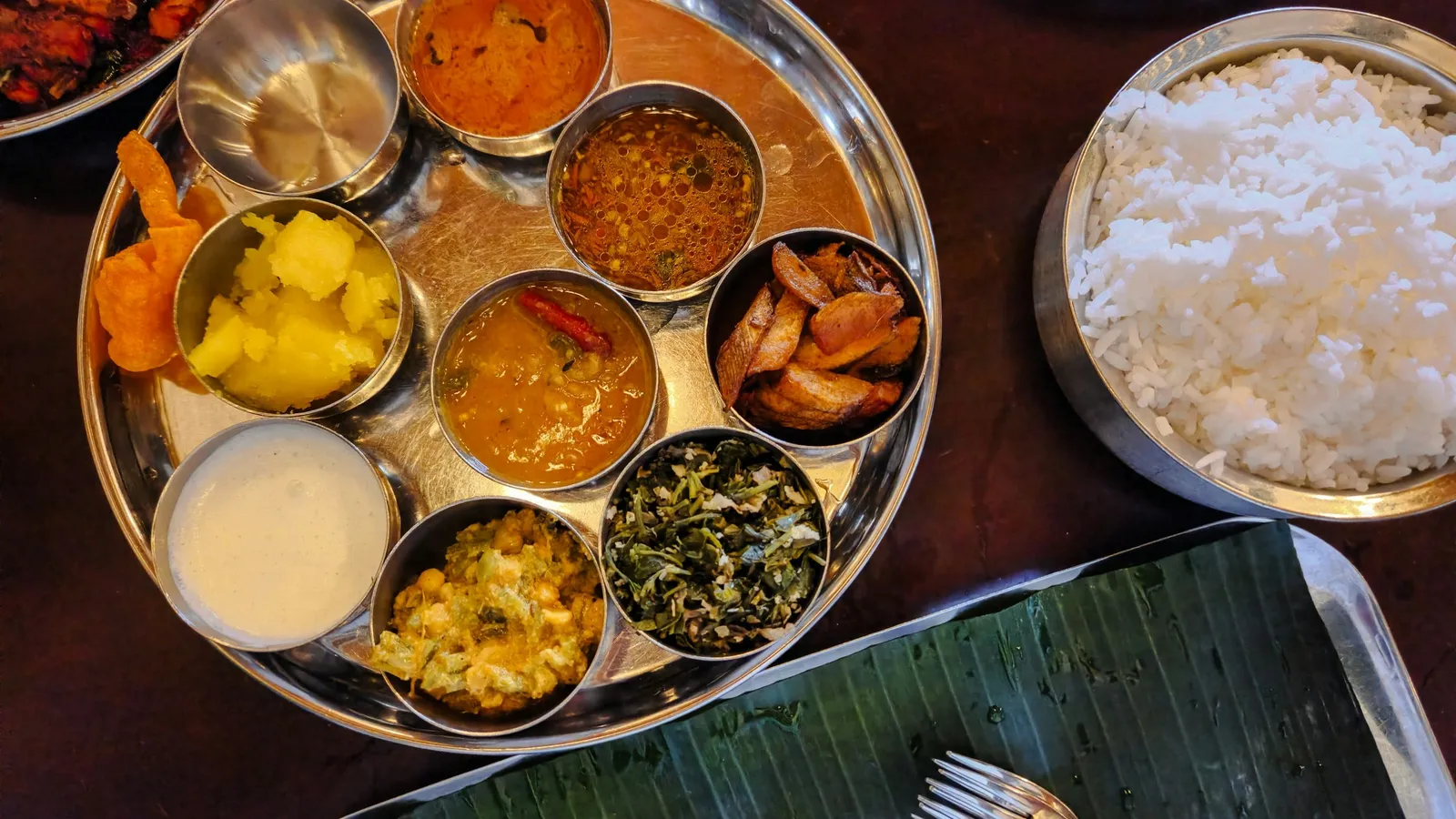
NCERT lists green leafy vegetables, fresh fruits, wholegrains, pulses and nuts as good sources. Here is the fibre per 100 g, from the US Department of Agriculture's FoodData Central database (Indian varieties differ a little):
Whole-wheat flour (atta), dry: 10.7 g
Lentils, cooked: 7.9 g
Chickpeas, cooked: 7.6 g
Guava: 5.4 g
Carrot, raw: 2.8 g
White flour (maida), dry: 2.7 g
Banana: 2.6 g
White rice, cooked: 0.4 g
Whole-wheat flour carries about four times the fibre of maida.
How much fibre is in a day's meals?
Using the values above, compare two days. The weights are for working out the sums, not a diet plan.
Day A: 100 g maida (as bread or naan), 200 g cooked white rice, one 100 g banana. Total: 2.7 + 0.8 + 2.6 = 6.1 g.
Day B: 100 g atta (as rotis), 100 g cooked white rice, 150 g cooked lentil dal, one 100 g guava, 100 g raw carrot. Total: 10.7 + 0.4 + 11.9 + 5.4 + 2.8 = 31.2 g.
Day A falls far short of the WHO minimum of 25 g. Day B clears it with ordinary food.
If you or your child has stomach pain or constipation that does not settle, talk to a doctor rather than changing the diet on your own.
The Fermi Concept Library gives every biology concept its own lesson and its place in the map, so you can see how fibre, enzymes and water absorption connect. Tonight, try counting your own dinner's fibre with the list above.