On this page
Unit 8 of Kaveri, the new NCERT English textbook for Class 9, pairs a mother's letter about chasing a dream with a short poem about taking the first step: one counts the cost, the other finds the nerve to start. If you are new to the book, our Kaveri Class 9 English book guide shows how all eight units fit together.
What is Follow That Dream about?
The NCERT chapter PDF presents the prose as a letter from Irene Chua to her teenage daughter, Ming, taken from her collection My Daughter, My Friend and dated 19 June 1995. The Kaveri acknowledgements trace it to NCERT's English By Choice, Additional Readings (2002).
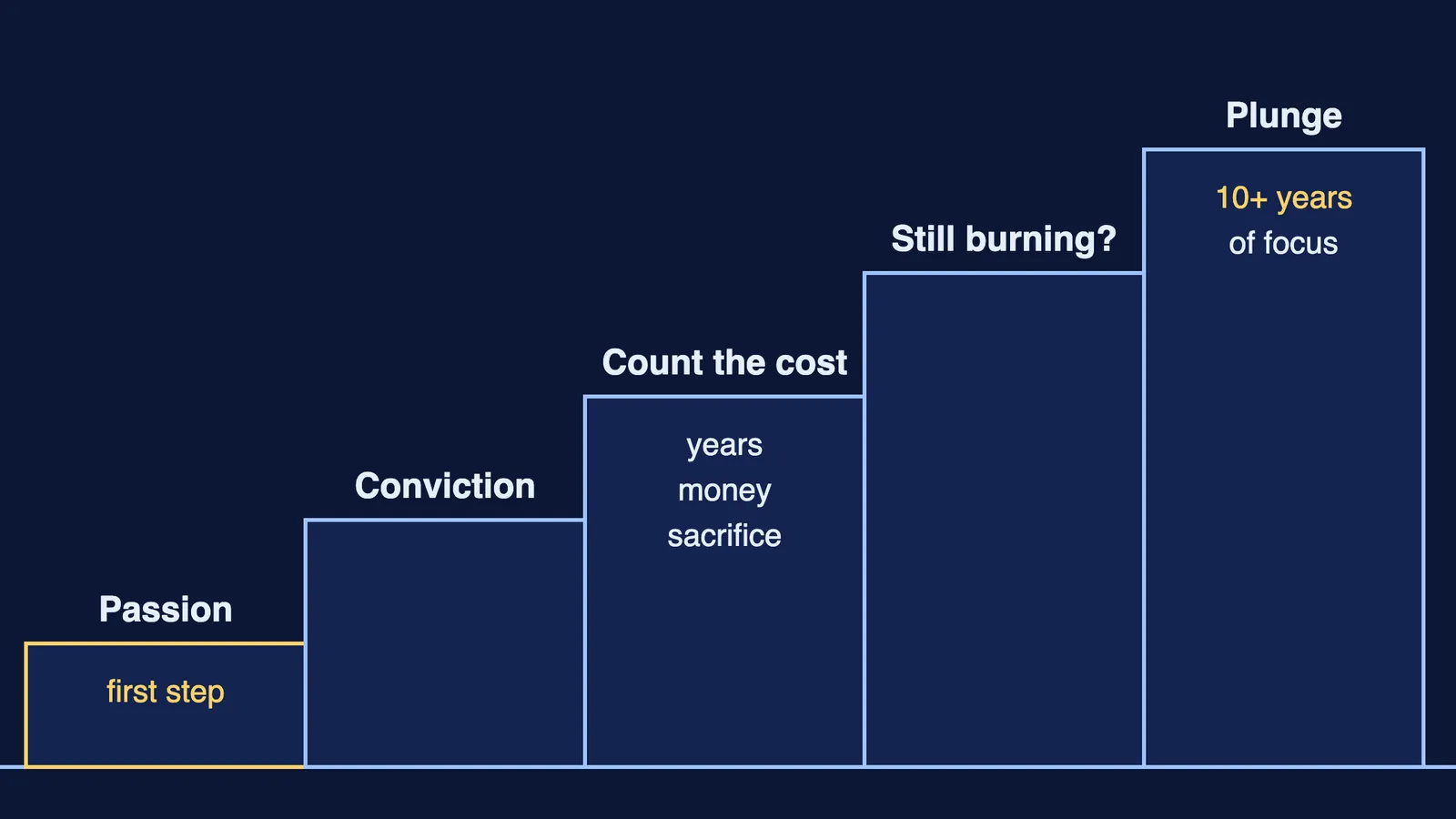
Ming has written about a dream, and her mother backs her, then gets practical. She tells Ming that reaching a world-class level in any field takes at least ten years of focused, intense work. She lays out a sequence: first a passion, then a conviction that the dream must be realised, then an honest count of the cost in years, money and sacrifice. Only if the desire survives that count should Ming throw herself in.
Three more ideas come up often in questions:
Nobody wins alone. Academy Award winners always thank the people who backed them.
Many dreams stay wishes. Some trade a dream for security; others lose it to war or a family's need for income.
Dreams can change. Her own youthful dream changed, and the book she finally published took her ten years. A later dream, she says, is worth as much as the first one.
The tone is encouraging but realistic.
What is the poem Believe in Yourself about?
The poem, by Robert Langley according to the Kaveri acknowledgements, has four stanzas of four lines each, printed in the Unit 8 chapter. It speaks to "you", alone before a hard choice with no audience watching, asks whether the future or fear will win, and admits how comfortable it is to keep things as they are. Its answer: staying put is not how people grow, the first move is the hardest, and self-belief keeps you on course.
For the exam, notice four things: the direct address to the reader, the rhetorical question in the second stanza, the contrast between comfort and growth in the third, and the regular rhyme on the second and fourth lines of each stanza. The unit ends with a second short poem for wider reading, Dorothy Hewitt's Always Believe in Yourself.
What are the main themes of Unit 8?
Effort and sacrifice: dreams need years of work, not just wishing.
Realism with hope: weigh the obstacles, then act if the desire is still strong.
Support: parents, teachers and friends are part of every achievement.
Change: goals can shift over a life without losing value.
Courage to begin: leaving your comfort zone is where growth starts.
For long answers, link them: the letter covers the long middle of a dream, the poem its first step. For more on effort and ability, read our post on Carol Dweck's growth mindset research.
How will this unit be tested in the CBSE Class 9 exam?
The CBSE Class 9 English Language and Literature curriculum for 2026-27 prescribes Kaveri for both R1 and R2. In the R1 paper, literature is worth 30 marks. Extract-based questions carry 10 marks: one extract out of two from drama or prose and one out of two from poetry. Short answers carry another 10 marks, with five of six questions answered in 40-50 words each. Two longer answers of about 120-150 words, each chosen from two questions, carry 5 marks each: one on theme, plot or character, one asking you to think beyond or across texts.
The letter also uses could in several senses, from possibility to unreal wishes, so revise our modals guide for Classes 9 and 10 alongside it.
How do I write a 40-50 word answer on this unit?
Here is a practice question we wrote, with a model answer.
Question: Why does Ming's mother ask her to count the cost before chasing her dream?
Model answer (47 words): Ming's mother wants her daughter to be realistic. She explains that excellence needs years of focused work, money and sacrifice. If Ming still wants the dream after weighing these costs, her commitment will last through hard times. So the advice protects the dream rather than discouraging it.
Try these yourself:
How does the mother show that success is never a solo effort?
Why does the poem call comfort tempting but not good for us?
Long answer: Compare the advice of the letter and the poem. Which matters more for a student today, planning or courage?
A 20-minute revision plan: list the letter's five stages from memory (5 minutes), mark the poem's question, contrast and rhyme (5 minutes), and write the three answers to the word limit (10 minutes).
If your dream runs through science or maths and you don't know where to begin, Fermi's AI tutor can work out what you already know and build a plan for the session, so the first step is a clear one.