

On this page
Modals are short words such as can, may and must that change what a sentence means. Learn them by meaning, not as a list, and the board grammar questions get much easier.
Are modals in the Class 10 CBSE syllabus?
Yes. Modals are one of five grammar topics in the CBSE Class 10 English Language and Literature (code 184) syllabus for 2026-27, alongside determiners, tenses, subject-verb concord and reported speech (CBSE Class X English syllabus 2026-27). The same document gives grammar 10 marks, tested through gap filling, editing and transformation, with ten of 12 questions to be attempted.
The Class IX syllabus for 2026-27 is written as competencies under NCF-SE 2023 (CBSE Class IX English 2026-27), so ask your teacher how grammar is tested; the meanings below are the same.
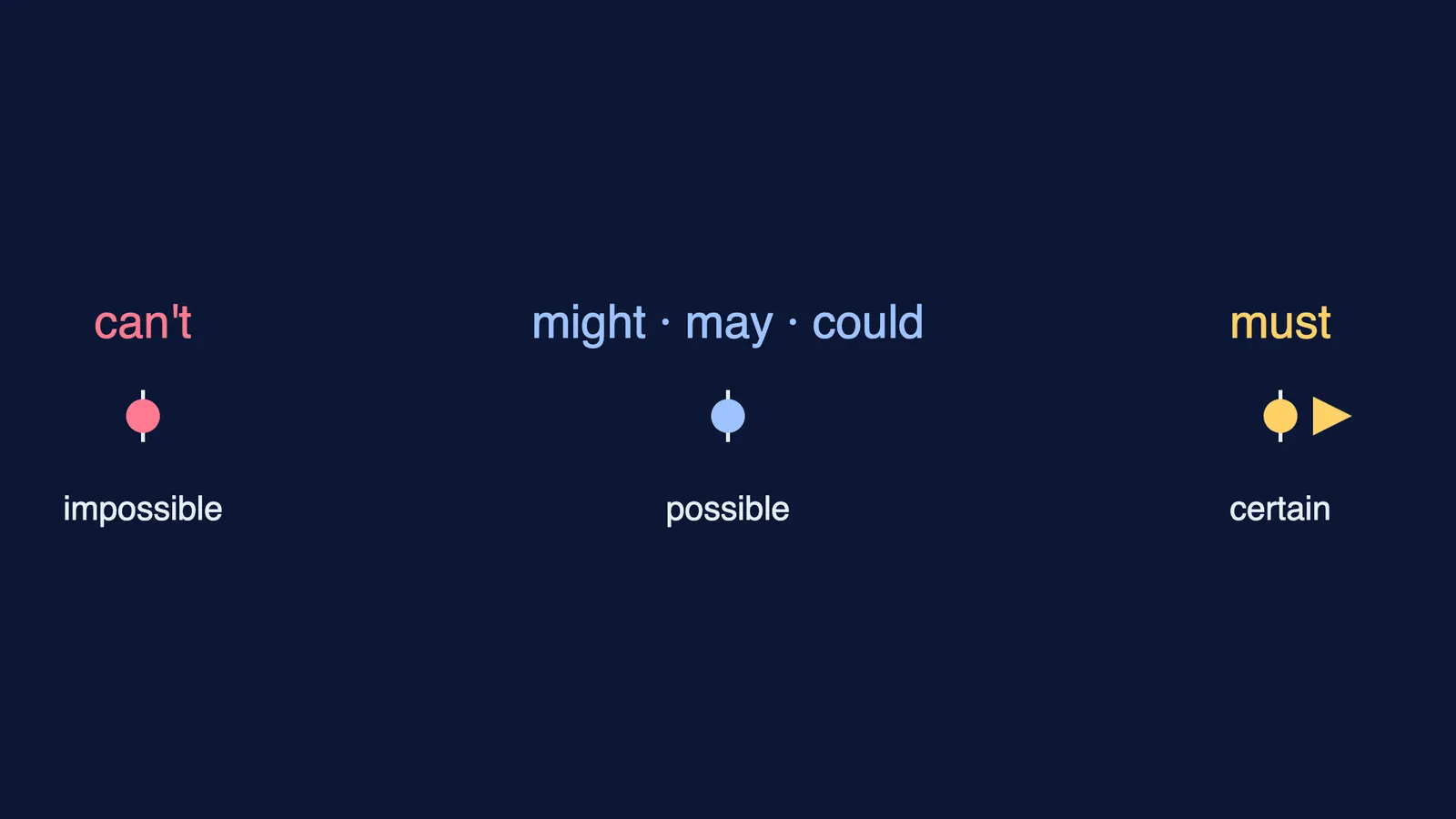
“We use modals to show if we believe something is certain, possible or impossible,” says the British Council, which adds that we also use them to talk about ability, ask permission, and make requests and offers (British Council LearnEnglish). They also express obligation and advice.
What are the rules for using modals?
Three rules cover most editing questions:
A modal is followed by the base verb without “to”: “It can be a surprise”, never “It can to be a surprise” (English modal auxiliary verbs, Wikipedia). Ought to is the exception that keeps “to”.
No -s with he, she or it: “She can try”, not “She cans try” (same source).
Questions put the subject after the modal (“Can you swim?”), and negatives add not: cannot, could not (LearnEnglish: can and could).
Can, could, may, might, must, should and ought to: what does each mean?
Ability:
can for present ability: “He can swim like a fish” (LearnEnglish: can and could).
could for past ability: “She could speak several languages.” The British Council says “We use could and couldn’t to talk about the past” (LearnEnglish: ability).
Permission and requests:
can and could for everyday requests: “Could I have some tea, please?” (LearnEnglish: modal verbs)
may for formal permission: “May I borrow the car tomorrow?” and “You may go now.” May not refuses permission and is formal and emphatic (LearnEnglish: may and might).
Possibility and certainty:
may, might and could say something is possible but not certain: “They might be at home.”
must says you are sure and have a reason: “It’s getting dark. It must be quite late.”
can’t says something is impossible: “That can’t be true.” (LearnEnglish: probability)
Obligation and prohibition:
must says something is necessary: “You must stop at a red light.”
mustn’t forbids: “You mustn’t make any noise in the library.” (LearnEnglish: suggestions and obligations)
don’t have to says there is no requirement: “You don’t have to do this” (Wikipedia).
Advice and duty:
should gives advice: “You should send an email” (LearnEnglish: suggestions and obligations).
ought to has meanings similar to should, expressing expectation or requirement, and ought not to can replace shouldn’t (Wikipedia): “You ought to have done that earlier.”
How do you choose the right modal in a gap-filling question?
Ask the sentence three questions, in this order:
Is the speaker judging how likely something is? Sure, with evidence: must. Unsure: may, might or could. Impossible: can’t.
Is someone allowed, required or forbidden? Allowed: may or can. Required: must. Forbidden: mustn’t. Not required: don’t have to.
Is it advice or ability? Advice: should or ought to. Ability: can now, could in the past.
Worked example: “The lights are off and the car is gone. They ___ be out.” Step 1 fits: the speaker is judging, and has two clues. So the answer is must.
In editing questions, scan for the three rule-breakers: “can to”, “musts” and “should to”. Each is a single word to fix.
Practice sentences with answers
Fill in each blank with a modal:
Ravi’s bag is on the bench, so he ___ be somewhere in school.
When I was six, I ___ ride a bicycle without help.
___ I leave the room, ma’am?
You ___ use your phone in the exam hall. It is against the rules.
Tomorrow is a holiday, so you ___ wear your uniform. (use have to)
You look tired. You ___ sleep early tonight.
Take an umbrella. It ___ rain this evening.
We ___ to respect our elders.
Answers: 1. must 2. could 3. May (Can or Could are less formal) 4. mustn’t 5. don’t have to 6. should 7. might (may and could also fit) 8. ought
Modals build on subject-verb agreement and present, past and future tenses. Parents can also read helping your child with English when you are not fluent.
When board revision moves on to science and maths, Fermi's AI tutor can work out what you already know and build a plan for the session, so you sit down to a clear next step.


