

On this page
Many parents in India went to school in Hindi, Tamil, Bengali or another language, and now watch their children study in English. Your job is not to be the English teacher. It is to keep your child reading, listening and talking every day, in any language, and to give them a reason to use the English they are learning.
Here are four things that work without fluency, and a one-week plan to start.
Does reading in my home language help my child's English?
It can, for the basic skills of reading. A 2011 meta-analysis by Monica Melby-Lervåg and Arne Lervåg in the Journal of Research in Reading pooled correlational studies of learners reading in two languages. It found a moderate to large correlation between phonological awareness (hearing the sounds inside words) and decoding (turning letters into sounds) in the first language and the same skills in the second. The link for spoken vocabulary was small, so your home language does not replace English words, and the decoding link varied with the writing system. Still, the sound skills a child builds reading Marathi or Telugu tend to go with the same skills in English.
Indian policy points the same way. The National Education Policy 2020 summary published by UGC says the medium of instruction until at least Grade 5, and preferably till Grade 8 and beyond, will be the home language, mother tongue, local or regional language. We cover that in more depth in what NEP 2020 and research say about home language.
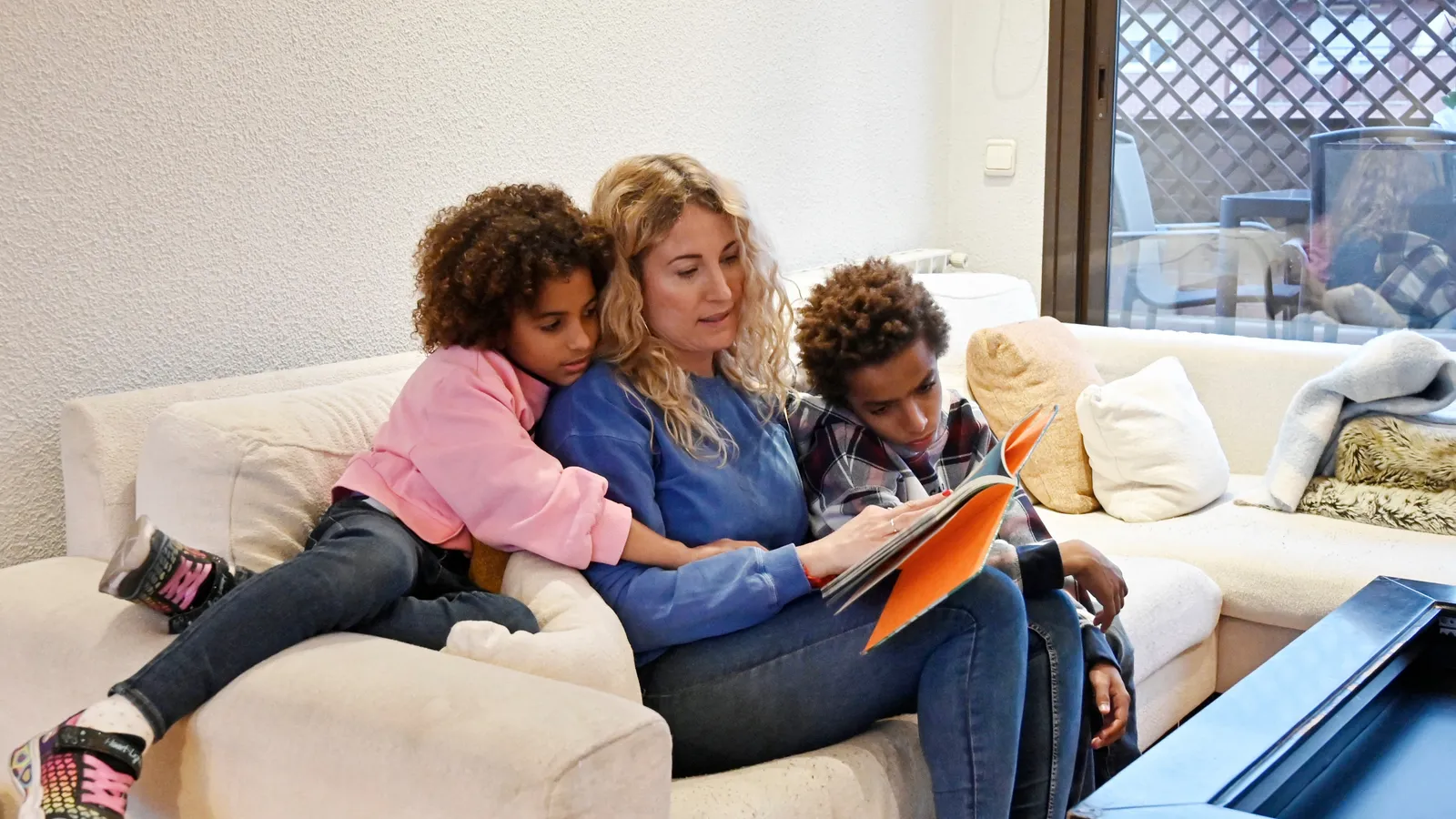
So read with your child in the language you are comfortable in. Ask questions about the story, point at pictures, let them guess what happens next. The method is explained in our guide to dialogic reading with young children. If you find the same story in both languages, read your version first; then let your child read the English one to you.
How can audio and subtitles help if I can't pronounce the words?
Let recordings do the pronouncing. Play English audiobooks or read-along stories while your child follows the printed words, and turn on English subtitles when they watch English shows.
In a 2022 eye-tracking study in the Journal of Eye Movement Research, 136 weak readers from a remote village in Rajasthan watched popular Hindi film clips of dialogue and songs with and without same-language subtitles. The researchers found that 70 percent of them engaged in unprompted reading while watching clips with subtitles. That study used Hindi subtitles on Hindi films, not English, so it does not prove the same for English shows. But it suggests that when the words on screen match the words being spoken, many viewers start reading along.
Labels and everyday English at home
Labels put English into daily life. Ask your child to write English labels for things in the house: door, window, fridge, kitchen, shoes. Once a week, swap two labels and see if they notice. Add a short English list next to your shopping list, and ask them to read it out at the shop.
Why should I ask my child to teach me English?
Explaining something to another person is a well-studied way to learn it. A 2018 meta-analysis of 28 studies by Keiichi Kobayashi in Japanese Psychological Research found that, compared with studying without expecting to teach, preparing to teach improved learning (effect size 0.35), and preparing and then actually teaching improved it more (0.56). The benefit of teaching was larger when students expected and did interactive teaching rather than a one-way explanation.
A parent who really does not know the word is a genuine listener. Try this script after school:
'Teach me three English words you learned today.'
'How do you say it? Say it slowly so I can copy you.'
'Can you use it in a sentence about our house?'
'I forgot one. Which was it again?'
Ask them to check your pronunciation. Being corrected by your child is not a loss of face; it shows them that adults keep learning.
A one-week plan: 15 minutes a day
Monday: read a story together in your home language and talk about the pictures.
Tuesday: play an English audio story while your child follows the text; you listen too.
Wednesday: your child makes five English labels for the house.
Thursday: 'teach me three words' at dinner.
Friday: watch an English show with English subtitles on.
Saturday: your child reads an English page aloud to you and explains it in your language.
Sunday: quiz each other on the labels, with the child as quizmaster.
Older children often meet a different problem: they read English fine but get stuck on science written in it. Our guide to studying science in English when you think in another language covers that. The Fermi Concept Library has a lesson for every concept in physics, chemistry, biology, mathematics and computing, so your teenager can read one and then teach it back to you in your language.
Pick one night from the plan and start tonight.


