On this page
Many Indian families speak one language at home, another with neighbours and a third at school. Parents often wonder whether using the home language will hold a child back in English, or whether switching to English early will help. India's National Education Policy takes a clear position, and research gives a more nuanced one. This post covers both, and what you can do at home either way.
What does NEP 2020 say about the mother tongue?
Paragraph 4.11 of the National Education Policy 2020 says: "Wherever possible, the medium of instruction until at least Grade 5, but preferably till Grade 8 and beyond, will be the home language/mother tongue/local language/regional language." It applies to both public and private schools. The policy also says high-quality textbooks, including in science, will be made available in home languages, and that teachers will be encouraged to use a bilingual approach with students whose home language differs from the medium of instruction.
Paragraph 4.14 adds a goal parents of science students will like: bilingual textbooks and materials for science and mathematics, "so that students are enabled to think and speak about the two subjects both in their home language/mother tongue and in English."
Note the words "wherever possible". How each state and school applies the policy varies, so ask your school what it does in practice.
Why does the language of teaching matter so much?
A child cannot learn from a lesson they do not understand. UNESCO's Global Education Monitoring Report estimated in 2016 that 40% of the world's population does not access education in a language they understand. In a multilingual country like India, a mismatch between home and school language is common.
What do studies actually find?
The evidence leans in favour of early learning in a familiar language, with important caveats.
Ethiopia. Students there switch to English instruction in Grade 5, 7 or 9 depending on the region. Using this variation, Seid (2019) estimated that learning in the mother tongue in Grades 1 to 4 raised Grade 5 maths scores by 0.159 standard deviations, suggesting those students learned better once they switched to English.
Europe. A meta-analysis by Reljić, Ferring and Martin (2015) found a small positive effect on reading for bilingual programmes that use the home language of minority-language children, compared with programmes that teach only in the majority language. Only five studies qualified, so the authors call for more research.
Kenya. Not every programme works. In a randomised trial reported by Piper and colleagues (2018), adding mother-tongue literacy instruction gave no extra benefit for English or Kiswahili and slightly lower maths results, partly because teachers used the mother tongue little in other subjects.
India. A study of 1,272 primary school children from low-income homes by Vogelzang and colleagues (2025) found that minority-language children who did not get mother-tongue education did worse when reading in the regional language. Growing up in a multilingual household helped English reading. Sites with more mother-tongue education did better in regional-language literacy but worse in English.
The pattern: a familiar language helps children grasp ideas, but English and other languages still need deliberate, well-taught support.
What can parents do at home?
Keep using your home language for real talk. Explaining, arguing, storytelling and asking "why?" build thinking skills that carry across languages.
Do science and maths talk in the home language too. Ask why the roti puffs up, how far the bus stop is, or how many cups of water the plant needs. The idea comes first; the English word can follow.
Make a two-column word list. When a new science term appears at school, such as evaporation or friction, write the English term next to your language's word or a simple explanation. Our post on studying science in English has more strategies for older students.
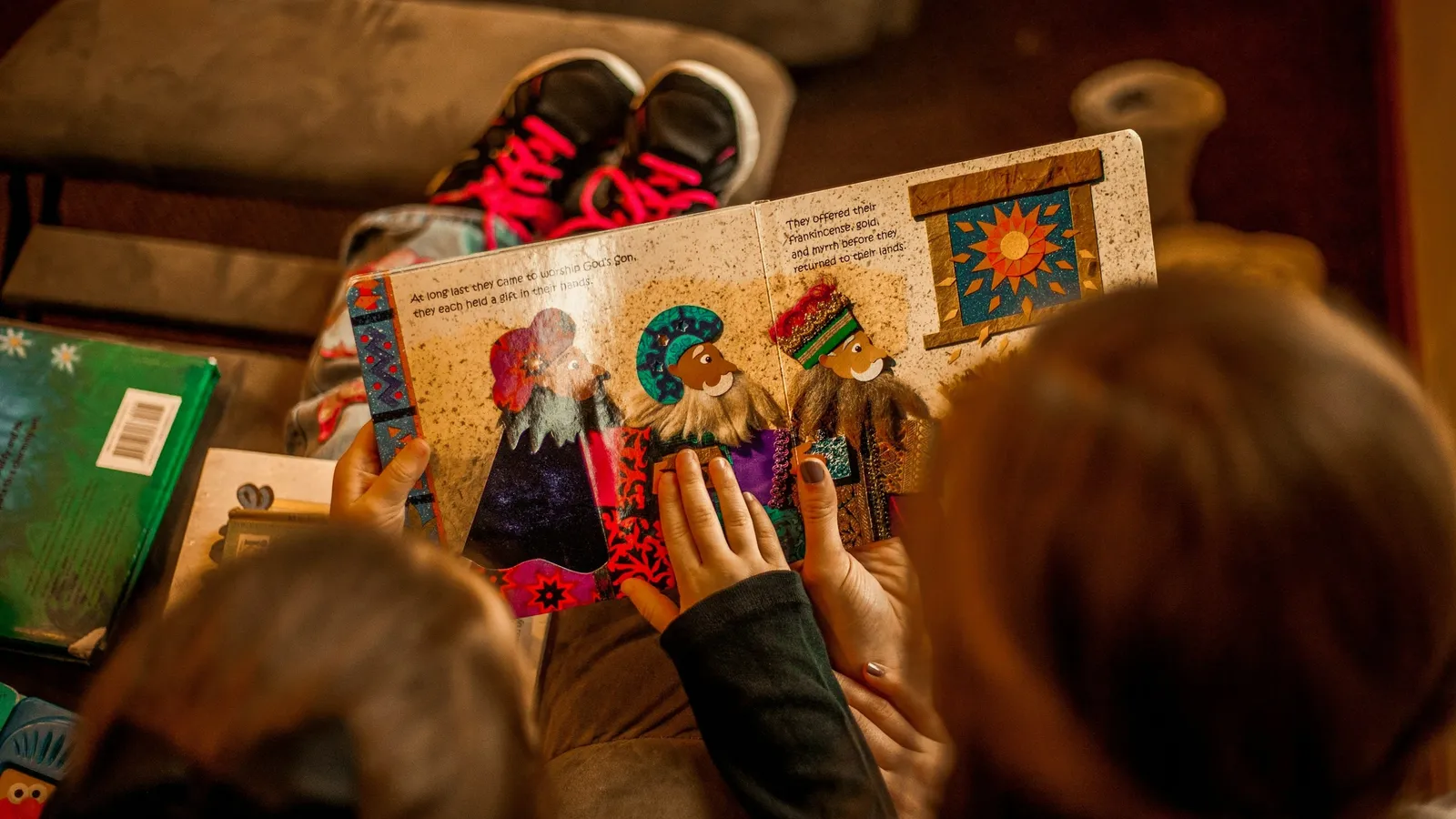
Read in both languages. Stories, comics and newspapers in the home language count as reading. Shared reading with young children works in any language.
Talk to the school. Ask whether teachers explain difficult ideas in the local language, and whether bilingual materials are available.
What if my child is struggling with English-medium science?
Look at whether the problem is the language or the idea. Ask your child to explain the topic to you in your home language. If they can, the gap is vocabulary, and a word list will help. If they cannot, the concept itself needs work. In that case, the Fermi Concept Library gives every concept in physics, chemistry, biology and mathematics its own lesson, so you can find the one idea that is missing.
Tonight, ask your child to explain one thing from today's science lesson in your home language, and write down any English words they had to borrow.