On this page
The NCERT Class 11 Biology excretion chapter (kebo116, Reprint 2026-27) is Chapter 16, and it sits under Unit 5, Human Physiology, in the NEET (UG) 2026 syllabus. The lists below hold 20 of its values, each as the PDF prints it (ranges and "nearly" kept), with its section and the NCERT number it is confused with. This is a study summary, not medical advice.
For a revision habit that spans chapters, see our single-sheet method for NCERT biology numbers. For the concepts behind these numbers, read our worked NEET guide to excretion, from nephron to counter-current.
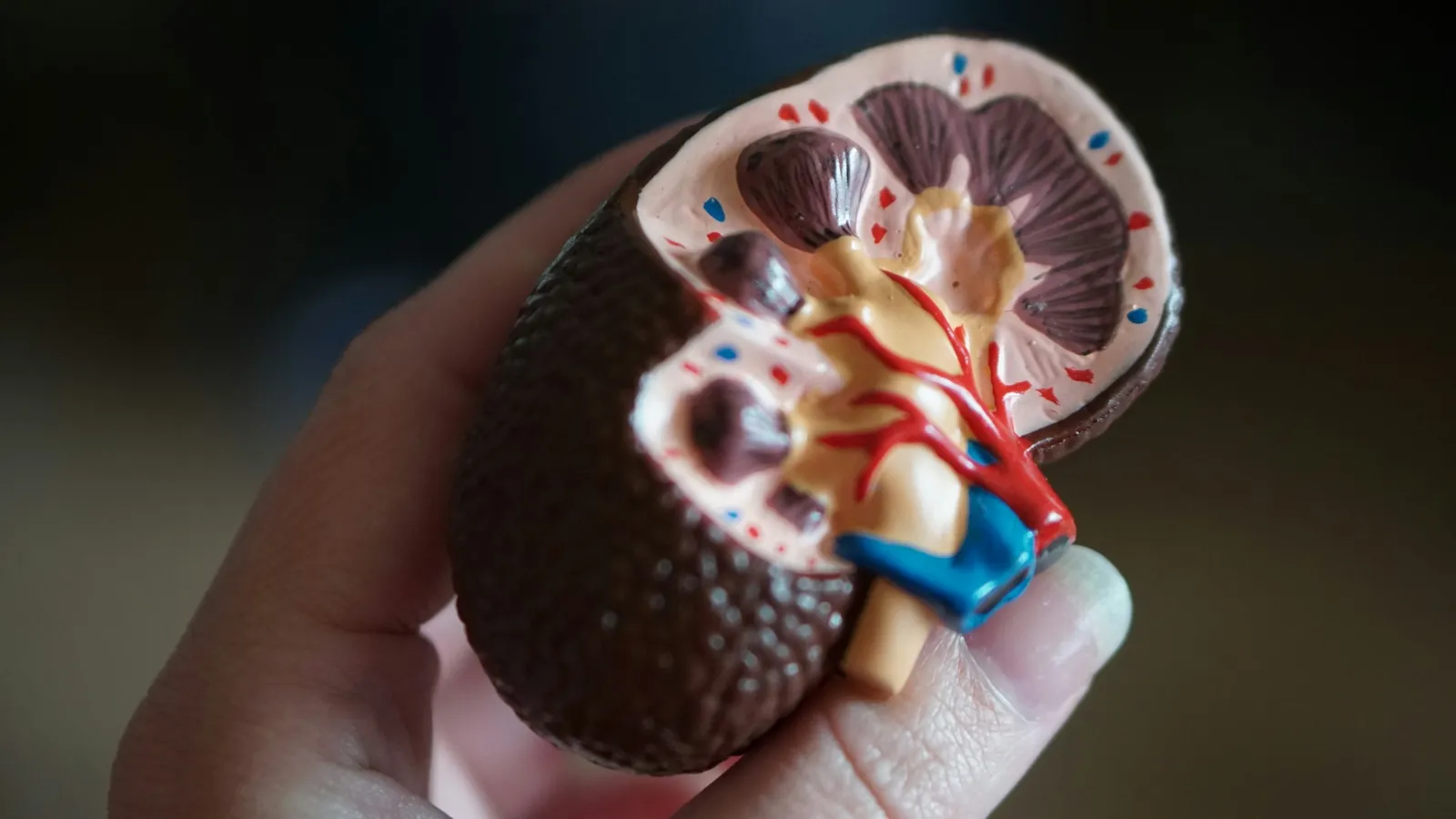
What sizes and counts does NCERT give for the kidney?
10-12 cm: Length of each adult kidney. Often swapped with 5-7 cm, the width (NCERT 16.1).
5-7 cm: Width of each kidney. Often swapped with 2-3 cm, the thickness (NCERT 16.1).
2-3 cm: Thickness of each kidney. Often swapped with 5-7 cm, the width (NCERT 16.1).
120-170 g: Average weight of each kidney. Often swapped with 125 ml/minute, the GFR (NCERT 16.1).
Last thoracic to third lumbar vertebra: Where the kidneys sit. Watch the order: thoracic is the upper level, lumbar the lower (NCERT 16.1).
Nearly one million: Nephrons in each kidney, not in the pair. Often swapped with "over a million tubular structures", the Summary's wording (NCERT 16.1).
Which blood and filtrate volumes does NCERT give?
1100-1200 ml per minute: Blood filtered by the kidneys (Summary: "about 1200 ml"). Often swapped with residual volume, 1100-1200 mL, in Chapter 14 (NCERT 16.2).
Roughly 1/5th: Share of the blood each ventricle pumps out in a minute. Often swapped with nearly four times, the urine concentration factor (NCERT 16.2).
3 layers: Endothelium, Bowman's capsule epithelium, basement membrane. Often swapped with the three main processes of urine formation (NCERT 16.2).
Approximately 125 ml/minute: GFR in a healthy individual. Often swapped with 1100-1200 ml, the blood filtered (NCERT 16.2).
180 litres per day: Filtrate formed per day. Often swapped with 1.5 litres of urine (NCERT 16.2).
Nearly 99 per cent: Filtrate reabsorbed by the renal tubules. Often swapped with 70-80 per cent, the PCT's share (NCERT 16.2).
NCERT's residual volume averages 1100 mL to 1200 mL (section 14.2.1, Chapter 14, Breathing and Exchange of Gases). Tag one "blood, per minute", the other "air, after forced expiration".
Which percentages and concentrations does NCERT give?
70-80 per cent: PCT's share of water and electrolyte reabsorption. Often swapped with nearly 99 per cent, all tubules together (NCERT 16.3).
300 mOsmolL–1: Interstitial osmolarity in the cortex. Often swapped with about 1200, the inner medulla (NCERT 16.4).
About 1200 mOsmolL–1: Osmolarity in the inner medulla. Often swapped with 1100-1200 ml of blood per minute (NCERT 16.4).
Nearly four times: How concentrated urine can be compared with the initial filtrate. Often swapped with roughly 1/5th, the ventricle share (NCERT 16.4).
Which urine and other-organ numbers does NCERT give?
1 to 1.5 litres per day: Urine an adult excretes on average. Often swapped with the single 1.5 litres used in 16.2 (NCERT 16.6).
pH-6.0: Urine pH; NCERT calls it slightly acidic. Often mislabelled alkaline (NCERT 16.6).
25-30 gm per day: Urea excreted on average. Often swapped with 1 to 1.5 litres, the urine volume (NCERT 16.6).
Approximately 200mL/minute: CO2 removed by the lungs. Often swapped with 125 ml/minute, the GFR (NCERT 16.7).
Which numbers can you work out instead of memorising?
NCERT prints none of these results: they are our arithmetic from its numbers, checked in Python.
Filtrate per nephron. Two kidneys give about 2,000,000 nephrons. 180,000 ml a day ÷ 2,000,000 = 0.09 ml, about 90 microlitres per nephron per day. Per minute, 125 ml ÷ 2,000,000 is about 62.5 nanolitres.
Blood filtered in a day. 1100 ml × 1440 minutes = 1,584 litres; 1200 ml × 1440 = 1,728 litres. Keep this apart from the 180 litres of filtrate: one is blood passing through, the other is fluid that leaves it.
CO2 from the lungs in a day. 200 ml × 1440 minutes = 288,000 ml, or 288 litres, which is 1.6 times the 180 litres of daily filtrate. NCERT gives the CO2 figure per minute but the filtrate per day, so convert to the same unit before you compare.
Urine per minute. 1 to 1.5 litres ÷ 1440 minutes is about 0.69 to 1.04 ml a minute. Against a GFR of 125 ml/minute, that is under 1 per cent of the filtrate, which fits NCERT's "nearly 99 per cent" reabsorbed.
Quick recall check
A revision card says the lungs remove about 125 ml of CO2 a minute. Correct it, and name whose rate 125 ml/minute really is. About 200mL/minute of CO2 (16.7); 125 ml/minute is the GFR (16.2).
A model kidney in the lab is 6 cm wide and 4 cm thick. Which of the two fits NCERT's adult ranges? Only the width (5-7 cm); thickness should be 2-3 cm (16.1).
A worksheet diagram labels the cortex 1200 and the inner medulla 300 mOsmolL–1. What is wrong? The labels are reversed: 300 in the cortex, about 1200 in the inner medulla (16.4).
An option says "the PCT reabsorbs nearly 99 per cent of water". Which two percentages are merged? The PCT takes back 70-80 per cent of the water and electrolytes (16.3); nearly 99 per cent is the whole tubule's reabsorption of filtrate (16.2).
A statement reads "urine is slightly alkaline, with a pH of 6.0". Which word breaks it? "Alkaline": NCERT calls urine at pH-6.0 slightly acidic (16.6).
A diagram caption places the kidneys between the last cervical and third thoracic vertebrae. Correct both ends. Last thoracic and third lumbar (16.1).
One friend writes "about 10 lakh nephrons per kidney", another "over a million". Who matches NCERT? Both: 10 lakh is one million. Section 16.1 says nearly one million; the Summary says over a million.
A fill-in reads "an adult excretes 25-30 litres of urea a day". Fix the unit and give the urine volume. 25-30 gm of urea; urine is 1 to 1.5 litres a day (16.6).
Which of these numbers still swaps places for you? Fermi's AI tutor works out what you already know and builds a plan for the session.