On this page
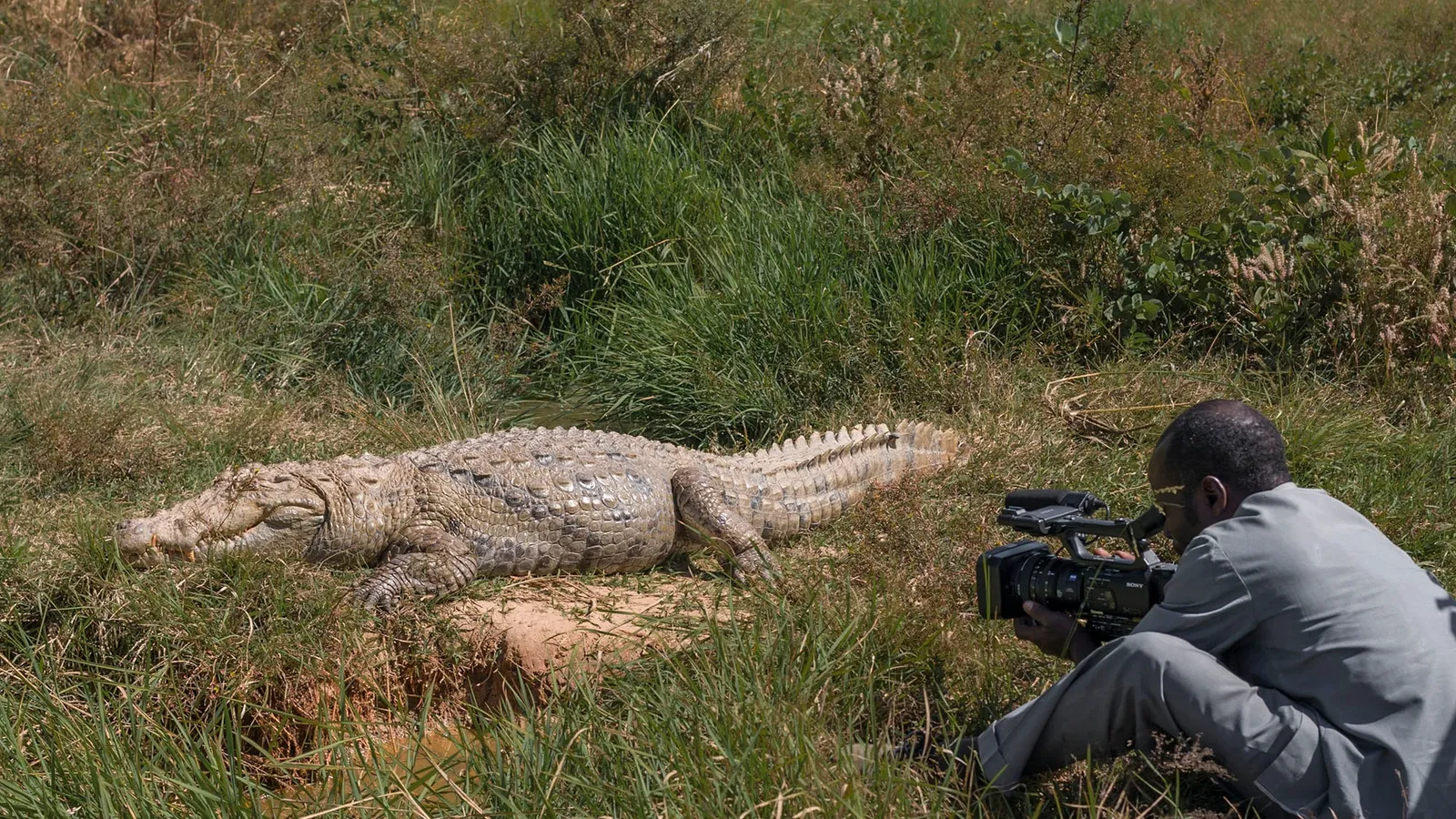
A nature documentary looks like luck: the camera happens to be there when the whale surfaces. In practice it is years of planning, and much of that planning is biology. If you like animals, read papers for fun and want to tell stories, this is a real career, and a biology degree is one way in.
How is a nature documentary actually made?
The numbers behind a big series show the scale. According to TVBEurope's production report, Planet Earth III was filmed over nearly five years and took 1,904 days of filming.
The same report says some shoots were managed remotely: director Will Ridgeon sat at home in Bristol, directing a camera on a remotely operated vehicle two miles beneath the sea's surface. It also names Abdullah Khan, a self-taught cameraman from Pakistan, who filmed the Indus river dolphin for the series.
Broadly, a film moves through four stages:
Story research: finding a behaviour or a scientific finding worth showing, and checking it with the scientists who study it.
Planning: where and when the animal can be found, permits, kit and safety.
Filming: often weeks of waiting for a few minutes of usable footage.
Edit and script: shaping the footage into a story that stays true to the science.
Where does a biology degree fit in a documentary team?
The entry role that uses your science most is the researcher. Seth Daood, a researcher at the BBC Natural History Unit, told Creative Lives in Progress in 2023 that "my job is to find some of the exciting stories you see in nature documentaries produced by the BBC."
In the same interview he says that "you spend a lot of time reading scientific research papers and articles, trying to decide if they look like an interesting story and are worth pursuing." After that, he talks with scientists and organises the logistics for shoots, supporting the producer. He studied Natural Sciences at Cambridge, and he looked for openings on the BBC jobs board, Creative Access, The Talent Manager, ScreenSkills and Twitter.
If you are still choosing a degree, our guide to career options after a BSc in Zoology shows where that degree leads beyond film.
What are the routes into science documentary work for biology students?
There is no single exam or licence. These are the main routes, and many people combine two:
A field biology master's in India. The NCBS Masters in Wildlife Biology and Conservation in Bengaluru is offered once every two years and teaches effective communication using a variety of media alongside field research.
A wildlife filmmaking degree abroad. The MA Wildlife Filmmaking at UWE Bristol is a one-year full-time course co-designed with producers, directors and production managers from the BBC's Natural History Unit. It normally asks for a 2:1 honours degree or above and an online portfolio, which can include film, photography, writing or illustration.
A fellowship in India. The Green Hub Fellowship in Tezpur, Assam, is a one-year residential programme that selects 20 fellows every year from northeast India, aimed at young people from remote areas and marginalised communities. It teaches photography, videography, editing and storytelling, with a natural history overview.
Festivals for first films. The CMS Vatavaran environment and wildlife film festival in New Delhi lists a student film award for environment and wildlife conservation films made by a student or group of students from any school or college.
A 12-month plan to test this career while you study
You can find out whether you like this work long before paying for a course.
Months 1-2: watch like a researcher. Pick one documentary episode. List every animal behaviour it shows and find the scientific paper or field study behind one of them. Our parents' guide to science documentaries to watch with kids has starting points.
Months 3-4: read papers. Read one short paper a fortnight on an Indian species. Write a three-line summary: what was found, how, and why a viewer would care.
Months 5-6: write a pitch. Use this template: "Most people think [species] does [X]. A study in [place] found [Y]. We would film [the moment] in [season], with help from [the researcher]." Fill it only with facts you have checked.
Months 7-10: make a two-minute film. Use a phone, a local park or lake, and a single behaviour such as birds feeding.
Months 11-12: show it and ask. Send your film to a student festival and ask one working filmmaker or field biologist for 15 minutes of advice. Our guide on how to talk to professionals about careers has a script for that message.
Papers will use ideas you have not met yet in Class 11 or a first-year BSc. When that happens, the Fermi Concept Library has every concept in biology, chemistry, physics, mathematics and computing, each with its own lesson, so you can look up the term and get back to the paper.
Start with the first step this month: one episode, one behaviour, one paper.