On this page
Virology is the study of viruses: how they get into cells, copy themselves and spread, and how the immune system and vaccines stop them. No single entrance exam makes you a virologist in India. You get there through a chain of degrees and national fellowships.
Which subjects should you take after Class 10?
Take biology with physics and chemistry in Class 11 and 12. Biology covers cells, genetics and immunity; chemistry covers the proteins, DNA and RNA you will handle in a lab. Keep your maths going too: it helps later with statistics, and the GAT-B exam described below opens with Class 12-level questions in physics, chemistry, maths and biology.
After Class 12, the usual first step is a BSc in microbiology, biotechnology, biochemistry, zoology or life sciences, or a BTech in biotechnology. MBBS and veterinary degrees lead here too, but they are not the only way in. If you are weighing up a microbiology degree, our guide to microbiology degree jobs in pharma and food safety shows where else that degree can take you.
How do you get into an MSc in virology in India?
The best-known dedicated course is at the ICMR-National Institute of Virology (NIV) in Pune. According to NIV's academic page, the two-year MSc Virology began in 2005 and runs with the Department of Biotechnology, Savitribai Phule Pune University. It takes 20 students a year, and its entrance exam is usually held in May or June.
With only 20 seats, keep a second route open: an MSc in biotechnology or an allied subject. The national entrance for these courses is GAT-B. The Department of Biotechnology's GAT-B 2026 notice says the exam is run by the National Testing Agency for DBT-supported postgraduate programmes. Students admitted to a DBT-supported MSc in biotechnology or allied sciences get a stipend of Rs 5,000 a month.
What do you need for a PhD in virology or immunology?
NIV's PhD programme is affiliated with the Academy of Scientific and Innovative Research (AcSIR). It takes candidates who already hold a national fellowship: ICMR-JRF, CSIR-UGC-JRF or DBT-JRF. That makes the fellowship exams a core part of the plan. Our explainer on CSIR NET JRF and who should take it covers how one of them works.
For immunology, the BRIC-National Institute of Immunology (NII) in New Delhi works the same way. Its doctoral programme page asks for a master's or four-year bachelor's degree in any area of science and technology, an MVSc or MBBS, plus an active five-year fellowship from an agency such as CSIR, UGC, DBT or ICMR. Scholars are picked by interview, around 25 to 30 a year, and the PhD is awarded by the Regional Centre for Biotechnology, Faridabad. For more on that side of the field, see our guide to an immunology career after a BSc.
What does lab work in virology actually look like?
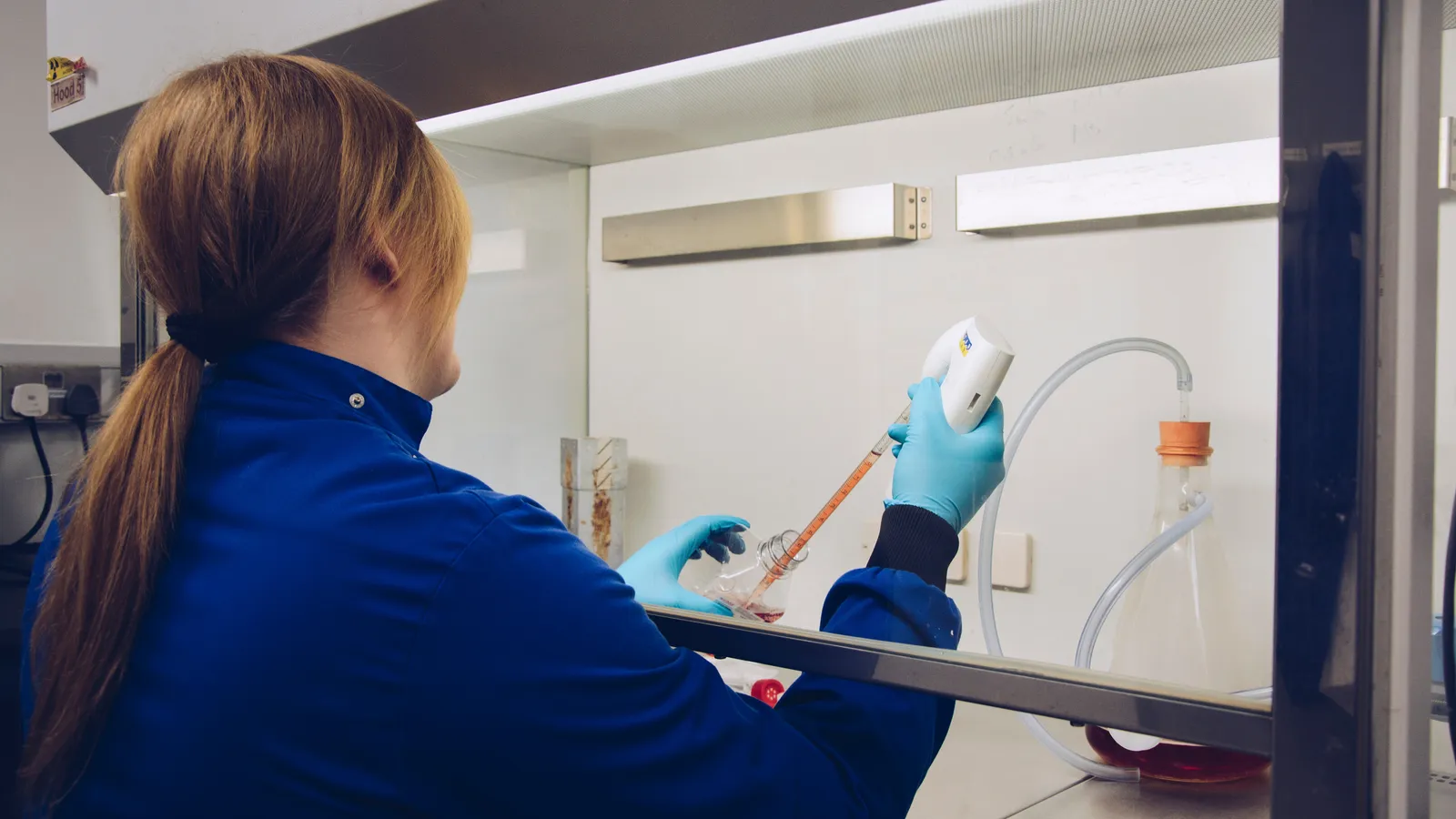
Viruses can only multiply inside living cells. So much of the week goes into cell culture: growing cells in flasks inside a safety cabinet, feeding them fresh medium, and keeping them free of contamination. Then come the measurements: PCR to detect viral genes, antibody tests to measure the immune response, microscopy, sequencing and data analysis. Experiments often fail before they work, so patience matters more than speed.
Safety shapes everything. WHO's Laboratory biosafety manual, 4th edition, published in December 2020, builds on an evidence-based, transparent assessment of risk, so that precautions match the actual risk of each piece of work. At the far end of that scale, NIV's maximum containment facility (BSL-4) has been running since 2012. It works on high-risk pathogens such as Nipah, CCHF, KFD, SARS-CoV-2 and mpox. Students begin with much lower-risk work and strict training.
Not all virology is basic research. ICMR says the Department of Health Research and ICMR have set up 145 Viral Research and Diagnostic Laboratories across India, and in 2018-19 these labs investigated 323 outbreaks. That is the public-health side of the work.
A plan from Class 11 to your first research lab
Class 11 and 12: master the NCERT chapters Human Health and Disease, and Molecular Basis of Inheritance.
BSc years 1 and 2: get really good at sterile technique, and keep a proper lab notebook.
BSc summers: email research labs to ask for a summer project. Keep it short: your year and subject, a paper of theirs you read, and one technique you want to learn over six to eight weeks.
Final BSc year: sit the NIV entrance and GAT-B, and apply to other MSc courses as a backup.
MSc: treat the dissertation as a test run of a PhD, and prepare for the JRF exams alongside it.
PhD: choose your supervisor and lab as carefully as the topic.
If a school chapter such as antibodies or DNA replication feels shaky, the Fermi Concept Library has a lesson on every concept in biology and chemistry, each with its place in the wider map. If you don't know where to start, Fermi's AI tutor works out what you already know and builds a plan for the session.