On this page
You turn the page, read the first question, then the second, and neither looks like anything you practised. Your stomach drops and a voice says the whole paper will be like this. It almost never is. What you do in the next two minutes matters more than those two questions.
Why does the paper feel harder than it really is?
Two unfamiliar ones in a row feel like a pattern, even though they are a tiny sample. A tough opening tells you very little about page three.
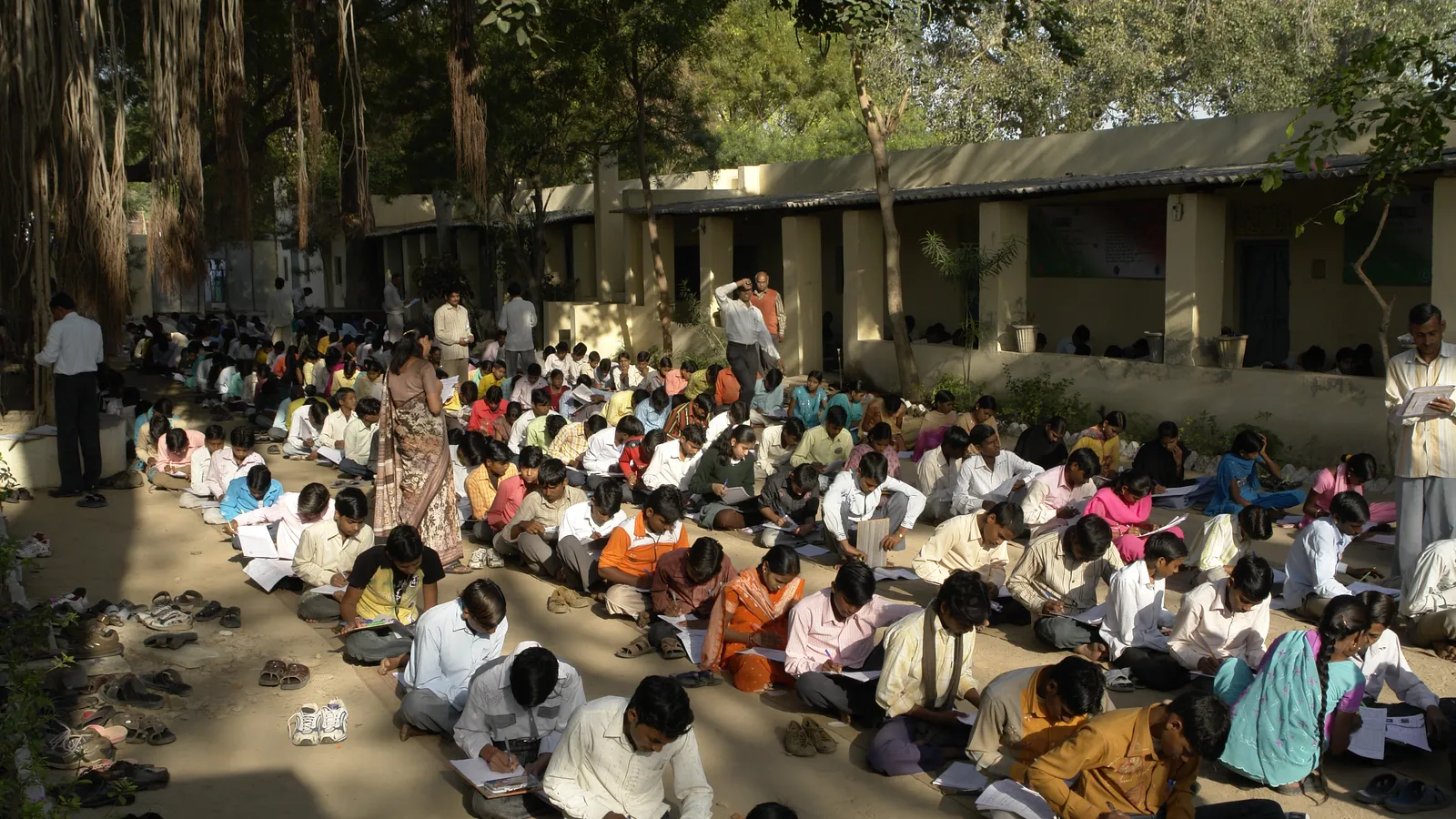
The second thing to know: if the paper is hard for you, it is hard for the hall. The National Testing Agency's published normalisation procedure (written for CUET-UG 2022) says plainly that candidates who get "a relatively tougher set of questions" are "likely to get lower marks", which is why it calculates percentiles separately for each shift. Under that method, your percentile is worked out against the candidates who sat your shift. A brutal paper pulls everyone's raw marks down, not just yours.
What should you do in the first two minutes?
Run these three steps in order.
Skip fast. Give any question that looks unfamiliar about a minute. If you can't see a first step by then, mark it in the margin and move on. Skipping is a decision, not giving up.
Find three sure questions. Scan ahead for three questions you know you can finish: a direct formula, a definition, a short calculation. Do those first, carefully.
Name the nerves, then reframe them. A racing heart is your body getting ready to work. In a study of students preparing for the GRE, Jamieson and colleagues told one group that arousal improves performance; that group scored higher on the maths section than the control group, both in the lab and on their real GRE one to three months later.
What does a reset look like in a real paper?
Say you open a physics paper. Question 1 is a rotation problem with an unfamiliar set-up. Question 2 is a long circuit. The next few minutes:
0:00 to 1:00: read Q1, no first step comes. Write "R" in the margin and turn on.
1:00 to 1:40: read Q2, it looks long. Note it as "later, doable" and turn on.
1:40 to 3:00: scan the paper. Q6 is a lens formula question, Q9 is unit conversion, Q11 is a graph you have drawn before. Those are your three.
3:00 onwards: solve Q6, Q9 and Q11 fully. Then go back to Q2, then Q1 last.
If the worry voice starts, say this in your head: "This is hard for everyone in this room. I'm going to bank three questions, then decide."
A note on what the research tested. Ramirez and Beilock's Science paper found that a brief expressive writing task, done immediately before an important test, improved exam scores, especially for students who are habitually anxious about tests. If worry is loud on exam day, briefly writing down what you are worried about just before you go in is the closest match to what was studied.
Does skipping a question cost you marks?
Skipping costs nothing unless you never come back. Staying stuck on one question can cost you several you could have solved. In exams with negative marking, a blank answer also loses nothing extra, while a wild guess might, so check the marking scheme in your own exam's official notice before the day.
If you tend to get stuck on one question at home, practise the one-minute rule in mocks. Our guide on what to do when your child spends too long on one question has drills for that habit. If your mind goes completely empty rather than just tense, read what to do if you blank out during an exam.
What should you do after a hard paper?
Go home, eat, and do not replay every question. If there is another exam tomorrow, use this plan for a bad paper today with an exam tomorrow.
After the exams, look back at the questions you skipped. Usually you were stuck on a method, not missing the whole topic. The Fermi Problem Library has worked problems with a step-by-step solver that explains the reasoning rather than printing an answer, so you can see where your first step went wrong.
Parents, the most useful thing to say after a hard paper is short: "Sounds like a tough one for everyone. What did you manage to finish?" It points to what went right without pretending the paper was easy.
If worry about exams stops you sleeping, eating or functioning for days, talk to a doctor or counsellor. Tele MANAS is the government's toll-free mental health helpline, offering telephone counselling and referrals around the clock, according to the Press Information Bureau.
Next time the first page looks impossible: skip fast, find three, and remember the whole room is reading the same paper.