On this page
You walk into class on day one and you are the only girl, or one of a handful. Nobody has said anything wrong, yet you feel watched when you raise your hand, and you leave without asking your doubt. This guide is for you, and for your parent.
Why does being the only girl in a coaching class feel uncomfortable?
Research suggests the room itself is part of the problem. In an experiment published in PNAS, Dasgupta, Scircle and Hunsinger (2015) placed undergraduate women in engineering into small groups with different gender mixes. Women participated more actively in groups that were mostly female, and felt less anxious in female-majority groups than in groups where they were a minority, especially in their first year.
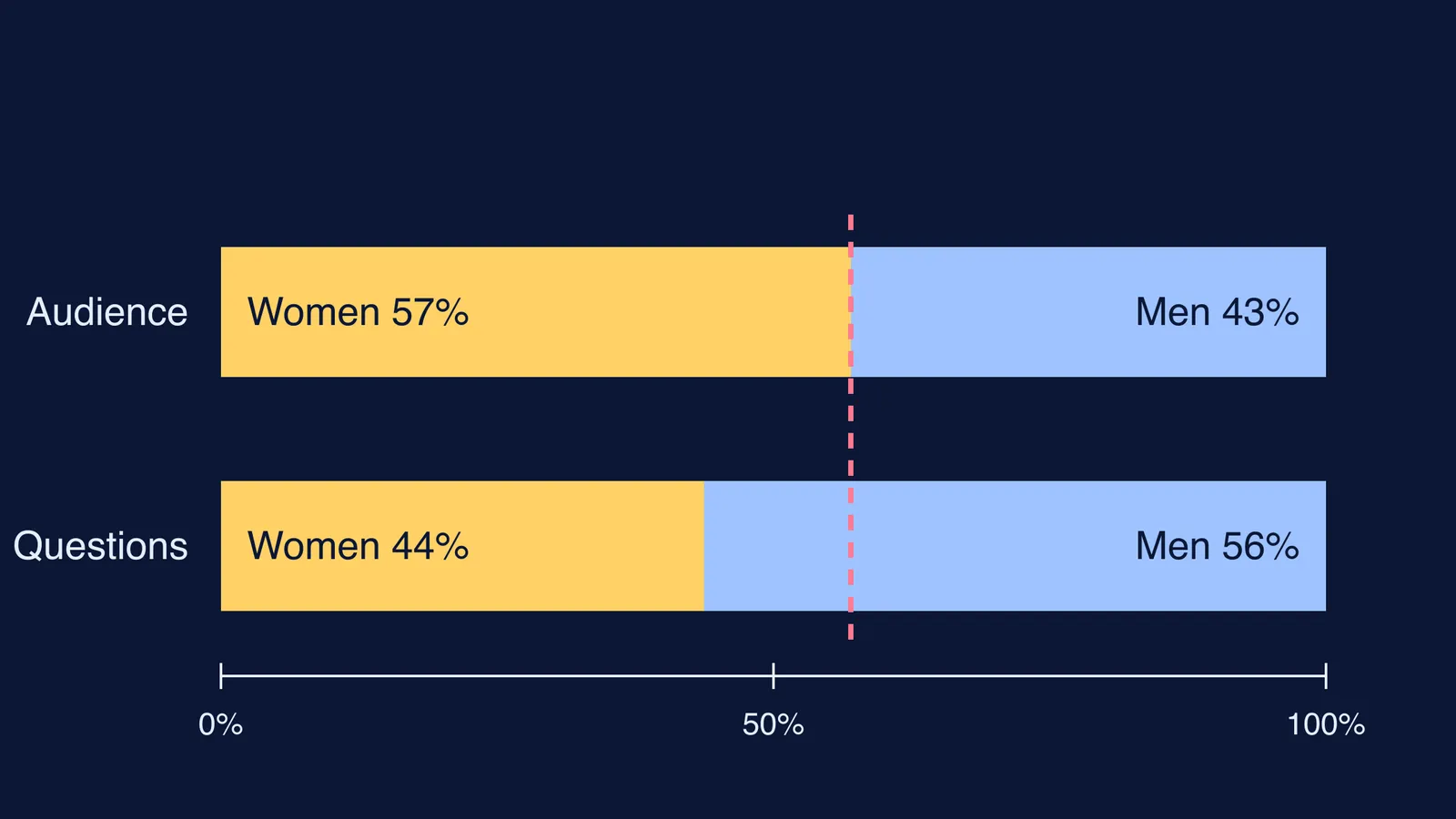
Speaking up is the hardest part. At a 2015 conservation biology conference where women were on average 57% of the audience, men still asked 152 of the 270 questions, according to Hinsley, Sutherland and Johnston (2017) in PLOS ONE. After accounting for who was in the room, men asked about 1.8 questions for every question asked by a woman.
So going quiet in a batch of mostly boys is a common response to being outnumbered. It says nothing about how good you are at physics or maths.
How do I ask doubts in class without feeling awkward?
A specific question is easier to ask than a vague one. Try this routine for two weeks.
Before class, write one doubt on a slip of paper, in one line.
Sit near the front, where the teacher can see your hand easily.
Ask about a step, not the whole topic: 'In the second line, why does the friction term change sign?'
If someone laughs, stay on the question: 'I'd like to follow this. Could you show that step once more?'
If you still can't ask aloud, take it to the doubt session or the teacher straight after class, the same day.
If you want to sharpen a doubt before saying it aloud, Fermi's AI tutor notices where you are stuck and decides whether to explain, ask or show, so you walk into class knowing which step to ask about.
How do I find a study partner in a batch of mostly boys?
Your study partner does not have to be in your batch.
Girls in other batches of the same institute, in the self-study room or at test-series centres.
A classmate of any gender whose work habits match yours: on time, does the homework, explains well.
A fixed weekly slot, such as Sunday after the test, in a shared space like the library.
A clear agenda for each session: one chapter, ten questions, swap and check.
For why explaining a solution to someone else helps you learn it, see our guide to peer instruction and convincing a classmate. For building a circle in a new place, see how to make friends in a new coaching city.
How can I travel to and from coaching safely?
Make a simple travel plan with your parents and stick to it.
Share your live location on the way there and back, and send a 'reached' message.
Keep the same route and timings so a delay gets noticed.
For late batches, ask the institute what arrangements exist, and travel with a batch-mate where you can.
Keep your phone charged and save the emergency numbers.
Women Helpline 181 is a toll-free 24-hour service that connects women to the Emergency Response Support System (ERSS) and to One Stop Centres, says the Ministry of Women and Child Development. ERSS is reached on 112, and the government has decided to integrate 181 with Childline 1098 and ERSS 112, which matters if you are under 18.
Where can I raise a concern about a teacher or classmate?
Match your step to what happened.
A one-off comment that bothers you: say calmly, 'Please don't say that,' and tell a parent the same day.
It repeats, or it comes from staff: write to the centre head or counsellor by email, with the date, what was said or done, and who saw it.
Nothing changes: take it outside the institute. The Ministry of Education's Guidelines for Regulation of Coaching Center, circulated to states on 16 January 2024, include a grievance and complaint redressal mechanism. Our guide on where to complain against a coaching institute in India explains the routes.
Touching, following, threats or anything that makes you feel unsafe: tell a trusted adult at once and call 112.
Keep a short dated note of each incident on your phone.
If worry is affecting your sleep or study, talk to someone. Tele MANAS is a toll-free government mental health helpline: call 14416 or 1-800-89-14416.
Pick one step from this list for this week, perhaps the doubt slip, and try it in your next class.