On this page
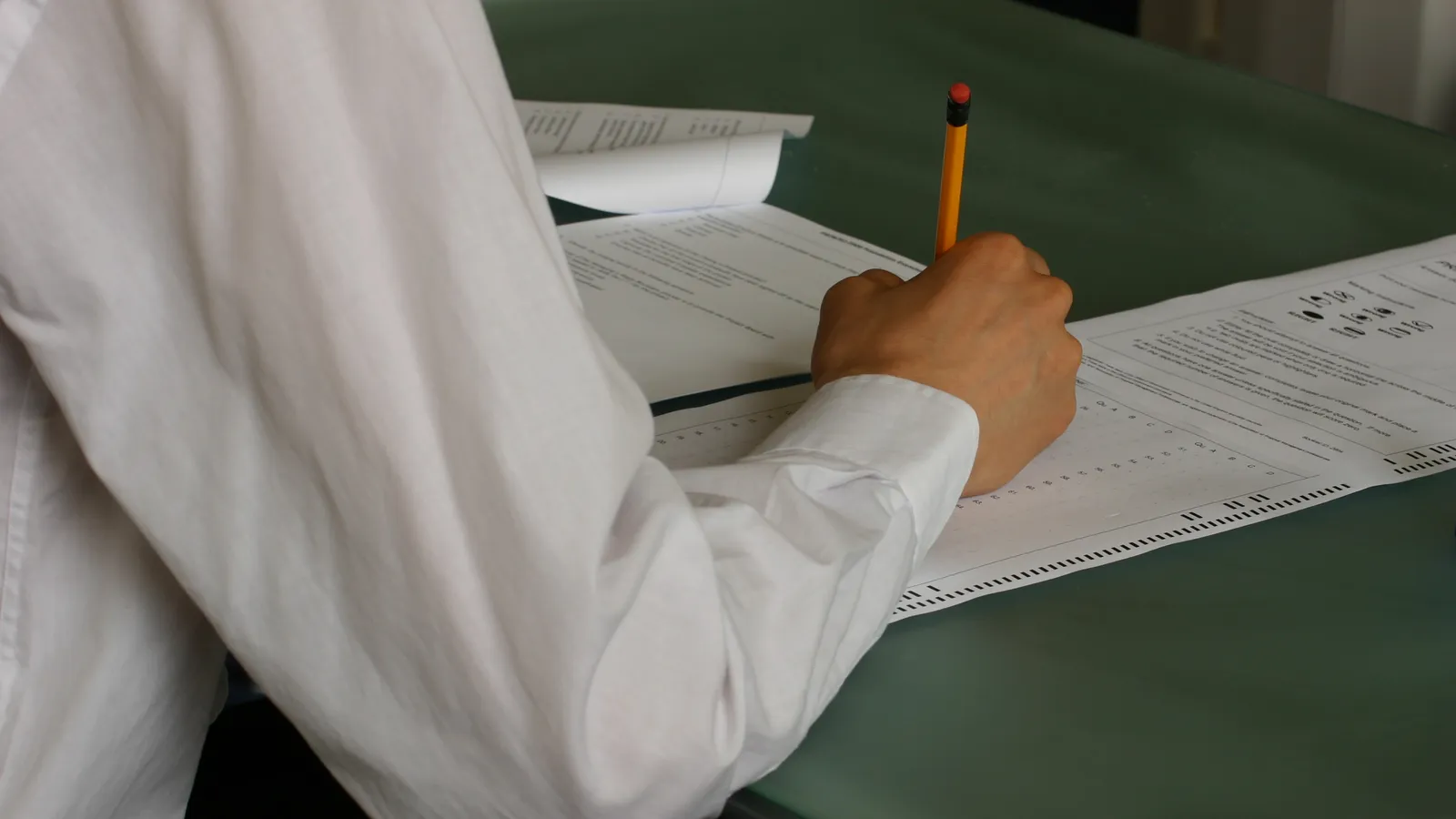
The result list is out and your name is not on it. Before you decide you are "not an olympiad person", give the paper one honest hour. Lost marks usually come from two different problems with two different fixes, and you cannot plan next year until you know which cost you more.
Why didn't I clear the olympiad first stage?
According to the HBCSE stages page, the National Standard Examinations (NSEs) are objective tests organised by the Indian Association of Physics Teachers, with teachers' associations for chemistry and biology. Only the best-performing students from the NSEs, approximately 400 in each subject, qualify for the second stage, the Indian National Olympiads, the same page says. In maths, the first stage is the Indian Olympiad Qualifier in Mathematics, a three-hour paper with 30 questions, according to the HBCSE mathematical olympiad page.
For the NSEs, then, the cut-off is relative, and a decent score can still miss. The result list does not tell you where your marks went; the paper does.
How do you review an olympiad paper you didn't clear?
Get the question paper and a reliable set of solutions. Then go through every question you got wrong, skipped or guessed, and put each one in exactly one bucket:
Didn't know the idea. The concept was new or half-learnt.
Knew the idea, couldn't use it. You recognised the topic but could not set up the problem or chose the wrong method.
Knew how, slipped. A sign, a unit, a misread word, a wrong bubble.
Never really got to it. You ran out of time or guessed blind.
To separate the buckets, close the solutions and try the question again, untimed, with no notes. If you solve it cleanly, the loss was exam technique (buckets 3 and 4). If you still cannot, it was a knowledge gap (buckets 1 and 2).
In a review of the research, Janet Metcalfe of Columbia University concluded that experiments show making errors and then getting corrective feedback helps learning, that errors made with high confidence are corrected more readily than low-confidence ones, and that feedback including analysis of the reasoning behind the mistake is crucial (Annual Review of Psychology, 2017). Write one line per question: "I assumed friction acted up the slope" teaches you more than "wrong answer".
Is it a knowledge gap or exam technique?
Here is an illustrative tally from a Class 11 student's NSEP paper (the numbers are invented to show the method):
7 questions in bucket 1: mostly rotation and thermodynamics, which they had not finished.
4 in bucket 2: they knew conservation of momentum but could not set up the collision problems.
5 in bucket 3: two sign errors, two unit slips, one wrong bubble.
4 in bucket 4: last section never reached.
Eleven losses are knowledge, nine are technique. "More practice" is too vague; this student needs two unfinished chapters, a habit of setting up problems before calculating, and timed papers with a slip checklist.
If bucket 4 is large, keep a per-question time log in practice papers; this guide to tracking time per question in mock tests shows how. For bucket 1 gaps, the Fermi Concept Library covers every concept in physics, chemistry, biology and mathematics, each with its own lesson, so you can rebuild a missing topic before you practise it.
How should you plan for next year's olympiad?
First check that you can sit again. For the science olympiads, the HBCSE eligibility page says you must be studying in Class X, XI or XII at the time of enrolment; it also sets date-of-birth limits. Then build the year around your buckets:
Months 1 to 4: close bucket 1. Learn the chapters behind your bucket 1 questions, one at a time.
Months 3 to 7: fix bucket 2. Solve fewer problems but harder ones, and write out the method before you calculate. When a solution goes wrong, the Fermi Problem Library has a step-by-step solver that explains the reasoning, so you can see where your setup went off.
Months 6 to 10: train buckets 3 and 4. Do full timed papers with a slip checklist. For harder practice, HBCSE posts past national olympiad papers with solutions.
Every month: rerun the bucket review on one practice paper and watch which bucket shrinks.
If you are also preparing for JEE, read how to prepare for olympiads alongside JEE before you fix your hours.
What should parents say after an olympiad result?
Keep the first talk short and about the paper, not the rank. You could say: "That's disappointing, and you clearly worked for it. When you're ready, shall we sort the questions you lost into what you didn't know and what slipped? Then we'll know what next year needs." Then let your child lead the review.
The Tele MANAS number is listed by the Press Information Bureau. Start your bucket review this week, while the paper is still fresh.