

On this page
Who presents the slides, who writes the report, whether your internship can shift your hours around semester exams: these are all negotiations. It is tempting to give in to keep the peace or dig in and argue. There is a third way, and it takes three steps.
What is negotiation, in simple terms?
Negotiation is a conversation in which two people who need something from each other try to agree on what happens next. The method of the Harvard Negotiation Project, set out by Roger Fisher, William Ury and Bruce Patton in *Getting to Yes*, starts by separating a person's position from their interests (Program on Negotiation, Harvard Law School).
A position is what someone says they want: "I'm not doing the presentation."
An interest is the reason behind it: stage fright, or a tuition class that clashes with the practice slot.
Positions often clash where interests do not. The same article describes two siblings arguing over hosting their parents' anniversary at home or in a restaurant. One had no time to prepare; the other worried about cost. Once they said so, an affordable restaurant suited both.
Why do students get stuck in negotiations?
Usually because they assume that whatever the other person gains, they lose. In a 1990 study, Leigh Thompson and Reid Hastie found that most negotiators went in expecting the other side's interests to be completely opposed to their own (Thompson and Hastie, Organizational Behavior and Human Decision Processes). A substantial number failed to notice when their interests were fully compatible with the other side's, and settled for suboptimal agreements. So do not assume the pie is fixed until you have asked.
What are the simple steps to negotiate well?
Step 1 is to prepare for ten minutes. Before the conversation, write down five things:
My interest: what I actually need, not just what I am asking for.
Their likely interest: my best guess, to check by asking.
My fallback: what I will do if we do not agree. Negotiators call this your BATNA, the best alternative to a negotiated agreement (Program on Negotiation).
Two or three options that could work for both of us.
A fair standard we could both accept: the marking rubric, a college rule, the internship offer letter.
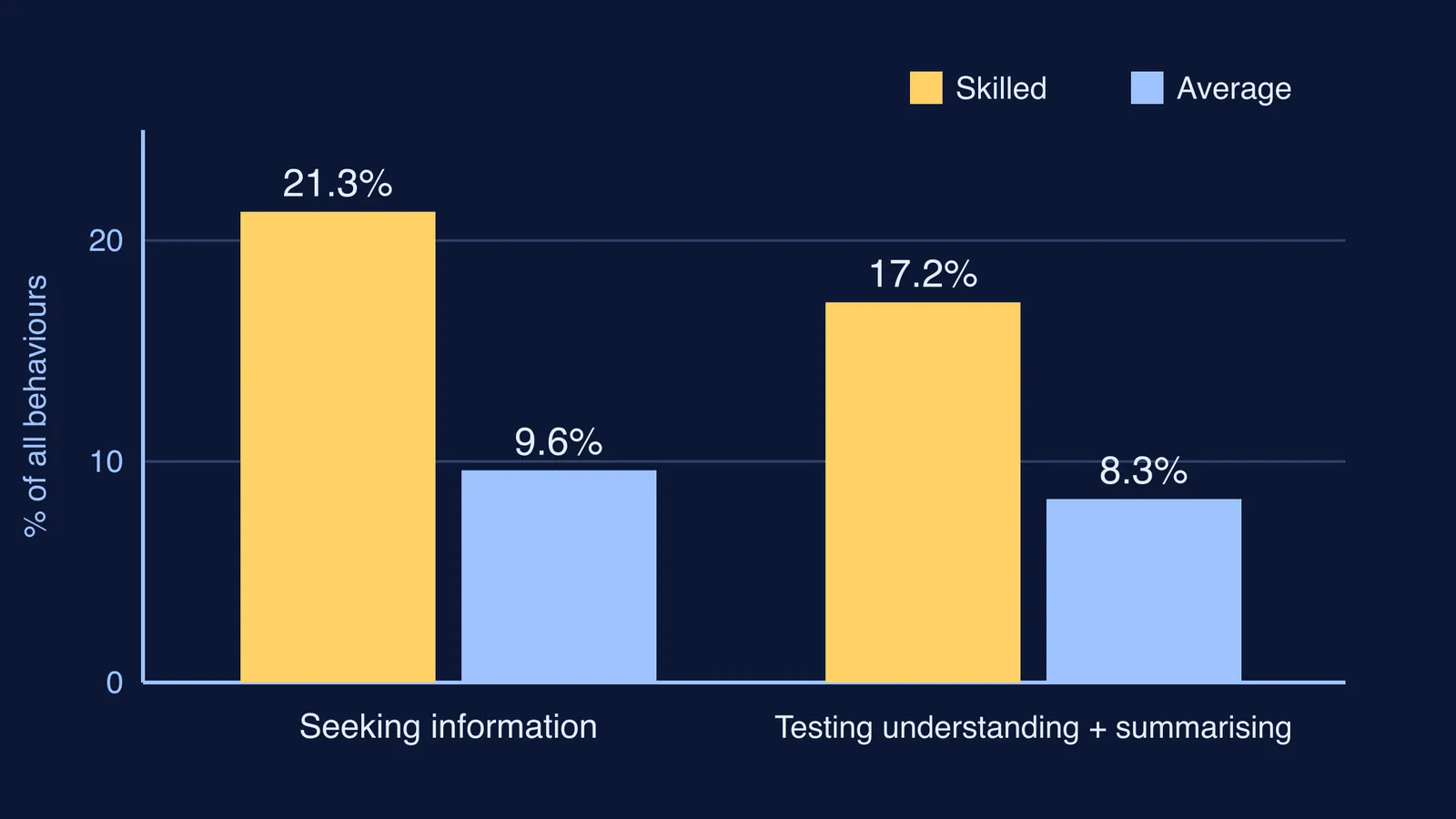
Step 2 is to ask, then play back what you heard. The training firm Huthwaite International observed 49 negotiators who met its success criteria, including being rated effective by both sides, over 103 real negotiating sessions, and compared them with an average group (Huthwaite International report). Seeking information made up 21.3% of what the skilled negotiators did, against 9.6% for the average group. Testing understanding and summarising made up 17.2% of their behaviour, against 8.3%. The report also notes that a question can be an acceptable alternative to direct disagreement.
Lines you can use:
"What makes Friday hard for you?"
"So the problem isn't presenting, it's answering questions. Have I got that right?"
"Let me check where we are: you do the data, I do the slides, and we both rehearse on Thursday."
Step 3 is to find the shared interest and write it down. List options before picking the one that serves both interests best, then post the agreement in the group chat.
What does this look like in a group project?
Four Class 11 students are building a physics project on projectile motion. Kabir says he will not present. That is a position.
Ask: "What part of presenting bothers you?" Kabir is unsure of the physics and does not want to be caught out by the teacher's questions.
Play back: "So you're fine speaking, you just want to be sure of the concept?" Yes.
Shared interest: the group needs a confident presenter; Kabir needs to understand the topic.
Option: Kabir presents the demonstration, a teammate takes the theory questions, and Kabir spends one evening on the concept before rehearsal.
If the stuck point is the science itself, the Fermi Concept Library has a lesson for every concept in physics, chemistry, biology, mathematics and computing, so whoever takes that part can catch up before the group meets again. If a teammate is not working at all, that is a different problem; see our plan and scripts for group project teammates not doing their work.
How do you negotiate in an internship?
The same steps apply, with extra care over the fair standard. Before asking for anything, reread what you agreed to; our guide on what to check in an internship offer letter lists the terms to look for. Then try something like:
"My end-semester exams run for two weeks next month. I want to keep the dashboard on schedule. Could I work mornings only during those weeks and make up the hours the week after? Is there a deadline in that period I should plan around?"
It states your interest, respects theirs, offers an option and ends with a question. For debates in front of the whole class, our post on how to open, add, listen and disagree in a group discussion covers the speaking side.


