

On this page
Marine biology in India is a research career more than a single job title. You get there through a life-science or fisheries degree, a specialised master's, and then project work in a government institute or university lab.
What should you study to become a marine biologist in India?
There are two main routes, and both start with Physics, Chemistry and Biology in Class 11 and 12.
The science route. You take a BSc in zoology, botany, microbiology or another life science, then a master's in marine biology or a related subject. Annamalai University's centre at Parangipettai in Tamil Nadu is one long-standing example: it began in 1957 as a field laboratory and was recognised by the UGC as the Centre of Advanced Study in Marine Biology in October 1963, and its faculty runs postgraduate courses including a two-year course in marine biotechnology. If you are already in a zoology BSc, our guide to career options after a BSc in Zoology covers the other doors the degree opens.
The fisheries route. You take a Bachelor of Fisheries Science (BFSc) at a fisheries college, then a Master of Fisheries Science (MFSc). The Central Institute of Fisheries Education in Mumbai was set up on 6 June 1961, came under ICAR in 1979 and became India's first fisheries university in 1989; its MFSc specialisations include Mariculture and Fisheries Resources Management. ICAR's own entrance exam once listed fisheries among its undergraduate disciplines, but from 2023-24 those admissions moved to CUET-UG. Check the current NTA and college notices for dates and eligibility, because these change every year.
Which institutes and labs hire marine biologists?
Most jobs sit in government research bodies and universities, such as:
CSIR-National Institute of Oceanography (NIO), Goa. Based at Dona Paula, its research covers biological, chemical, geological and physical oceanography.
ICAR-Central Marine Fisheries Research Institute (CMFRI), Kochi. It began as a marine fisheries research station in Madras on 3 February 1947, joined ICAR in 1967 and moved its headquarters from Mandapam to Kochi in 1972.
Centre for Marine Living Resources and Ecology (CMLRE), Kochi. An office of the Ministry of Earth Sciences, it operates the research vessel FORV Sagar Sampada for fishery, chemical, physical, biological and benthic studies.
Your first role is usually a project post: project assistant, junior research fellow or field technician on a funded study. Our guide to project assistant jobs in research labs after a BSc explains how those are advertised and how to apply. For longer research careers, the Joint CSIR-UGC NET decides eligibility for a Junior Research Fellowship, for Assistant Professor posts and for PhD admission.
What does marine biology fieldwork actually involve?
Fieldwork usually happens in three settings.
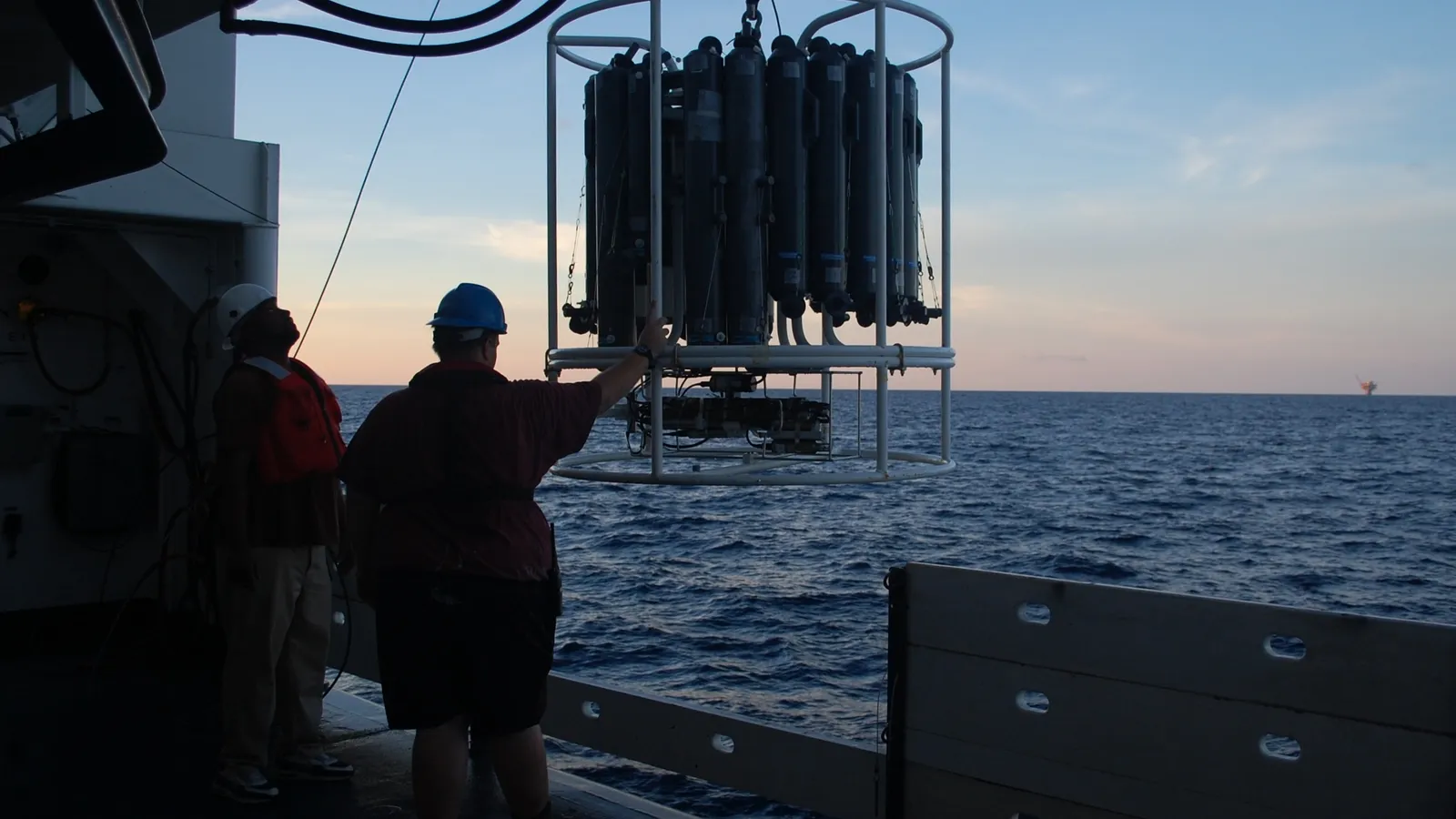
Cruises at sea. NIO's research ship Sindhu Sadhana carries 29 scientists and 28 crew and has an endurance of 45 days. Days follow a station schedule: stop, lower water samplers, haul plankton nets, label samples, move on.
Coasts, estuaries and mangroves. Annamalai's centre has easy access to an estuary, mangroves, backwaters and coastal waters, and a seaworthy boat for field collections. Expect tide tables, mud, early starts and repeated trips to the same sites, season after season.
Fish landing centres. CMFRI developed a stratified multistage random sampling method to estimate marine fish landings along India's coast. Work like this can mean long days at harbours, measuring and identifying catch.
Then come weeks in the lab: sorting and identifying specimens, running chemical and DNA analyses, cleaning data and writing reports. If the ocean side interests you more than the animals, see our piece on the oceanography career path for science students.
How can you plan for a marine biology career, stage by stage?
Class 11-12: take PCB and keep your basics in ecology, classification and animal physiology strong. If a chapter such as plankton food chains or osmoregulation feels shaky, the Fermi Concept Library gives every biology concept its own lesson and shows its place in the map.
BSc or BFSc years: pick electives in ecology or statistics, volunteer for a professor's field project, and learn basic data handling.
Master's: choose a programme with a field station or boat access, and do your dissertation on real field samples.
After the master's: apply for project posts at institutes like CMFRI, NIO and CMLRE, and sit the Joint CSIR-UGC NET for a research fellowship.
Long term: a PhD for a scientist's post; specialised skills such as taxonomy, remote sensing or molecular methods make you easier to hire.
If you don't know where to begin a tough topic, Fermi's AI tutor can work out what you already know and build a plan for the session, so you sit down to a clear next step.
A good first move this month: write to one marine lab near you and ask whether you can visit during your holidays.


