On this page
Your JEE Main score gets you into the JEE Advanced hall. It does not tell you how you will do there. The two exams test the same three subjects, but JEE Advanced asks different kinds of questions, marks them differently and changes its paper layout from year to year. Below are those differences, from the official papers, and a plan for the weeks between.
How is JEE Advanced different from JEE Main?
JEE Main Paper 1 has 75 questions: in each subject, 20 multiple-choice questions and 5 numerical-value questions, each worth +4 with -1 for a wrong answer, according to the NTA JEE (Main) 2027 Information Bulletin.
JEE Advanced has two papers of three hours each, and appearing in both is compulsory, according to the JEE (Advanced) 2026 Information Brochure. It says the questions are designed to test "comprehension, reasoning and analytical ability", and that the marking scheme is given only in the instructions at the time of the exam.
Here is what one subject looked like in the JEE Advanced 2026 Paper 1:
4 questions with only one correct option: +3, or -1 if wrong.
4 questions with one or more correct options: +4 for all correct options, partial marks for some, -1 if any chosen option is wrong.
4 numerical-value questions: +4, and 0 for a wrong answer.
4 matching sets, where you link four entries in List-I to five in List-II: +4, or -1 if wrong.
Two things follow. A multiple-correct question rewards marking only the options you are sure of. And a numerical question with no negative mark is worth attempting even when unsure, the opposite of a common JEE Main habit.
Does the JEE Advanced paper pattern change every year?
The question types stay broadly the same, but their number and marking can change from year to year. The 2025 Paper 1 gave each subject 4 single-correct questions, 3 multiple-correct, 6 numerical and 3 matching sets, with -2, not -1, for a wrong multiple-correct answer. The 2026 Paper 1 used 4, 4, 4 and 4. The 2026 Paper 2 had no matching sets at all: after 4 single-correct questions it had 5 multiple-correct and 5 numerical questions, plus two question stems with two numerical questions each, worth +2 apiece.
Past papers from 2007 onward are free on the official JEE Advanced archive, and the brochure advises you to take the computer-based mock tests in the Resources section of jeeadv.ac.in.
How many weeks do you get between JEE Main and JEE Advanced?
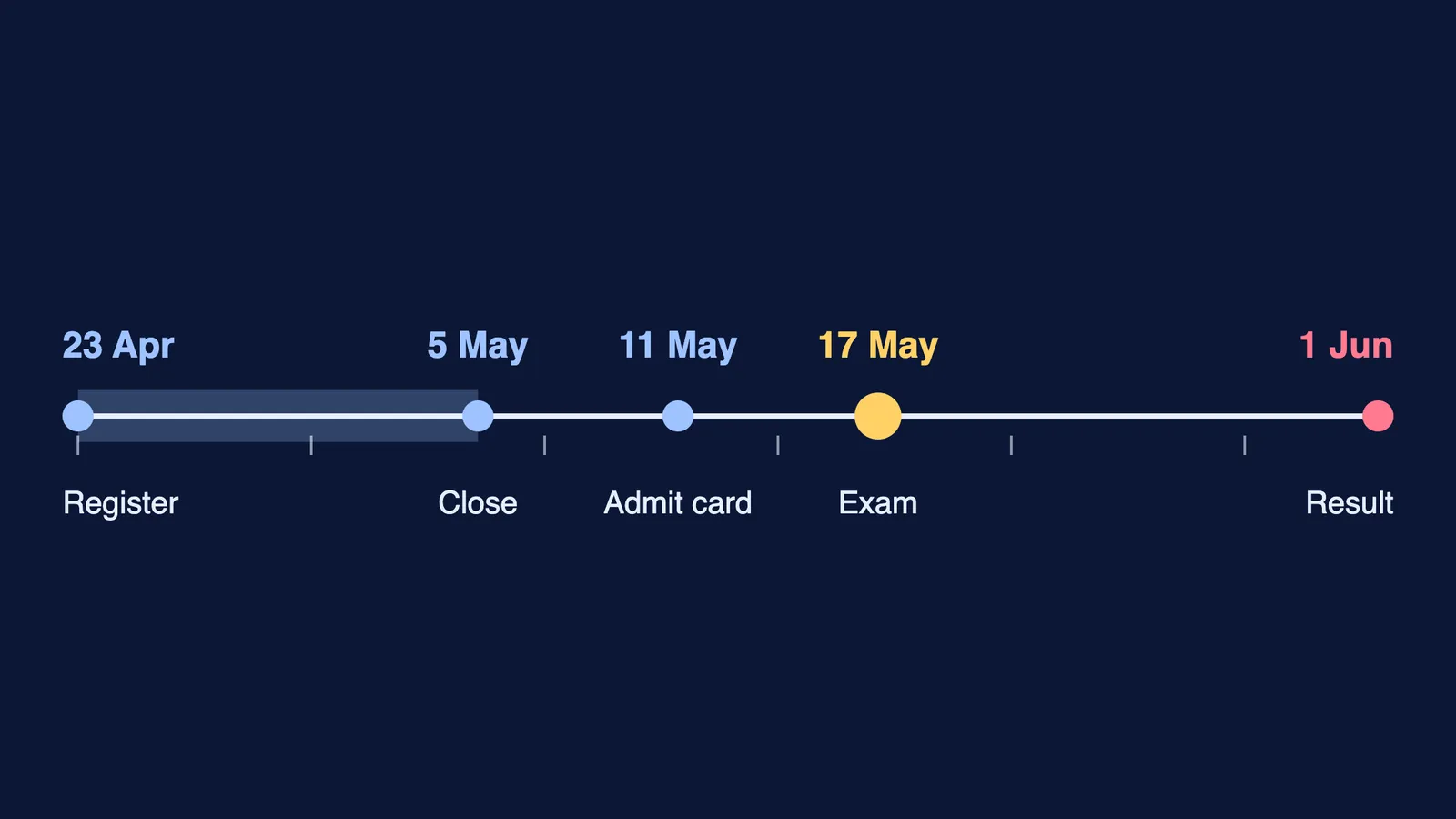
In 2026, registration for JEE Main qualifiers opened on 23 April and the exam was on 17 May, per the 2026 brochure. That is about three and a half weeks. The official site later extended registration to 5 May, and results came out on 1 June.
To sit the exam, you must be among the top 2,50,000 successful candidates in JEE Main Paper 1, across all categories, and you can attempt JEE Advanced at most twice in two consecutive years, according to the official eligibility page. The 2027 JEE Advanced date is not on the official site yet; JEE Main 2027 Session 2 is scheduled for 2 to 7 April 2027 in the NTA bulletin.
A three-week plan for JEE Advanced after JEE Main
Three weeks is too short for new chapters, but long enough to learn how this exam asks and marks questions.
Week 1: learn the patterns
Take one past Paper 1 and Paper 2 from the archive on the same day, timed, three hours each, with a break between.
Score them with the marking scheme printed at the top of each section, including partial marks.
Sort every lost mark into three groups: did not know the idea, knew the idea but used the wrong method, or lost marks to the format (a wrong extra option, a skipped numerical).
Week 2: fix the biggest group
If most marks went to the format, drill the format. Take 10 multiple-correct questions from older papers and, for each option, write one line on why it is right or wrong before you mark it. If most marks went to wrong methods, rework those problems from a blank page; the Fermi Problem Library has worked problems with a step-by-step solver that explains the reasoning rather than printing an answer. If the gap is the idea itself, read it again in the Fermi Concept Library, where each concept has its own lesson and its place in the map.
Our guide to reattempting an old mock test shows how to redo a paper without just remembering the answers.
Week 3: one more pair, then rest
Sit one more pair from a year whose layout you have not seen, and try the official computer-based mock. Then review lightly; our JEE Advanced 14-day plan covers the final fortnight, and when to guess with negative marking helps you decide which sections to answer boldly.
If stress is affecting your sleep or eating, talk to a parent, teacher or counsellor early. Your next step today: download one past paper pair from the JEE Advanced archive and book a six-hour slot to sit it.