On this page
Ask how many hours you should study for JEE or NEET and you will hear 10, 12, even 14. Those numbers usually come from toppers' interviews, not from research. Research points instead to what you do in those hours, and treats sleep as part of the work.
How many hours should you study for JEE or NEET?
No study sets a correct number of hours for JEE Main, JEE Advanced or NEET-UG. The closest evidence comes from research on deliberate practice, described in a 2014 meta-analysis in Psychological Science as structured activities created specifically to improve performance.
That meta-analysis found deliberate practice explained 26% of the differences in performance in games, 21% in music, 18% in sports and 4% in education. Practice matters, but the amount alone explains little.
The best-known hours figure comes from a 1993 study of music academy students. Reviewing it in Frontiers in Psychology (2019), K. Anders Ericsson and Kyle Harwell describe students' daily practice growing gradually from about 15-20 minutes to 4-5 hours as their skill grew. That is solo practice, not a day at a desk.
Even that link between hours and skill is contested. A 2019 replication in Royal Society Open Science by Brooke Macnamara and Megha Maitra did not replicate the finding that accumulated practice matched each skill level. In their sample, the best violinists reported about 22.7 hours of solo practice a week, fewer than the good group's 30.7.
Does studying more and sleeping less help?
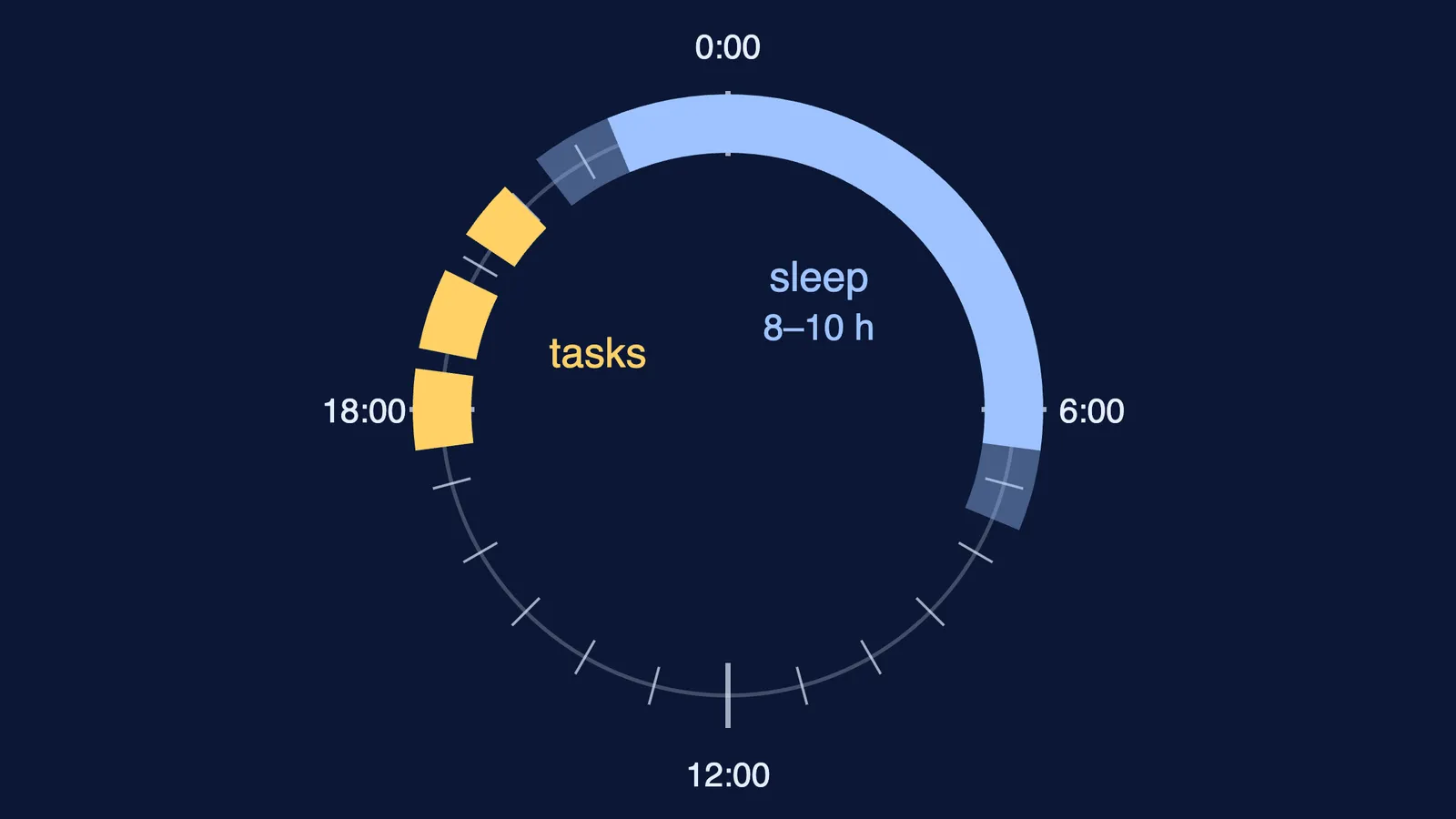
No. A National Sleep Foundation expert panel judged 8 to 10 hours of sleep appropriate for teenagers.
In a laboratory experiment published in Sleep (2003), healthy adults limited to 6 hours or less in bed a night for 14 days built up cognitive deficits equivalent to up to 2 nights without any sleep. Their sleepiness ratings barely climbed after the first days, suggesting they were largely unaware of how much worse they were doing.
Sleep also does work for you after studying; our explainer on how sleep helps you remember what you studied covers why.
How do you plan by tasks instead of hours?
An hours target rewards sitting; a task target rewards finishing something a test will check.
Start from your last mock test or homework. List the three topics where you lost the most marks.
Turn each into a task with a visible end: "solve 12 rotational motion problems and write why each wrong one went wrong", not "study rotation for two hours".
Put the hardest task in the block when you are most alert.
End each task with a check from memory: write the key formulas or reactions without looking, then compare.
Come back to each topic on later days instead of finishing it in one sitting. A review of 317 spacing experiments in Psychological Bulletin found that the gap that gave the best retention grew as the time until the test grew.
Switch away briefly now and then. In an attention experiment in Cognition, occasional brief switches to a second task stopped the usual slide in attention on a long, monotonous task.
Stop when the tasks are done or your accuracy drops, not when the clock says so.
A worked example: one weekday
Take a Class 12 JEE aspirant whose school and coaching fill most of the day, with about four free hours in the evening and bed at 10:30 pm for an 8-hour night.
Block 1, the hardest: 12 rotational motion problems from the weakest area of the last mock. Log each error as concept, method or calculation.
A short break: walk, water, no phone.
Block 2: write the reactions of one organic chemistry chapter from memory, check against NCERT, and redo the ones you missed.
Block 3, lighter: redo 10 maths problems you first solved three days ago.
Last few minutes: write tomorrow's three tasks.
For NEET, swap block 3 for recalling one NCERT biology chapter from memory. The day ends when the list is done.
When a problem goes wrong in block 1 and you cannot see why, the Fermi Problem Library has worked problems with a step-by-step solver that explains the reasoning rather than printing an answer. If the error log points to a concept gap, the Fermi Concept Library has a lesson for each concept in physics, chemistry, biology and mathematics.
What if you study long hours and still do not improve?
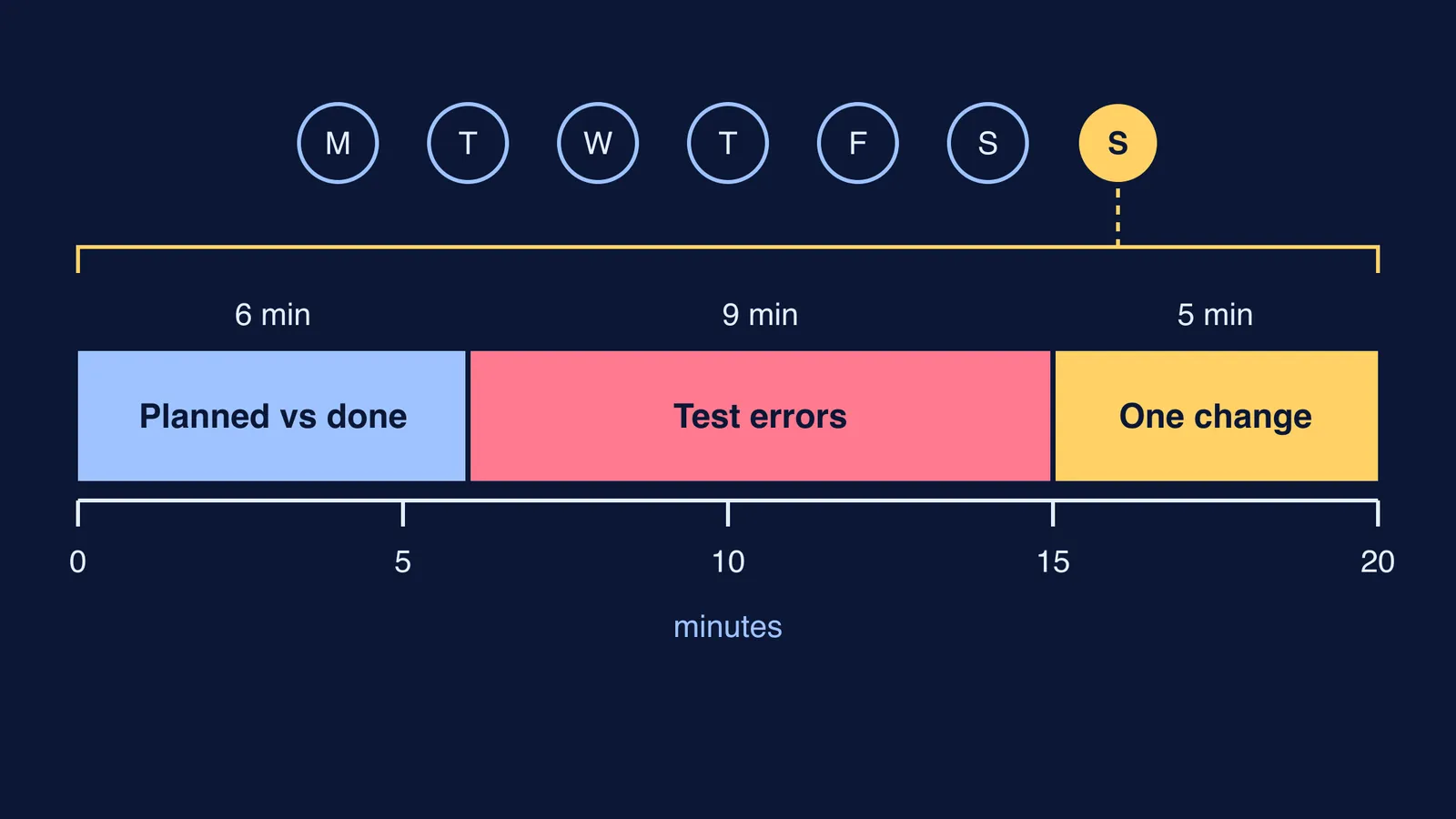
Long hours with flat scores usually mean the method needs changing. Our guide to a second attempt at the same exam shows how to change methods rather than add hours.
If you feel exhausted, numb or dread every session for weeks, read our post on the signs of student burnout and a recovery plan, and talk to a parent, teacher or doctor. India's Tele MANAS helpline is on the toll-free number 1800-89-14416 or the short code 14416.
Parents can help with one change of question: ask "what did you finish today?" instead of "how many hours did you study?"
Tonight, write three tasks instead of a number of hours, and protect your sleep.