

On this page
If you liked the Earth chapters in geography, physics and chemistry, a BSc in geology is a real option, not a fallback. It is a field science, and its jobs sit in four places: mining and exploration, groundwater, government survey work and research. The main government geologist posts ask for a master's degree, so plan the five years together.
What does a BSc in geology cover?
The University of Delhi's 2019 BSc (Hons) Geology syllabus%20Geology%20(CBCS)%202019.pdf) is a good example of a three-year programme. Its core courses include Earth System Science, Mineral Science, Structural Geology, igneous, sedimentary and metamorphic petrology, Palaeontology, Geomorphology, Economic Geology, Remote Sensing and GIS, Engineering Geology and Hydrogeology. Field work is built in, through courses such as Basic Field Training and Geological Mapping.
Expect chemistry (how minerals form and break down), physics (gravity, magnetism and seismic waves) and a lot of maps. If the physics or chemistry underneath feels shaky, the Fermi Concept Library has a lesson for every concept in physics, chemistry, biology, mathematics and computing, so you can fix a gap early.
Which jobs can you get after BSc geology in India?
Mining and mineral exploration
Exploration geologists find and map ore bodies before anyone digs. When the Union Cabinet approved the National Critical Mineral Mission, it said the Geological Survey of India (GSI) had taken up 368 critical-mineral exploration projects in the previous three years and would take up 227 more in 2025-26. Employers include GSI, public-sector mining companies and private exploration firms; expect long spells in the field.
Groundwater
Hydrogeologists study where water sits underground, how fast it refills and whether it is safe to drink. According to the 2025 national groundwater assessment, reported by the Ministry of Jal Shakti, India draws 60.63% of its annually extractable groundwater. The same assessment rates 730 of 6,762 assessment units (blocks, taluks or mandals) as "over-exploited", meaning more water is pumped out than is recharged each year. The Central Ground Water Board (CGWB) carries out this assessment with state governments every year, and state groundwater departments and water consultancies also hire.
Government survey work
The main door into GSI and the CGWB is the UPSC Combined Geo-Scientist Examination: a preliminary exam, a main exam and an interview. The UPSC notice for the 2026 exam required candidates to be 21 to 32 years old, with relaxations for some categories. Geologist posts needed a master's degree in geology or a related subject such as applied geology or geochemistry; hydrogeology posts needed a master's too. The notice listed 39 Geologist Group A vacancies in GSI, plus 5 Scientist 'B' (Hydrogeology) and 18 Assistant Hydrogeologist posts in the CGWB. Vacancies change every year, so read the current notice.
Research
For an MSc at an IIT, the usual route is the Joint Admission Test for Masters, which has a Geology (GG) paper. The JAM 2027 website schedules Geology on 14 February 2027. After an MSc, the Joint CSIR-UGC NET decides eligibility for Junior Research Fellowship, assistant professor posts and PhD admission. Labs also hire project staff with a master's degree; our guide to research jobs without a PhD in India explains how those roles work.
Two neighbouring fields are worth a look too: geotechnical engineering, which deals with soil, foundations and slopes, and GIS and mapmaking, which builds on the remote sensing a geology degree teaches.
Do you need an MSc after BSc geology?
For the UPSC route, yes. For research, almost always. A BSc alone may get you field assistant, lab or GIS work with some consultancies and exploration firms, but most students treat it as the first three years of a longer plan:
You want a secure government job: BSc, then MSc, then the Combined Geo-Scientist Examination.
You want to work on water: choose hydrogeology electives and an MSc with field projects on aquifers.
You want industry and travel: focus on economic and exploration geology, and GIS skills.
You want to do research: aim for JAM, then CSIR-UGC NET or a PhD.
How should you plan your three BSc years?
Year 1: keep your physics, chemistry and maths sharp. Geophysics and mineral chemistry lean on them.
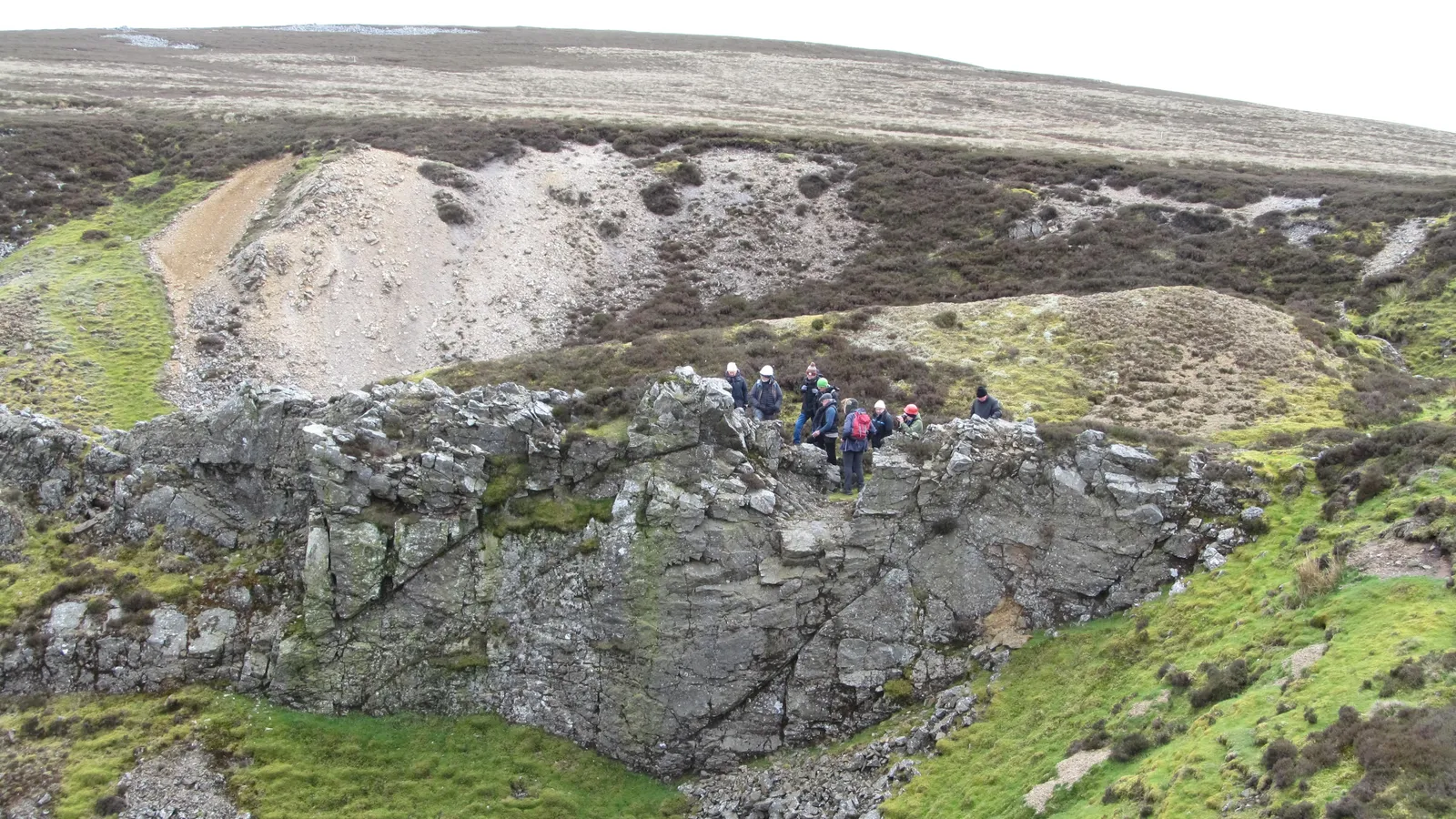
First summer: keep a field notebook on every trip. Sketch outcrops, note dip and strike, and photograph samples with a scale.
Year 2: pick a direction from the list above and choose electives to match. Learn one GIS tool properly.
Year 3: sit JAM or your university's MSc entrance. The 2026 UPSC notice let candidates apply while still waiting to pass their qualifying exam, so you may be able to attempt the Combined Geo-Scientist Examination in your final MSc year.
Before you choose a college, ask three questions: how many field trips does the course run each year, which electives are actually offered, and where did last year's graduates go for their MSc? If you're not sure where to start revising for an entrance test, Fermi's AI tutor can work out what you already know and build a plan for the session.
Start with your chosen college's syllabus, and check that it includes real field training.


