

On this page
If you like biology but don't want to spend your life in a hospital, entomology is worth a look. It is the study of insects, and in India the work broadly splits three ways: protecting crops, controlling the mosquitoes and flies that spread disease, and studying insects in the wild. In almost every case, the way in after a BSc is a master's degree.
Why does India need insect scientists?
FAO estimates that up to 40 percent of global crop production is lost to pests every year, and that invasive insects cost the world economy at least $70 billion a year.
Insects also keep food growing. According to FAO, more than three-quarters of the world's food crops rely at least in part on pollination by insects and other animals.
Then there is health. The WHO fact sheet on vector-borne diseases says these diseases make up more than 17% of all infectious diseases and cause more than 700,000 deaths a year. Mosquitoes, sandflies, fleas and ticks are on its list of carriers.
What does an entomologist actually do?
A real case shows the work better than a job title. In early July 2018, a team from ICAR's National Bureau of Agricultural Insect Resources surveyed maize fields in Karnataka and found the fall armyworm, a pest from the Americas that had not been reported in India before. Mongabay India reported that pest incidence around Chikkaballapur was more than 70 percent, and that ICAR issued the first pest alert in Karnataka on 30 July 2018.
That one episode took identification, field sampling, damage records and fast warnings. All three branches share those skills.
Agricultural entomology: pests, natural enemies, safer pesticide use and pollinators. If bees are the part that appeals to you, read our guide to beekeeping as a career and the courses behind it.
Medical or public health entomology: mosquito surveillance, insecticide resistance and outbreak investigation.
Ecology and taxonomy: identifying species, keeping collections and tracking how insects respond to habitat and climate.
Which master's should you do after your BSc?
It depends on what your BSc was in.
BSc Agriculture, Horticulture or Forestry. The usual route is an MSc (Agriculture) in Entomology through ICAR's All India Entrance Examination for Admission (AIEEA-PG). The National Testing Agency runs it, along with the AICE-JRF/SRF exam for PhD admission. Which BSc subjects qualify for which MSc can change from year to year, so check the current information bulletin on the NTA ICAR portal before you plan around it. If you're still choosing a bachelor's, see how BSc Agriculture admission through state entrance exams works.
BSc Zoology, Life Sciences or Biotechnology. Public health entomology is open to you, and our guide to career options after a BSc in Zoology covers the other routes. ICMR's Vector Control Research Centre in Puducherry (now called the ICMR National Institute for Vector Control Research) runs a two-year MSc in Public Health Entomology, affiliated to Pondicherry University. Its 2026-28 prospectus sets these terms:
Eligibility: a bachelor's in biological sciences (including agriculture, biotechnology, microbiology or life science) with Zoology as a major or allied subject, or Entomology as one of your subjects.
Marks: at least 55% in core and allied subjects for General/EWS candidates, relaxed to 50% for OBC (non-creamy layer), SC and ST candidates.
Seats: 20, provisionally, with 18 filled through the entrance test and 2 kept for in-service health department staff.
Entrance test: held only in Puducherry, two hours, 100 multiple-choice questions at undergraduate level, with 50% needed to be shortlisted.
Stipend: Rs 10,000 a month for candidates selected through the test.
The same prospectus lists the employers who need these graduates: state health departments, the National Centre for Vector-Borne Diseases Control, the National Centre for Disease Control, the National Health Mission and ICMR.
How can you prepare during your BSc?
Use this four-step plan, one step per year or semester.
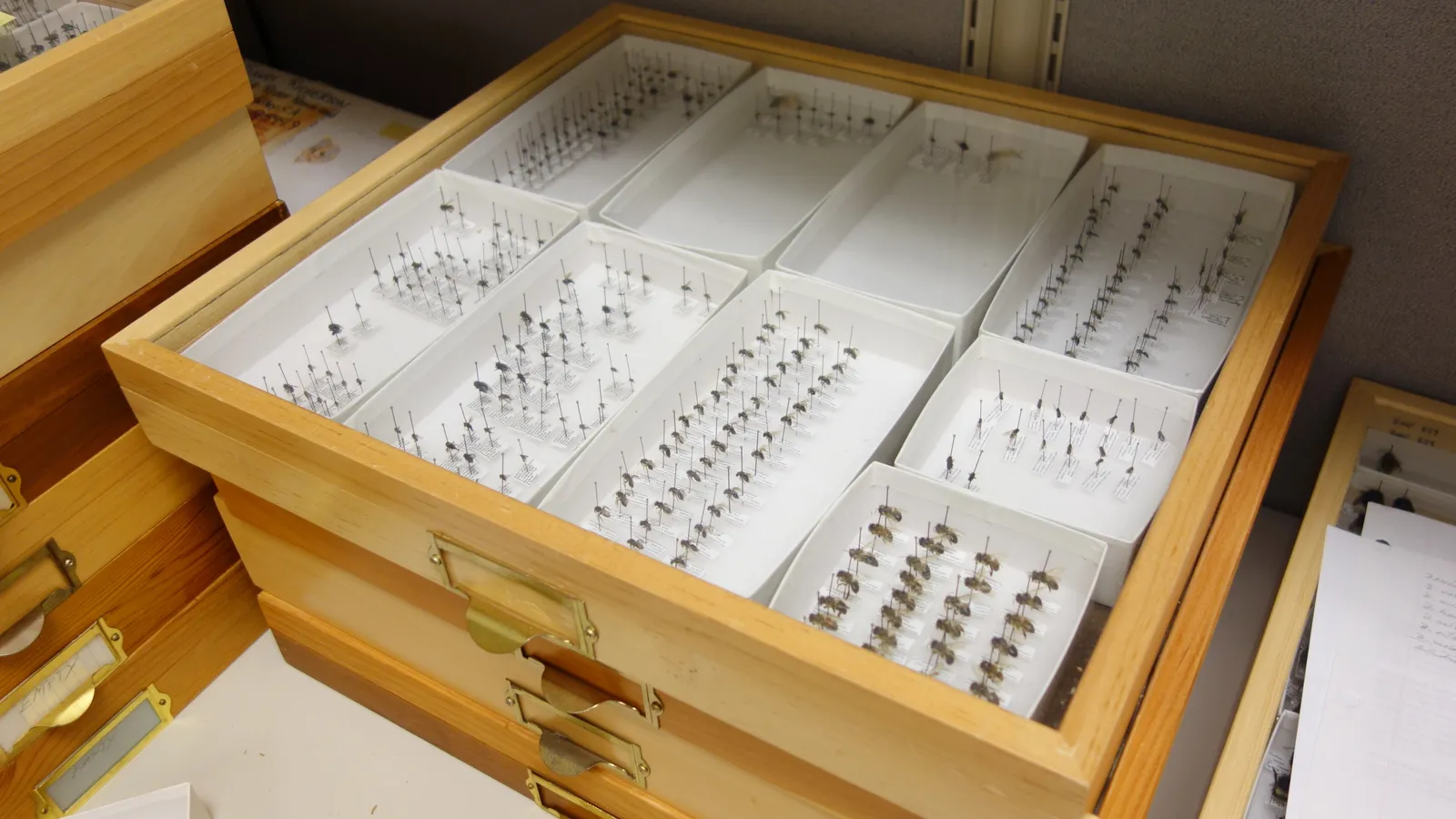
Pick a branch by trying it. Spend a week with a local Krishi Vigyan Kendra (farm science centre), a college insect collection or a mosquito survey project. Seeing the work up close tells you more than reading about it.
Read the eligibility rules now, not in your final year. Write down the exact subjects and marks each target programme asks for. Then choose your electives to match.
Build the skills the syllabus expects. The MSc PHE course includes taxonomy, molecular biology, biostatistics and a dissertation, so learn basic statistics and keep a field notebook of the insects you identify.
Revise the biology the entrance tests cover. The MSc PHE test sets undergraduate-level questions, so go back over insect morphology, physiology and ecology. If a topic like insect respiration or metamorphosis never quite made sense, the Fermi Concept Library has a lesson for each biology concept and shows its place in the map.
If you don't know where to start revising, Fermi's AI tutor can work out what you already know and build a plan for the session, so every revision hour has a clear next step.
Start with step 1 this term.


