On this page
If you have spent years in a Kathak or Bharatanatyam class, a dance degree after Class 12 is a real option. At many colleges, how you dance in the practical test counts for more than your board percentage. Here is how the degrees differ, how auditions work, and where they lead.
What is the difference between a BPA and a BA in dance?
A BPA (Bachelor of Performing Arts) spends most of its time on your dance form, with theory, music and history alongside. Banaras Hindu University's Faculty of Performing Arts offers a BPA in Dance with Bharatanatyam or Kathak, and its 2026 undergraduate notice asks applicants to take CUET (UG) in Performing Arts (320). The Maharaja Sayajirao University of Baroda's Department of Dance offers a BPA, an MPA, a PhD and a postgraduate diploma, and its admission notices cover Bharatanatyam and Kathak.
A BA (Honours) in dance sits in an arts faculty and adds general subjects. In its 2022-23 admission notice, Rabindra Bharati University in Kolkata described its BA Honours in Dance as a three-year, six-semester course with 98 seats, and every student also picked one elective from a pool that included English, History, Philosophy and Economics.
Some institutions train dancers outside the degree format. Kalakshetra in Chennai runs a four-year diploma in Bharatanatyam for students aged 17 to 25 who have passed Class 12. It says it seeks students who intend to become professional artists, and the first year is probationary.
Rule of thumb: pick the BPA to spend most of your day dancing; pick the BA for dance plus a second subject.
How do dance degree auditions work?
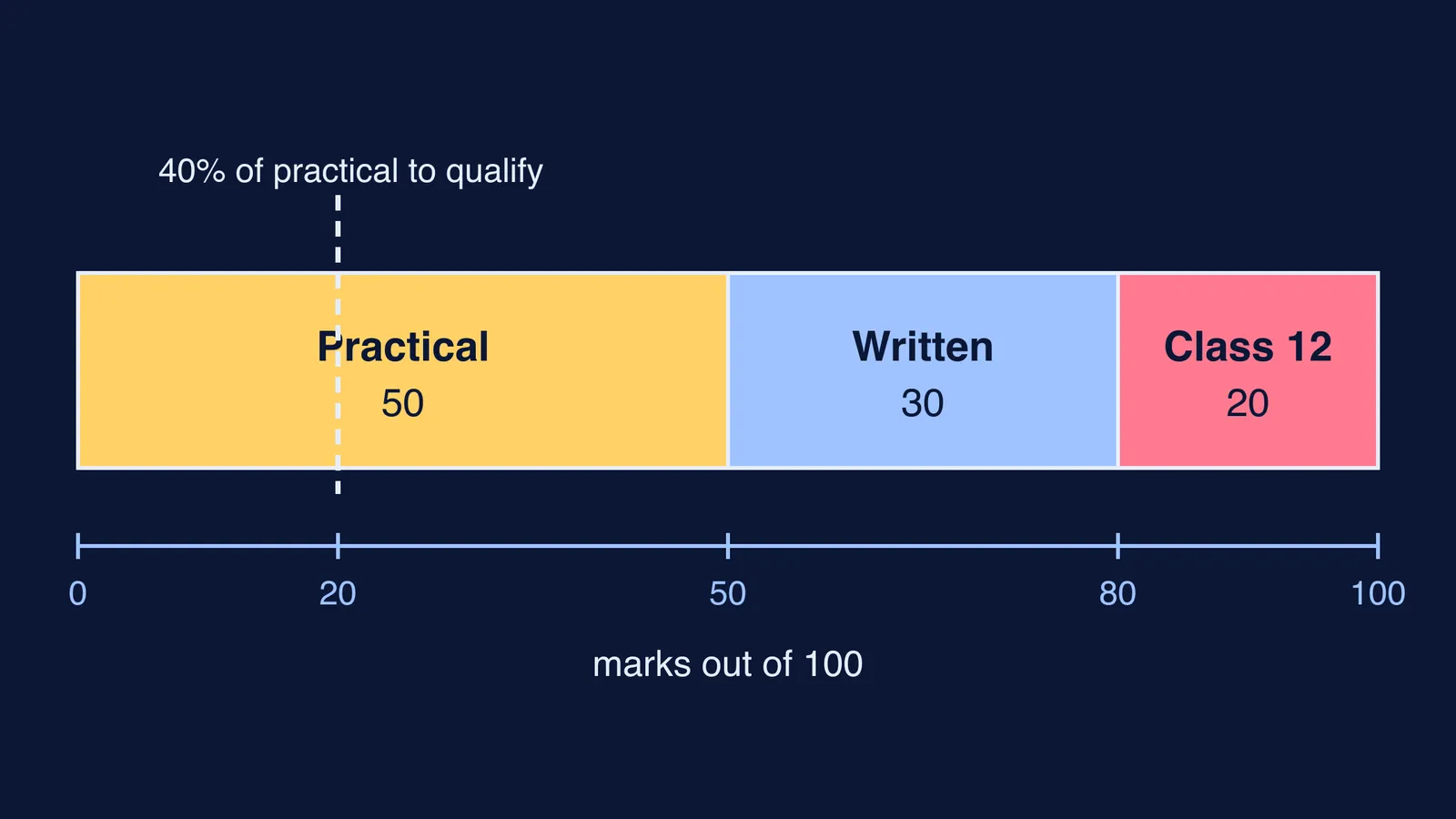
The admissions below pair a practical test with something else. The Rabindra Bharati notice shows the full split:
Practical test: 50 marks, taken first and offline.
Written theory test: 30 marks, only for those who score at least 40% in the practical (30% for reserved categories).
Class 12 marks, best four subjects: 20 marks.
At BHU, final merit for the BPA combines your CUET (UG) score with a practical examination held at the university, according to the same BHU notice. At Kalakshetra, selection is a practical aptitude test plus an interview that every applicant must attend, as its admission page says. Rules and dates change every year, so read the current notice on each university's own site.
How should you prepare for the audition?
Prepare one short piece you can perform cleanly under nerves, and a second in case you are asked for more.
Know the basics behind what you dance: the names of the adavus or tukdas you use, the tala, and what the piece is about.
Practise saying in two sentences why you want this degree. Kalakshetra interviews every applicant and looks for students who intend to become professional artists.
Keep a recent video of your dancing ready. Rabindra Bharati asked applicants to upload performance clips with the form.
Don't drop your board subjects. Class 12 marks still count in some merit lists, such as Rabindra Bharati's.
If Class 12 science or maths is what keeps you from dance practice, Fermi's AI tutor works out what you already know and builds a plan for the session, so you spend less time deciding what to study and more time in the studio.
What careers can a BA in dance lead to in India?
Performing. Solo recitals, dance companies, festivals, film and stage work. The degree gives training and a network; your repertoire gets you on stage.
Teaching. You can run your own classes or teach in schools. For Assistant Professor posts, the usual eligibility test is UGC NET, which NTA also uses for Junior Research Fellowships. The UGC syllabus for Performing Arts, code 65 covers the Natyasastra, rasa theory and folk and traditional forms.
Choreography. Creating work for your own group, for theatre, film or events, usually after years of performing.
Dance/movement therapy. The American Dance Therapy Association defines it as "the psychotherapeutic use of movement to promote emotional, social, cognitive and physical integration of the individual". Its FAQ says the registered dance/movement therapist credential requires master's-level training. Treat this as a postgraduate path, and check any course's recognition and supervised practice before you pay.
Arts management. Festivals and dance companies need people who understand dance and can plan programmes, raise funds and run tours.
Many dancers combine two or three of these. If your family is worried, our guide on handling relatives who object to the arts stream has words you can use. For the years before Class 12, read how to balance Bharatanatyam classes with school studies. If you are also thinking about visual art, compare this route with BFA admission and portfolio requirements.
Your next step: open the current admission notice for two or three colleges, note the audition date and format, and start rehearsing the piece you would perform.