On this page
When it is time for a student to pick a stream after Class 10, the family often gets involved. If your child has a clear aptitude for the humanities and wants to pursue the arts stream, you might support their choice completely. But extended family members often voice strong objections, fearing a lack of job security or prestige.
Navigating these conversations is a common challenge. However, shifting the discussion from emotional opinions to hard data can help you back your child's informed choice without creating a family rift.
Why do relatives object to the arts stream?
Most objections from relatives stem from outdated assumptions about the job market. They often grew up in an era where engineering and medicine were the primary guaranteed routes to a stable middle-class life. They view the arts stream as a fallback option for students who did not score high enough for science.
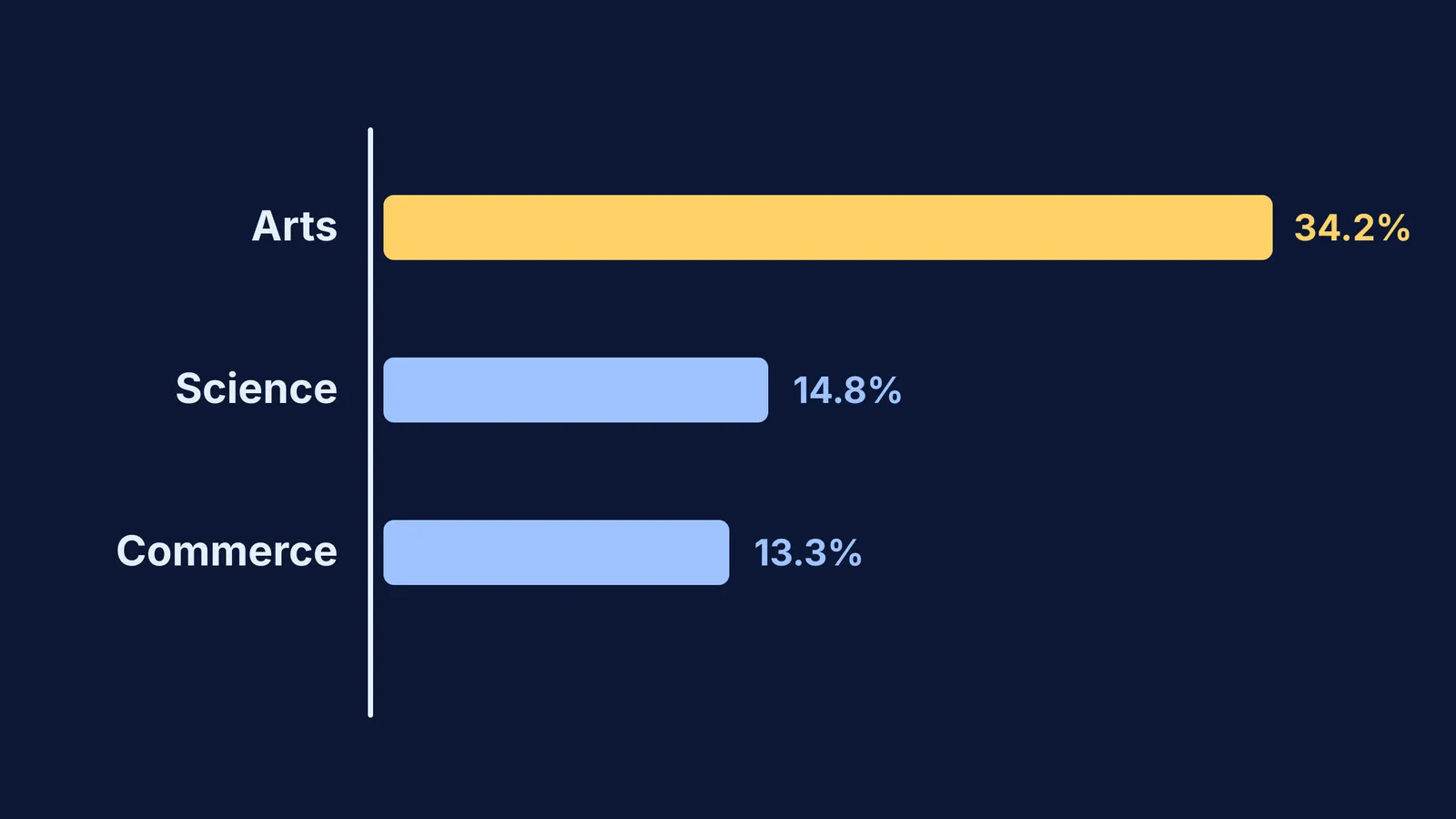
However, this perception does not match reality. According to the Ministry of Education's All India Survey on Higher Education (AISHE) 2021-2022, Arts is the most popular undergraduate discipline in India, making up 34.2% of all enrolments (PIB). It is a mainstream, competitive path chosen by millions of students, not a default option.
When well-meaning relatives express concern, they are usually confusing the subject matter with employability. Helping them separate the two is the first step in handling high expectations vs pressure from the extended family.
How to handle relatives who object to the arts stream?
The most effective strategy is to avoid defending the "arts" conceptually and instead discuss specific career trajectories. When an uncle asks, "What will they do with a history degree?", responding with "They enjoy it" often invites further argument.
Instead, outline a concrete plan. You might say, "They are taking economics and sociology to prepare for data journalism," or "They are aiming for a career in public policy." Giving a specific, modern job title changes the conversation. If you are navigating this alongside other family disagreements, our guide on what to do when your child's career choice differs from yours offers scripts that work just as well for extended relatives.
What are the career options after the arts stream?
The modern arts stream is not limited to teaching or civil services. Today's most resilient careers often require a blend of humanistic thinking and technical skills.
The India Skills Report 2024 by Wheebox found that B.A. graduates achieve a moderate employability score of 47.11% (Wheebox). This agility allows arts students to thrive in fields like user experience (UX) design, corporate communications, behavioral research, and digital humanities.
Furthermore, choosing arts does not mean abandoning mathematics or computing. In fact, combining the humanities with quantitative skills creates a highly sought-after profile. A student interested in sociology will benefit immensely from understanding statistical modeling, just as a linguistics student benefits from understanding natural language processing.
If your child wants to keep their quantitative skills sharp while pursuing the arts, the Fermi Concept Library maps every concept in mathematics and computing, letting them learn at their own pace. If they get stuck on the logic behind a statistical method or a piece of code, Fermi's AI tutor works out what they already know and builds a plan for the session, checking their understanding as it goes.
Supporting your child's choice to study the arts is about giving them the confidence to build a career that fits their strengths. By arming yourself with data and a clear plan, you can protect their motivation and turn family objections into productive conversations.