On this page
The Bachelor of Fine Arts (BFA) is the degree for students who want to study drawing seriously. A written entrance score gets you shortlisted; a drawing test on a single day often decides the seat.
How does BFA admission work after 12th?
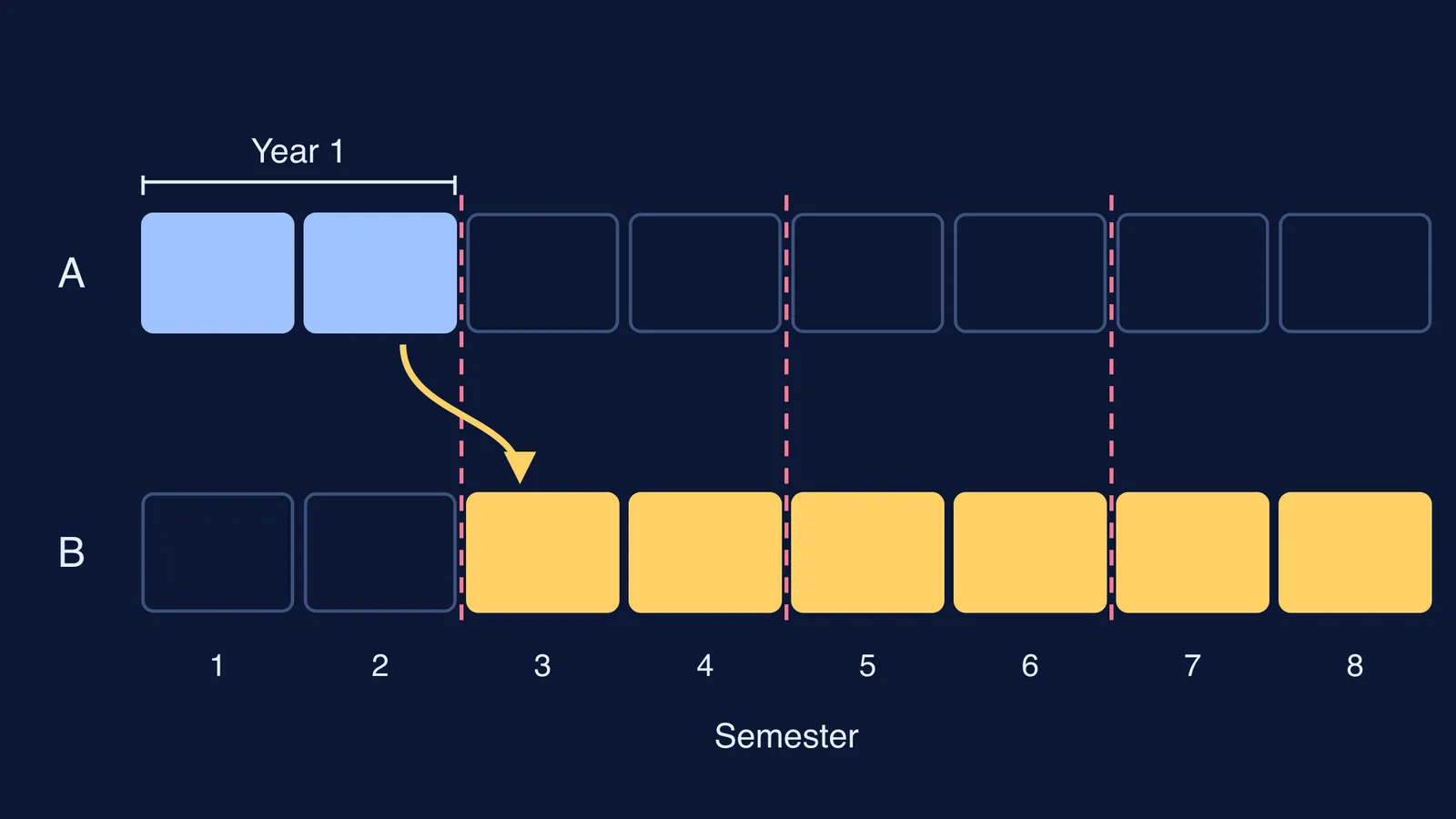
At the College of Art, Delhi, the BFA is a four-year, eight-semester degree. Applied Art, Painting, Print Making, Sculpture and Visual Communication start with a one-year foundation followed by six semesters in the specialisation; Art History runs as its own eight-semester course, according to the college's BFA admission policy for 2026-27. You must have passed Class 12 from a recognised board and taken CUET (UG) in one language plus the General Test. You may apply for only one specialisation, and you cannot change it later.
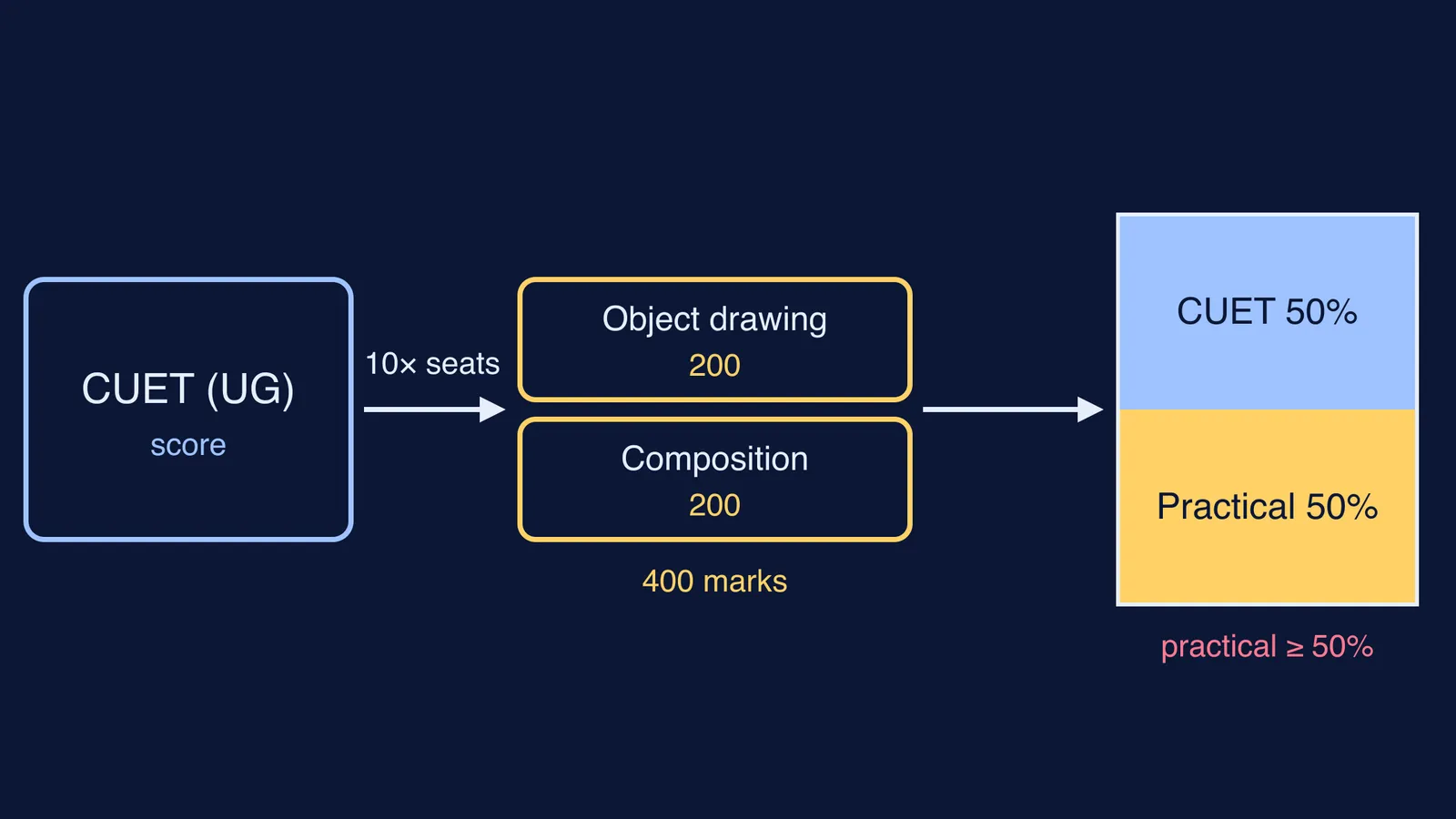
The college calls ten times the number of seats in each specialisation and category to its practical entrance test, ranked by CUET merit. Final merit is 50% CUET score and 50% practical score, and that combined score must also reach 50%. Only applicants who score at least 50% in the practical are considered at all.
Banaras Hindu University held an offline BFA practical test in 2025 for applicants, who brought their CUET (UG) admit card, as its 2025 practical test notice shows. In Maharashtra, the State CET Cell runs the MAH-AAC-CET for BFA seats. The 2026 paper had object drawing, design, memory drawing and a general knowledge section, 190 marks over 4 hours 45 minutes, and asked for 45% in Class 12 with English (40% for reserved and PwD candidates from Maharashtra), Careers360 reported.
What happens in a BFA practical entrance test?
At the College of Art, the practical has two papers of 200 marks and 2.5 hours each, 400 marks in all, according to the admission policy:
Object drawing, for every specialisation except Art History: objects with light and shade, background and foreground, in pencil on half imperial paper.
Composition from memory on a given subject: in water colour, tempera, ink or oil pastels on quarter imperial paper for Painting, Print Making and Applied Art; clay modelling for Sculpture; a design test of line, colour and space for Visual Communication.
Art History applicants instead write views on four visuals of art, artists or periods, then an analysis of about 800 words in English or Hindi.
You bring your own drawing board and art materials. The college provides only answer sheets and clay, and phones and smartwatches are not allowed inside.
What should a BFA portfolio include?
The College of Art's policy asks for no portfolio; it grades what you draw in the hall. Some colleges do ask for one, so check each current brochure, and build your portfolio as rehearsal for the test:
Six pencil object drawings: a jug, a bottle and a folded cloth under one lamp, moving the light each time.
Four memory compositions of everyday scenes (a railway platform, a vegetable market, a festival at home), each finished inside 2.5 hours.
Three pieces in the exact medium you will carry to the test.
A daily sketchbook: people at a bus stop, hands, your street.
For Sculpture, two or three clay models; for Visual Communication, two poster designs; for Art History, two 800-word critiques.
Date every piece so you can see your progress.
How should you prepare in the last 12 weeks?
Weeks 1 to 4: one object drawing a day, 45 minutes, single light source.
Weeks 5 to 8: add a timed memory composition twice a week.
Weeks 9 to 11: full mock days, with object drawing at 10:30 and composition at 2:00, the College of Art's own timings.
Week 12: check your board and materials, revise for CUET, sleep well.
If you are also carrying a science or maths subject through Class 12, Fermi's AI tutor can work out what you already know and build a plan for the session, so your study hours still leave room for drawing.
What jobs can you get after a BFA?
A careers guide from the National Institute for Career Service, under the Ministry of Labour and Employment, Careers Opportunities in Visual Arts (October 2024), lists art director, graphic designer, animator, UI/UX designer, commercial photographer, concept artist, creative director and art teacher among jobs open to fine arts graduates. Graduates who pass the UGC National Eligibility Test in Visual Arts may qualify to teach in colleges, the guide says.
The guide gives an expected salary of ₹2 to 4 lakh a year for an art teacher and ₹2.5 to 5 lakh for a graphic designer. For graduates moving into fields such as fashion design or filmmaking, it points to postgraduate programmes at NID Ahmedabad, NIFT Delhi and FTII Pune.
Your next step: download this year's brochure for each college you want, and write the practical test date on your sketchbook's first page.