On this page
Plenty of students prepare for NEET-UG at home, from a small town or alongside school, because coaching is too far, too costly or not a good fit. Nothing in the exam requires coaching. What coaching gives you is structure, a steady supply of tests and someone to ask. A self-study plan works when it replaces those three things on purpose. Here is how, using official material.
Can you crack NEET without coaching?
Yes, if you treat the exam as what it is: a published syllabus tested in a published format. The NEET (UG) 2026 Information Bulletin from the National Testing Agency sets 180 compulsory questions in 180 minutes, for 720 marks. Physics has 45 questions, Chemistry 45 and Biology (Botany and Zoology) 90, per the same bulletin. Each correct answer earns four marks and each wrong one costs one mark.
Two things follow. Biology carries half the marks, so it deserves about half your hours. And one question per minute means speed has to be practised, not hoped for.
What do you need instead of coaching?
Replace each thing coaching provides with something specific:
A syllabus map. The National Medical Commission notifies the syllabus, and the NEET (UG) syllabus document linked from the NTA site lists 20 units in Physics, 20 in Chemistry and 10 in Biology. Print it and tick units off as you finish them.
Textbooks. NCERT Class 11 and 12 Physics, Chemistry and Biology are on NCERT's textbook page as downloads. Read them line by line, especially Biology.
Tests. NTA runs National Test Abhyas, its mock-test platform with a medical section. For old papers, check your answers against the official answer keys NTA posts on the NEET (UG) website.
Someone to ask. Note every doubt in one place and clear it the same week: a school teacher, a study partner, or a tool that explains rather than just answers.
For that last one, the Fermi Concept Library has a lesson for every concept in physics, chemistry and biology, and the Fermi Problem Library has worked problems with a step-by-step solver that explains the reasoning rather than printing an answer.
Why should practice tests come before rereading?
Rereading NCERT feels productive, but it is the weaker habit. A 2013 review of ten study techniques by Dunlosky and colleagues rated practice testing and distributed (spaced) practice as high utility, and rereading and highlighting as low utility. In Roediger and Karpicke's 2006 experiments, students who took recall tests remembered more a week later than students who restudied, even though restudying made them feel more confident.
So close the book and test yourself after every chapter. Our one-week rereading vs practice testing experiment shows what that looks like day to day.
What does a self-study week for NEET look like?
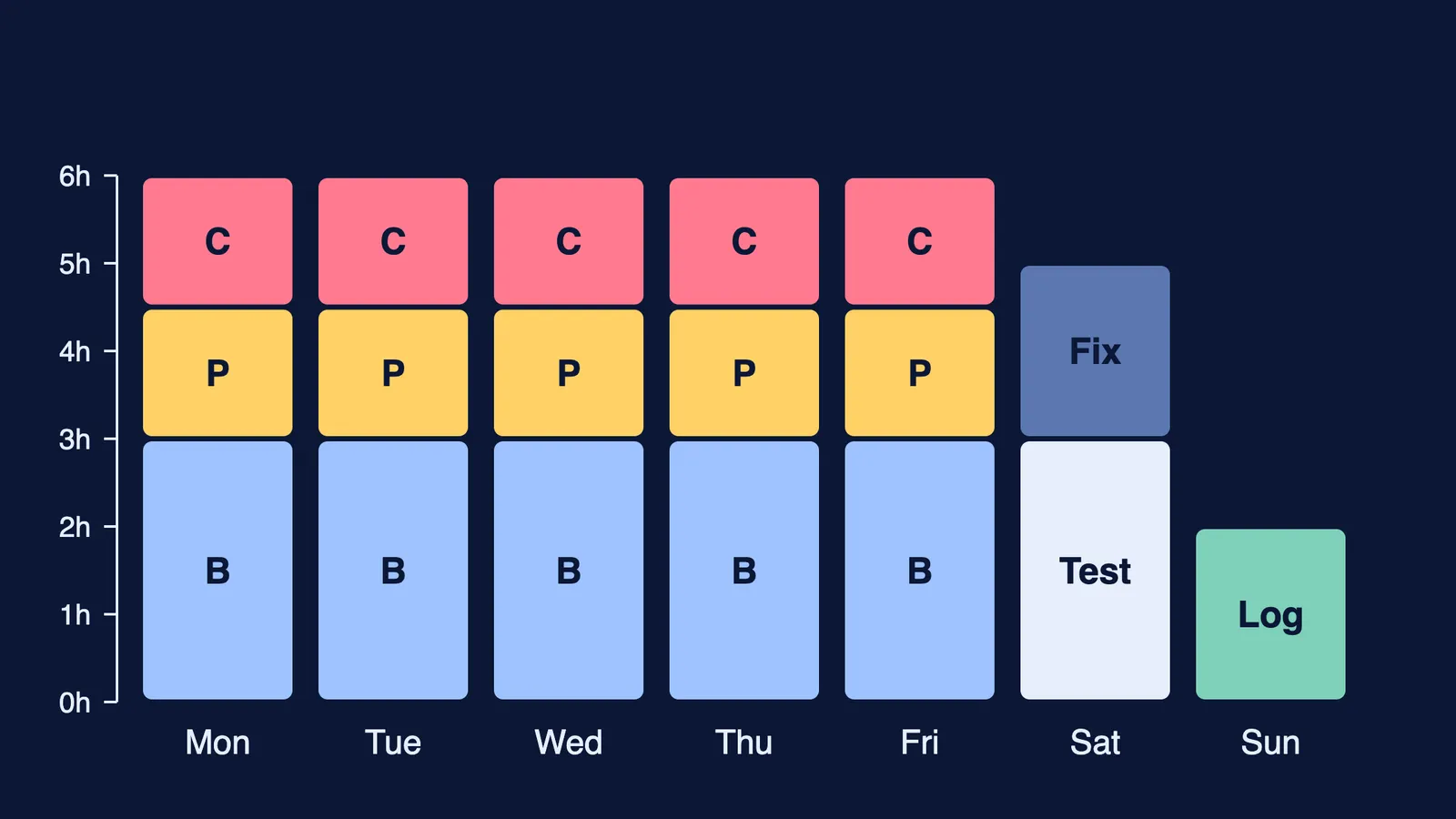
This plan assumes about six study hours on a weekday; scale it to your day, keeping the ratios.
Monday to Friday: 3 hours Biology, 1.5 hours Physics, 1.5 hours Chemistry, matching the 360/180/180 mark split in the NTA bulletin.
Inside each block: read one NCERT section, close the book, write what you remember, then solve 20 to 30 questions on it.
Start of each day: ten minutes recalling yesterday's topics from memory before opening anything.
Saturday, 2 pm to 5 pm: a timed mixed test in the 2 pm to 5 pm slot the 2026 bulletin set for the exam. Then two hours fixing every wrong and skipped question.
Sunday: about two hours updating your error log and planning next week's units, then rest.
Once a month: make Saturday a full 180-question paper in 180 minutes.
If Physics is the subject pulling your score down, our formula ladder and weekly plan for NEET physics slots into the Physics block.
How do you know your self-study is working?
Look at your monthly full papers, not your mood. Check three things:
Is the number of questions attempted in 180 minutes rising?
Are wrong answers from the same chapter falling month to month?
Is the error log shifting from "concept" mistakes towards "misread" and "calculation" ones?
If two months pass with no change, the plan needs changing, not more hours. When a concept keeps reappearing in the log, go back to the NCERT chapter, and if you are stuck on where to begin, Fermi's AI tutor can work out what you already know and build a plan for the session. In the last month, switch to our four-week NEET revision schedule.
What should parents do?
Ask about the plan, not the marks. "What's on the error log this week?" opens a better conversation than "How much did you score?" Studying alone can feel isolating. If your child seems persistently low or anxious, talk to a doctor or counsellor, or call Tele MANAS, the government's toll-free mental health helpline, on 14416 or 1800-89-14416, as listed on the Tele MANAS website.
Download the syllabus tonight, tick off what you have already finished, and plan the first week from what is left.