On this page
If you would rather shape dough than sit through Class 11, you do not have to wait for Class 12. There are three formal ways to learn baking after Class 10 in India, and they differ in length, in who signs the certificate, and in where they lead.
Which bakery courses can you join after 10th?
ITI Baker & Confectioner (one year). The DGT curriculum for the Baker & Confectioner trade sets the entry qualification as a Class 10 pass, the minimum age as 14, and the duration as one year. The year is split into 840 hours of trade practical, 240 hours of trade theory and 120 hours of employability skills, plus 150 hours of on-the-job training or a group project. Each unit has 24 seats. You need at least 60% in the trade practical to pass, and passing the All India Trade Test earns you the National Trade Certificate (NTC) from DGT.
IHM craft course in food production and patisserie (18 months). IHM Bangalore describes its Craftsmanship Certificate Course in Food Production and Patisserie as 1.5 years: two 17-week teaching semesters followed by 20 weeks of industrial training, open to students who passed Class 10 with English. IHM Chennai lists the same course at 1 year 6 months, with admission on merit in qualifying exam marks and fees of about Rs 66,455. It covers general cooking as well as pastry; IHM Bangalore says graduates start as cooks, commis and kitchen assistants. Note that IHM Chennai's Diploma in Bakery & Confectionery requires Class 12, so it is not a Class 10 option.
Skill council Craft Baker (390 hours). The Food Industry Capacity and Skill Initiative (FICSI) is the awarding body for a Craft Baker qualification at NSQF level 4. Its qualification file on the National Qualification Register lists 390 hours of training (144 theory, 246 practical) and a minimum age of 18. A Class 10 pass alone needs two years of relevant experience; a Class 10 pass with a one-year NTC or NAC qualifies directly. One module covers setting up facilities for small-scale artisanal production, useful for a home bakery. The file was approved in February 2022 for three years, so ask the training centre which version it now teaches.
What does a baker do all day?
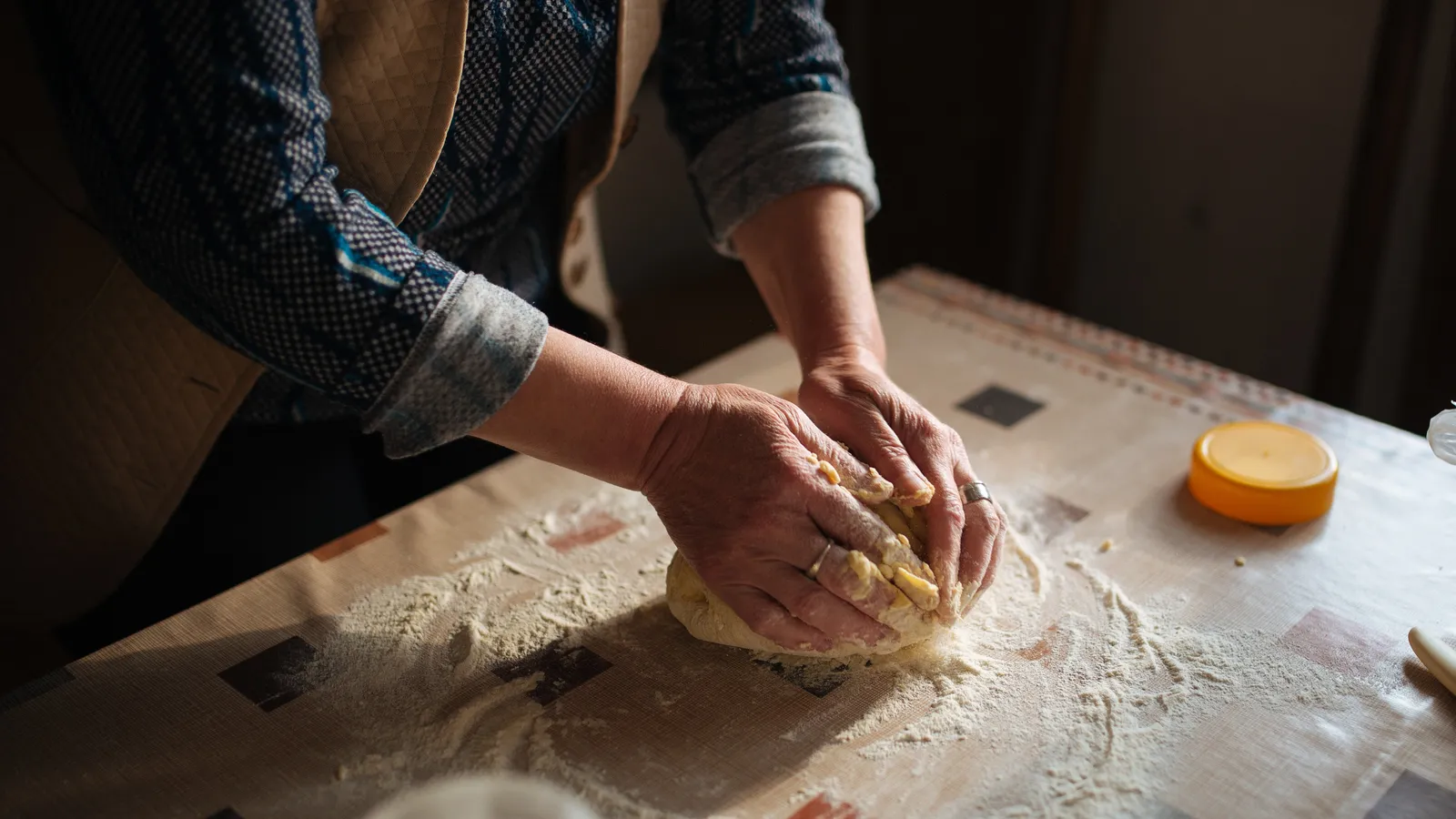
The same DGT curriculum describes the job plainly. A baker measures flour, sugar, milk, butter and shortening; mixes batters and doughs in a machine; rolls, cuts and shapes dough into sweet rolls, tarts and cookies; sets oven temperature; judges progress by the colour of the product and its time in the oven; cools it on racks; and finishes it with glaze or icing. Some specialise in bread, pastry or cakes; others run ovens or chocolate machines in factories. ITI trainees also learn Indian sweets, first aid and hygiene.
It is physical work near hot ovens, and much of it is repetition: customers want the same bun every day.
Baking is also chemistry. Why a cake rises and why a recipe calls for one raising agent and not the other come from reactions you meet in school science. Our explainer on baking soda versus baking powder is a good place to start. If an idea like acids and bases is shaky, the Fermi Concept Library has a lesson for every concept in chemistry and biology, so you can fix the gap before trade theory starts.
Which route suits you?
You want a government certificate quickly and are 14 or older: the ITI trade.
You want hotel kitchens and a wider range of cooking: the IHM craft course.
You already hold an NTC or have worked in a bakery: FICSI's Craft Baker, as a next step.
You plan to finish Class 12 first: the IHM bakery diploma, or the routes in our guide to becoming a chef after 12th.
If you are also weighing other trades, read our comparison of ITI and polytechnic after Class 10.
How do you get from the course to a job or a home bakery?
The DGT curriculum lists the routes: join industry as a baker and rise to supervisor and manager; take an apprenticeship leading to the National Apprenticeship Certificate (NAC); train to teach in ITIs; or become an entrepreneur in the field.
A home bakery that sells food is a food business. Under an FSSAI order dated 13 March 2026, food businesses with turnover up to Rs 1.5 crore need FSSAI registration, and a State licence applies above that up to Rs 50 crore, with effect from 1 April 2026.
A plan you can start this month:
Before admission, bake one recipe each weekend and note quantities, oven settings and what went wrong.
Visit one ITI and one IHM. Ask about fees, practical hours and where last year's trainees did industry training.
During the course, photograph everything you make; that album is your portfolio.
Treat on-the-job training as a long interview: arrive early, keep your station clean, ask for feedback.
Work or apprentice before going solo, so you learn costing and volume on someone else's ovens.
Register with FSSAI before your first sale, and start with a few products you can make reliably.
Pick one institute near you and book the visit this week.