On this page
A BSc Agriculture teaches you how crops grow. Agribusiness covers everything around them: who sells the farmer seed on credit, who buys the harvest and at what price, and who lends the money in between.
What does an agribusiness manager actually do?
Most jobs fall into three areas.
Farm inputs: seeds, fertilisers, crop-protection chemicals and machinery. A typical early job is managing a sales territory: visiting dealers, planning stock before sowing and running demonstration plots.
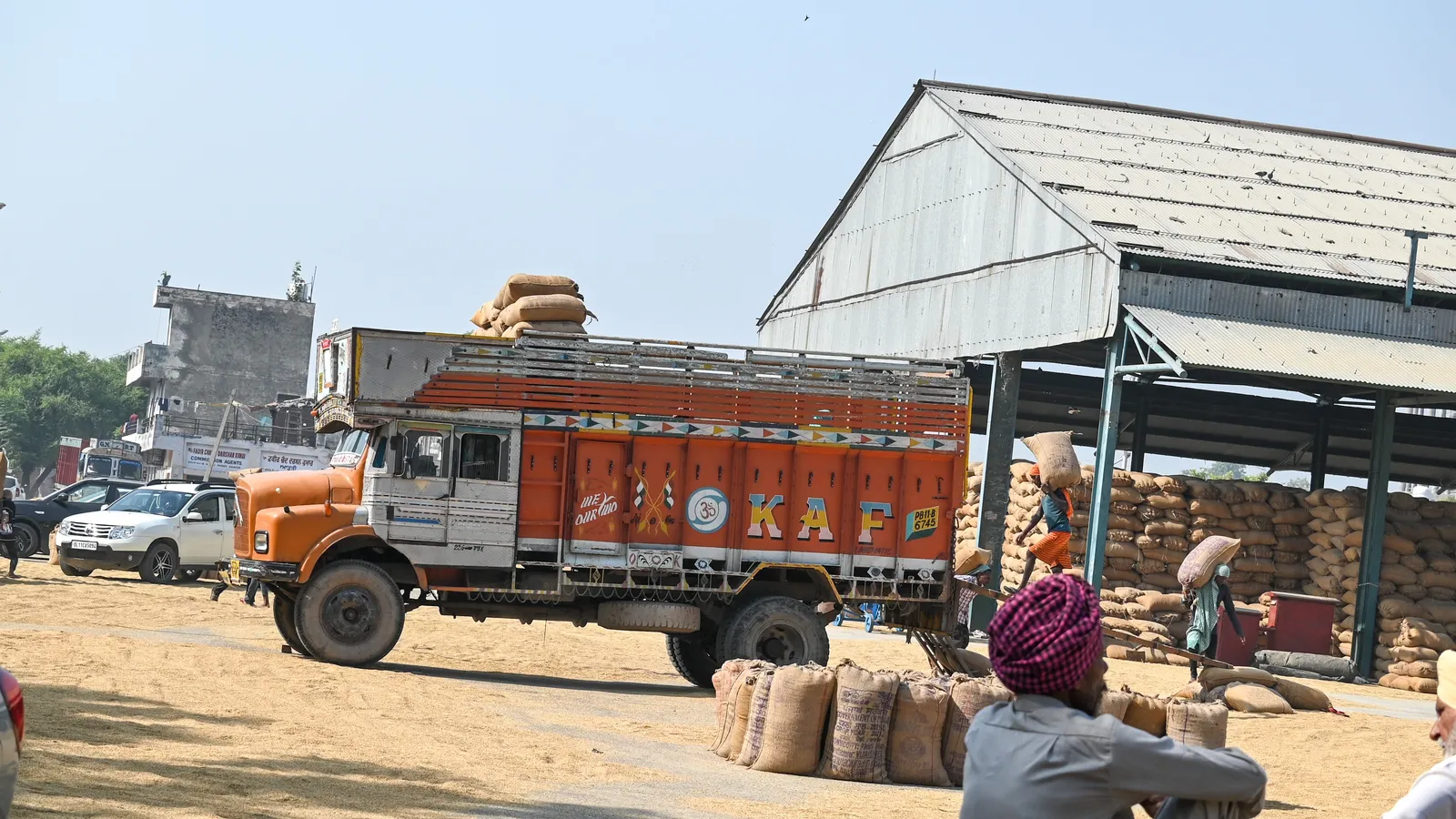
Produce marketing: buying grain, fruit, milk or vegetables from farmers or mandis, and then grading, storing, processing and selling them.
Rural finance: lending to farmers and rural businesses, selling crop or livestock insurance, and judging whether a loan can be repaid after a bad monsoon.
Your degree helps here: a sales manager who can tell a nutrient deficiency from a pest attack can talk to farmers on their own terms.
Why does rural finance need people who understand farms?
Because farm households earn from several sources, and crop income arrives around harvest rather than every month. NABARD's second All India Rural Financial Inclusion Survey (NAFIS 2021-22) covered 1 lakh rural households, as summarised in this Press Information Bureau research note.
Agricultural households earned an average of Rs 13,661 a month in 2021-22, according to the same PIB note on NAFIS.
Cultivation brought in Rs 4,476 of that, about one-third. Government or private jobs added Rs 3,150, wage labour Rs 2,238, other businesses Rs 2,010 and livestock Rs 1,677. A worked reading: if you lend against crop income alone, you are looking at about a third of what the household earns. A good rural finance manager asks about every source.
The survey also found that 44% of agricultural households had a valid Kisan Credit Card. Among households with more than 0.4 hectares of land, or that had taken a farm loan from a bank in the past year, the share rose to 77% (PIB summary of NAFIS 2021-22). Closing that gap for smaller farmers is everyday work for rural lenders.
Which postgraduate route leads into agribusiness management?
There are three common routes. Eligibility and dates change yearly, so check each institute's current page.
A specialist agribusiness MBA or PGDM through CAT. For the 2027-29 batch of IIM Ahmedabad's Post Graduate Programme in Food and Agri-business Management, you need a bachelor's or master's in agricultural sciences or a related discipline with at least 50% marks (45% for SC, ST and PwD candidates), and a CAT 2026 score (IIMA admission policy, PGP-FABM 2027-29). Graduates from other disciplines can apply if they submit a form explaining their interest in the sector.
Government agricultural marketing institutes. The Chaudhary Charan Singh National Institute of Agricultural Marketing in Jaipur is an autonomous body under the Ministry of Agriculture and Farmers Welfare and runs a PGDM in Agri-Business Management.
A master's at an agricultural university through ICAR. ICAR's All India Entrance Examination for postgraduate admission (AIEEA-PG) covers master's programmes in agriculture and allied sciences. For 2026-27, registration ran from 8 May to 7 June 2026 on the NTA portal, according to an ICAR public notice. Check the NTA information bulletin for that year's subjects and seats.
Shortlisting at IIM Ahmedabad gives your CAT score 65% of the weight and an application rating 35%, according to the IIMA admission policy. The rating is built from your Class 10, Class 12 and bachelor's marks and your work experience, and candidates with an agriculture background are preferred. Shortlisted candidates then take a written test and an interview.
If you are torn between business and the lab, our guide to a research career after BSc Agriculture covers the other side.
How do you choose, and what can you do in your final year?
Use this checklist when you compare programmes:
Does it require an agriculture degree, or only prefer one?
Which test does it accept: CAT, CMAT or ICAR's AIEEA-PG?
Does its placement report name input, food, commodity and banking employers?
A plan for the year before you apply:
Third year, first half: pick one area (inputs, marketing or finance) and look for a project or internship in it.
Third year, second half: start CAT practice. CAT 2026 has three sections, including quantitative ability and data interpretation with logical reasoning, and IIMA sets minimum percentiles for each section.
Final year: take the exam, apply widely and keep your semester marks steady.
If you dropped maths after Class 12 and the quantitative section feels like a blank page, Fermi's AI tutor can work out what you already know and build a plan for the session. The Fermi Problem Library has worked problems with a step-by-step solver that explains the reasoning, which helps when you keep picking the wrong method.
Weighing an MBA more generally? Read whether to plan for an MBA. If you are still in school, start with how to get into an agriculture university after Class 12.