On this page
When a teacher says your teenager keeps falling asleep in class, it is easy to hear "lazy". Adolescent sleep research often points to sleep timing instead, and you can measure that at home in a week.
Why do teenagers fall asleep in class?
The body clock moves later. Sleep and wake timing shifts later during the second decade of life, and a review led by Stephanie Crowley at Brown University, with Christine Acebo and Mary Carskadon, describes evidence for biological, psychosocial and environmental factors behind the shift (Sleep Medicine, 2007). We explain the biology in why teenagers feel sleepy later at night.
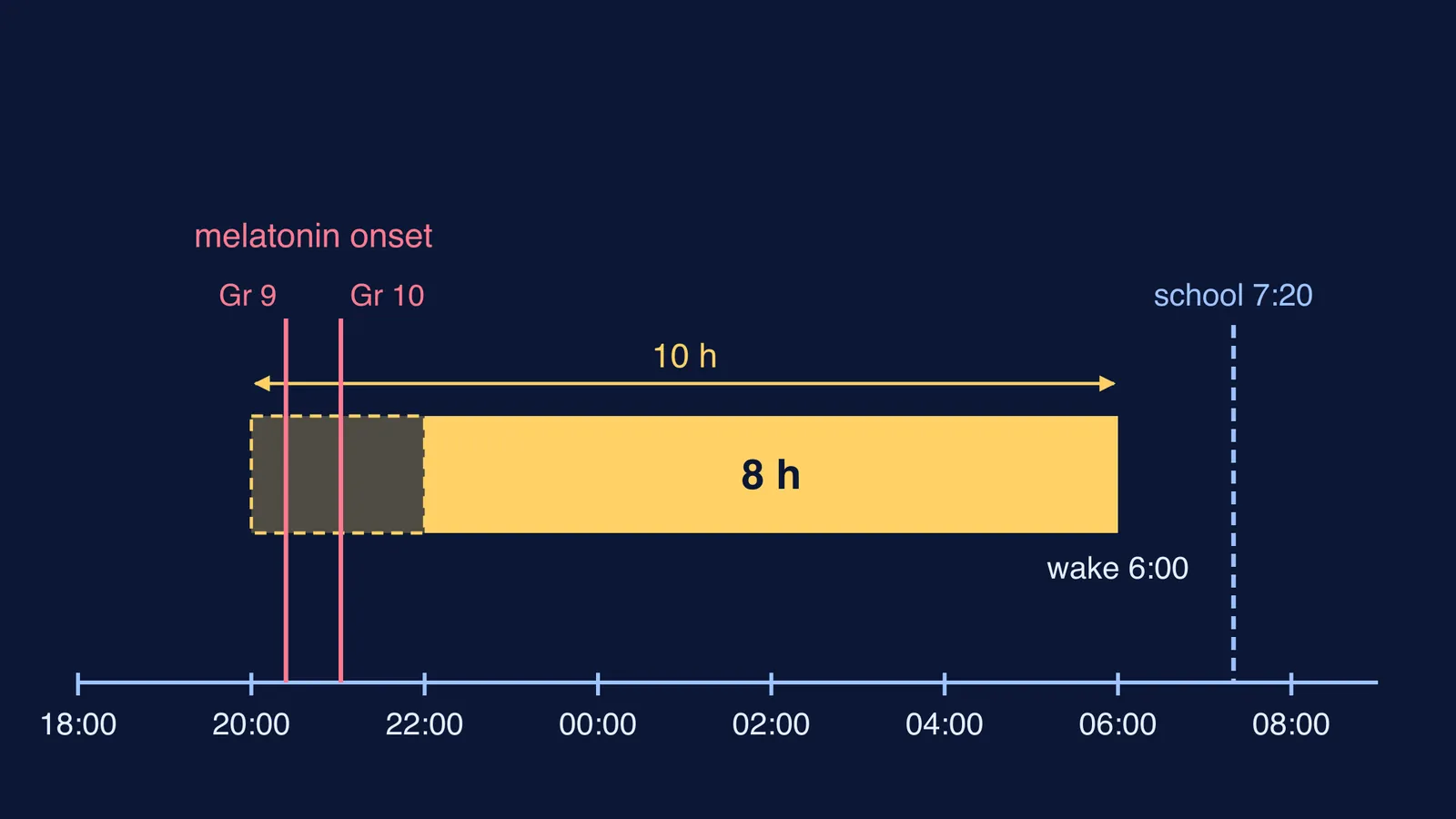
The day starts early. In a US study that enrolled 40 students, school moved from 8:25 am in 9th grade to 7:20 am in 10th grade; students woke earlier but did not fall asleep earlier, so they slept less (Carskadon and colleagues, Sleep, 1998). In a lab nap test at 8:30 am, they fell asleep in 5.1 minutes on average in 10th grade, against 10.9 minutes in 9th grade. The American Academy of Pediatrics calls school start times before 8:30 am "a key modifiable contributor to insufficient sleep" (Pediatrics, 2014).
Evenings fill up. Coaching, travel, homework and dinner push bedtime back, and a phone in bed can push it further. A systematic review of 67 studies found screen time was linked to worse sleep, mostly shorter and later sleep, in 90% of them (Hale and Guan, Sleep Medicine Reviews, 2015). The authors note this does not prove that screens cause the loss. For what the light itself does, read does blue light from phones affect sleep.
How much sleep does a teenager need?
Teenagers aged 13 to 18 should sleep 8 to 10 hours per 24 hours on a regular basis, according to a consensus statement from the American Academy of Sleep Medicine (Paruthi and colleagues, 2016).
A worked example: school starts at 7:20, so your teen wakes at 6:00. Eight hours means asleep by 10 pm. If coaching ends at 8:30 and the ride home takes 45 minutes, that leaves 45 minutes for dinner, homework and winding down.
Big weekend shifts matter too. In a survey of 3,120 high school students in Rhode Island, those sleeping under 6 hours 45 minutes on school nights, or going to bed more than two hours later at weekends, reported more daytime sleepiness and low mood than those sleeping over 8 hours 15 minutes with under an hour's weekend shift (Wolfson and Carskadon, Child Development, 1998).
A one-week sleep log to try at home
Make it your teen's log, not a surveillance sheet. They fill it in each morning, and you agree in advance that nothing written in it will be punished. Each day, note:
Time lights went out, and time the phone went out of reach.
Rough time they fell asleep.
Time they woke, and whether an alarm woke them.
Coaching or tuition end time, and time home.
Any nap: when and how long.
How alert they felt in the first class, from 1 to 5.
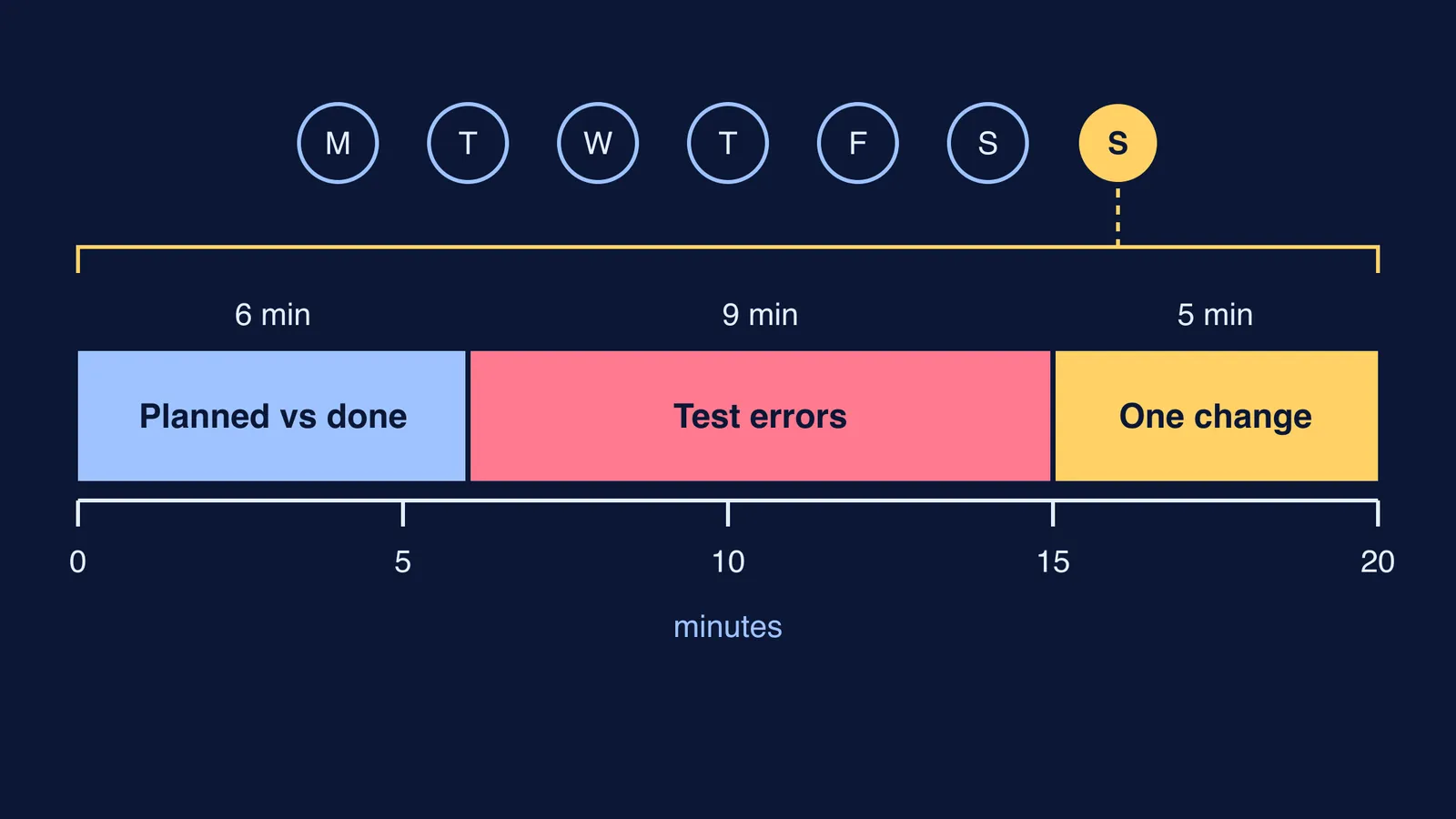
After seven days, work out:
Average school-night sleep, compared with the 8 to 10 hours the American Academy of Sleep Medicine recommends.
Weekend shift: how much later they slept on Saturday and Sunday.
The gap between lights out and falling asleep. A long gap with the phone nearby may point to screens; without it, the body clock may be the cause.
Which nights were shortest, and what came before them.
Then pick one change for next week, not five: the phone charges outside the bedroom, weekend wake-up stays within about an hour of school days, or the hardest homework moves before coaching. Our guide on how parents can help teenagers sleep more has more ideas.
If late nights come from being stuck on homework, Fermi's AI tutor can work out what your child already knows and build a plan for the session, so an evening study block has a clear end point.
If your teen seems anxious or low, the Indian government's Tele MANAS helpline is toll-free and open around the clock on 14416.
What should I tell the teacher?
Reply soon, thank them, and share a plan. A message you can adapt:
"Thank you for letting us know. We are looking into it at home. For the next week, Aarav is keeping a sleep log, including coaching days. Could you note which periods it happens in, and whether it is every day or only some days? We will share what we find, and what we are changing, by Friday."
It shows you took the concern seriously, asks for useful information and sets a follow-up date. Dozing in first period every day may point to sleep timing; dozing one day a week may match a late coaching night. Put the teacher's notes next to the log, and you may see where to start.