On this page
Your teen comes home and says everyone in the batch is buying a module set, a crash course or a famous problem book. You want to back them. You also know the shelf already holds books that were barely opened. You do not have to choose between “yes, buy it” and “no, we can't”. You can decide together, starting with what is already there.
How much do Indian families spend on coaching and study material?
India's Comprehensive Modular Survey: Education 2025, run by the National Statistical Office from April to June 2025, collected data from 57,742 students (PIB, Ministry of Statistics and Programme Implementation).
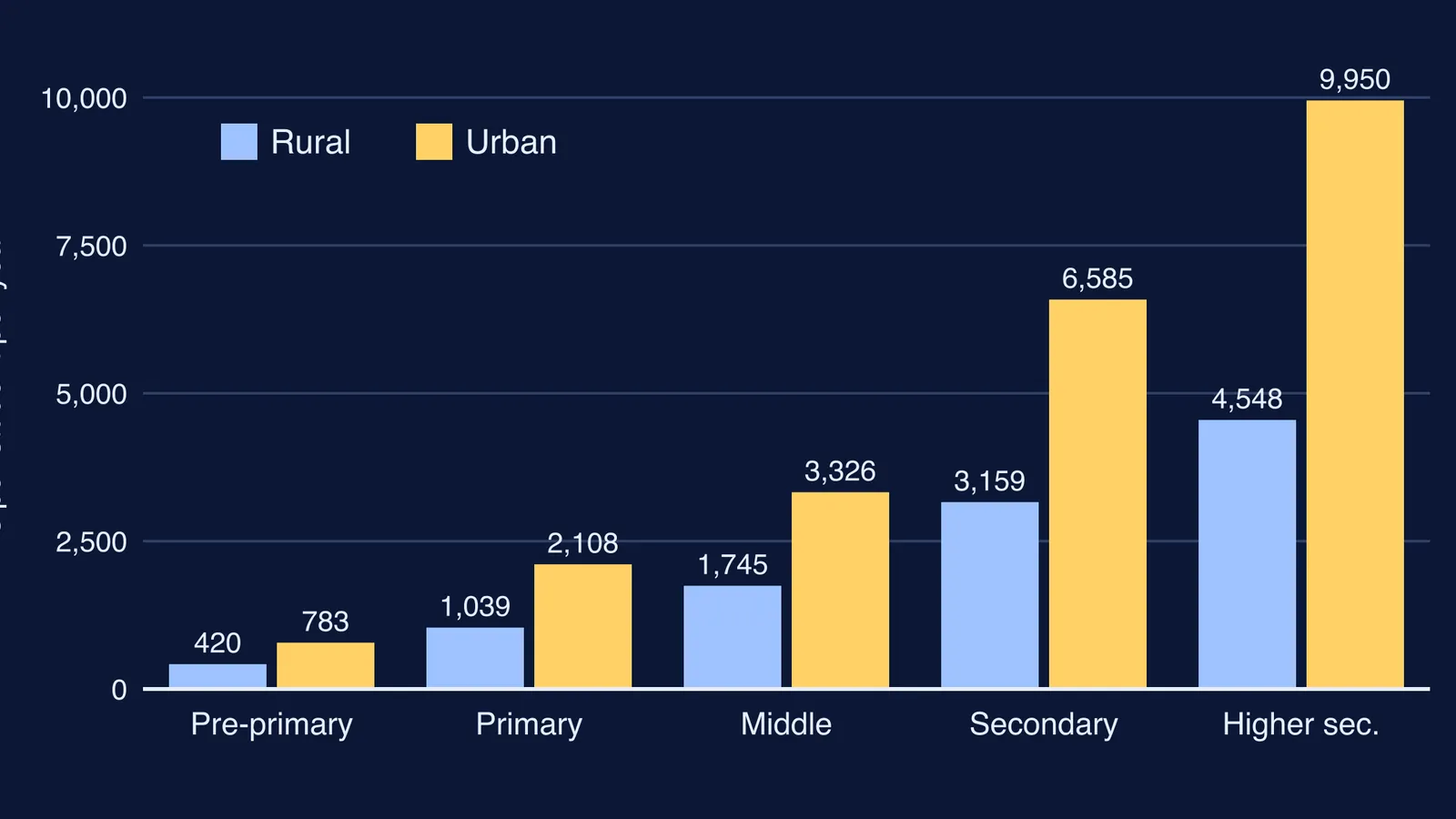
In that survey, 37.0% of higher-secondary students were taking or had taken private coaching during the academic year (PIB). Average household spending on private coaching was ₹6,384 per higher-secondary student nationally, and ₹9,950 in urban areas. These figures are averaged over all enrolled students, including those not taking coaching. Across all school levels, families spent an average of ₹2,002 per student on textbooks and stationery.
So families who do pay for classes or test series often spend more. The point is not that your teen's request is unreasonable. It is that by Class 11 the money is real, so a short check before buying is worth doing.
Why doesn't more material mean more marks?
Buying feels like progress. Using it is what counts. A review of ten learning techniques by John Dunlosky and colleagues, published in Psychological Science in the Public Interest in 2013, rated practice testing and distributed practice as high utility, and rereading and highlighting as low utility (Dunlosky et al., 2013).
In plain terms: solving problems from memory, spread over weeks, does more than owning another book you read through once. So the useful question is not “is this book good?” It is “will this give me practice I am not already getting?”
What is already at home? A quick audit
Sit down together, with your teen leading. Put everything on the table:
School textbooks (NCERT for most CBSE students) and any school workbooks.
Coaching modules, practice sheets and test papers you have already paid for.
Reference books bought earlier, including ones handed down by older siblings or cousins.
Previous years' papers and sample papers.
Online material, such as NCERT's DIKSHA platform, which has sections for NCERT and CBSE textbooks.
For each item, your teen marks it done, half done or not started. If the not-started pile is big, that pile is the first answer. For the order in which to use it, see our guide to studying NCERT first and reference books last, chapter by chapter.
Is the new book or course actually needed?
Ask your teen to answer these five questions out loud. If they can answer the first three clearly, the purchase is probably worth it.
Can you name the gap? “I keep losing marks in rotational motion” is a gap. “Everyone has it” is not.
Does nothing at home cover it? Check the audit pile first.
When will you use it? Ask which chapters, on which days this month.
Is there a cheaper way? A senior's copy, a second-hand copy, the school library, or one volume instead of the full set.
What happens to the unfinished material? Finish it or consciously drop it before adding more.
The same test works for shortcuts like bought notes; our piece on whether topper notes are worth buying for JEE or NEET walks through it.
Sometimes the gap is understanding, not a missing book. The Fermi Concept Library has a lesson for every concept in physics, chemistry, biology, mathematics and computing, so your teen can check what they actually need before anyone pays for anything.
How do you say yes, no or not yet without a fight?
Teens can hear “no” as “I don't trust you”. Having words ready helps.
Yes: “You've named the gap and shown me when you'll use it. Let's buy it. Show me the first chapter done before we talk about the next one.”
Not yet: “Let's finish what's on the table first. If the gap is still there after this module, we'll buy it.”
No: “We can't afford this right now, and that's not about you. Let's find a library or senior's copy together.”
Being honest about money can help teens feel included rather than refused. Our guide on involving your teenager in the family budget has ways to do that at any income.
Tele MANAS is the Ministry of Health and Family Welfare's toll-free mental health helpline, reachable on 14416 (PIB Research Unit).
Tonight, clear a table, put everything on it and let your teen run the audit.