On this page
A teacher calling your child stupid in front of the class is not "just scolding". Indian child-rights guidelines name it, and there is a clear route for raising it.
Does a teacher insulting a child count as mental harassment?
Usually, yes. The National Commission for Protection of Child Rights (NCPCR) defines mental harassment as "any non-physical treatment that is detrimental to the academic and psychological well-being of a child" in its Guidelines for Eliminating Corporal Punishment in Schools. Its examples include:
"Sarcasm that hurts or lowers the child's dignity"
"Calling names and scolding using humiliating adjectives, intimidation"
"Belittling a child in the classroom" for not meeting the teacher's academic expectations
"'Shaming' the child to motivate the child to improve his performance"
Section 17 of the Right to Education Act, 2009 says "No child shall be subjected to physical punishment or mental harassment", and anyone who breaks it is liable to disciplinary action under the service rules that apply to them, as quoted in the NCPCR guidelines. The RTE Act covers children aged 6 to 14, but the same guidelines ask CBSE, ICSE and state boards to set up grievance redressal cells for corporal punishment complaints from their schools.
Firm correction is still allowed. For dealing with a verbally confrontational student, the guidelines tell teachers: "Do not lose your temper, raise your voice, or use sarcasm." A teacher can point out missing homework. Mocking the child for it in front of classmates is the problem.
What should you do when your child tells you?
Listen first and react later. The NCPCR guidelines ask teachers who hear a child's disclosure to be open and supportive, not to doubt the child's information and not to blame the child; the same approach works at home. Ask "What exactly did they say?" and "Who else was there?" rather than "What did you do?"
How do you record what happened?
Write a dated note the same evening. Keep it factual and short:
Date, period and subject
The teacher's words as closely as your child remembers them, in quotation marks
What happened just before, including anything your child did
Classmates who saw it
How your child has been since: sleep, appetite, reluctance to go to school
Any earlier incidents with the same teacher, with rough dates
Save every email, diary remark and message from here on, and keep it off social media and the class WhatsApp group.
How do you raise it with the school, step by step?
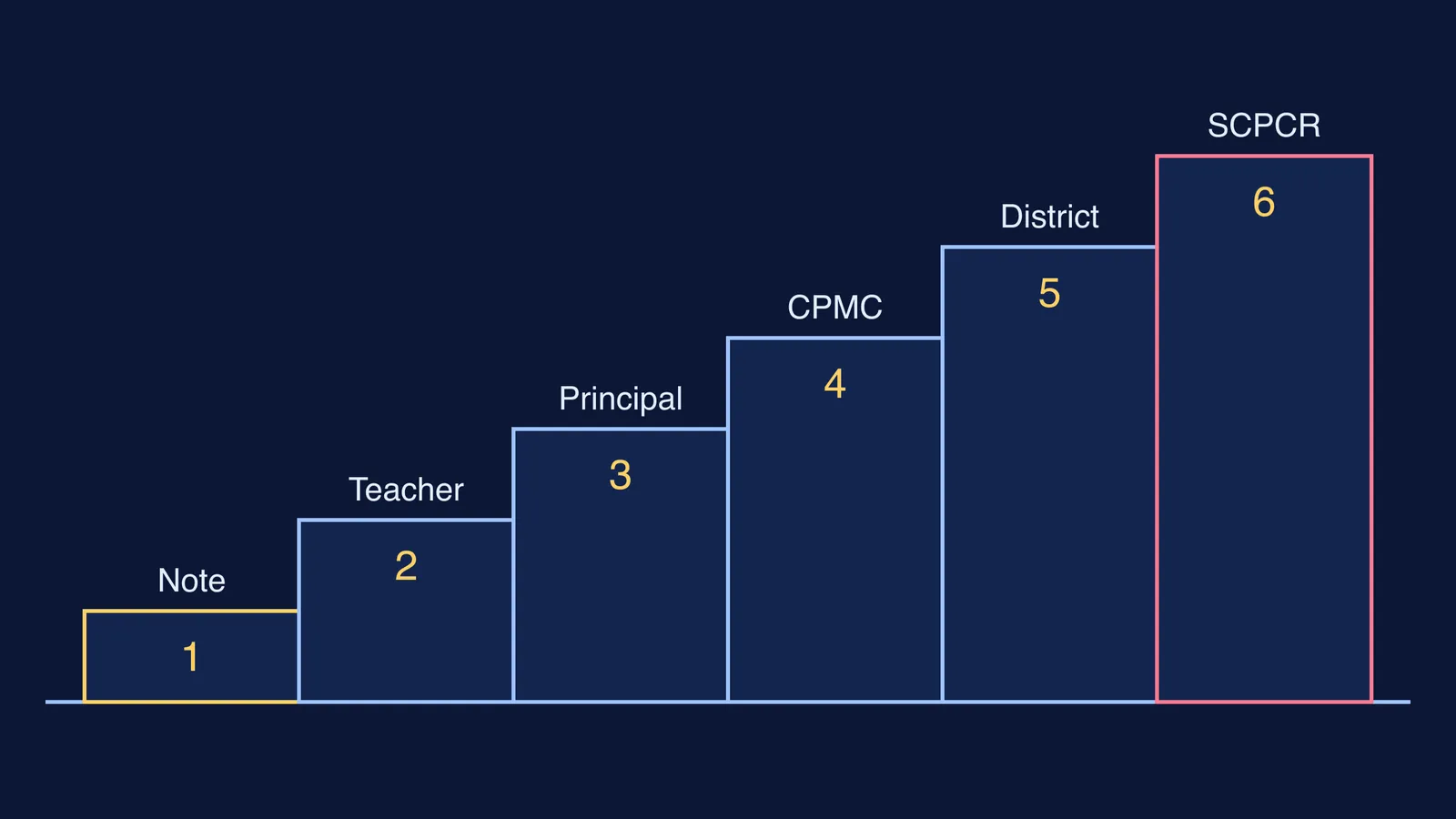
Ask the class teacher or principal for a meeting, in writing. A short email with the date of the incident is enough. Our email template for writing to a class teacher has a format you can adapt.
At the meeting, describe and ask. Try: "On [date], in the maths period, my daughter was called useless in front of the class after her test. She has not wanted to come to school since. I want to understand what happened and agree how it will not happen again." Then stop and listen.
If nothing changes, write to the principal. Mention Section 17 of the RTE Act and the NCPCR guidelines, attach your note, and ask what the school's grievance process is; the guidelines say schools should frame clear-cut protocols for student and parent grievances. Read our guide on when a complaint to the principal is the right step first.
Ask whether the school has a Corporal Punishment Monitoring Cell (CPMC). The NCPCR guidelines say the School Management Committee should set one up in each school, with members including two teachers, two parents, a counsellor and two students. It should hear mental harassment complaints without delay, preferably on the day, and send its recommendations to the district authority within 48 hours of the incident.
Go to the district. The guidelines ask states to designate a local authority for these grievances under Section 32 of the RTE Act, and say the District Collector, Magistrate or Deputy Commissioner should receive complaints of mental harassment. If the grievance is not resolved there, the State Commission for Protection of Child Rights hears appeals.
Keep every message calm and dated. For the wider legal picture, including physical punishment, see our explainer on corporal punishment in schools and Indian law.
How do you help your child bounce back?
Tell your child plainly that what the teacher said was wrong and that you are handling it. Keep routines normal. If the insult was about marks, rebuilding one topic at a time in private can help; Fermi's AI tutor works out what a student already knows and builds a plan for the session.
Tele MANAS, the government's free mental health helpline, runs round the clock on 14416 or 1800-891-4416, according to the Press Information Bureau.