

On this page
Teachers are busy, often managing dozens of students every day while planning lessons, grading assignments, and keeping parents informed. When you need to discuss your child's progress, a short, clear email is usually the best place to start. It gives the teacher time to check their records and reply thoughtfully, rather than trying to answer complex questions at the classroom door during drop-off or pick-up.
Research shows this connection matters deeply. A 2014 Harvard field experiment by Matthew Kraft and Todd Rogers found that brief, regular communication between teachers and parents reduced student failure rates by 41% 1.
Here is how to structure that first email and what to say for common situations, from sudden dips in marks to social concerns.
How to write an email to the class teacher?
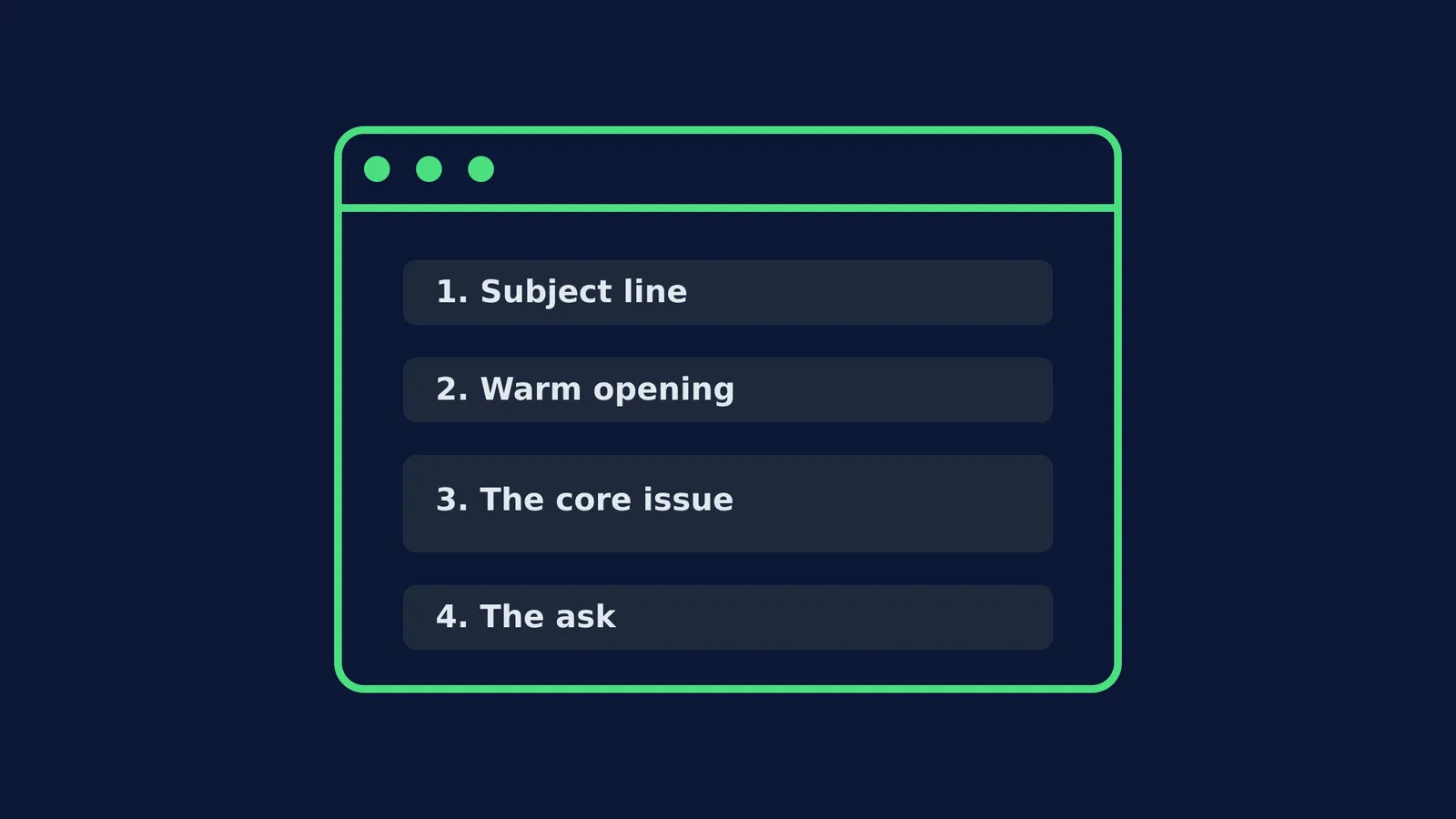
The most effective emails to teachers follow a simple four-part framework. This ensures your message is respectful of their time while getting straight to the point:
A clear subject line: Always include your child's full name, their class section, and the topic. For example, 'Arjun Sharma (Class 9B) - Question about recent maths test'.
A warm opening: Start politely. Acknowledge their hard work or mention something positive your child enjoyed in their class recently.
The core issue: State your concern in one or two sentences. Avoid long paragraphs of backstory; stick to the facts of what you have noticed at home.
The ask: End with a clear, low-pressure next step. Ask for a brief phone call or their quick advice via email.
How do you raise a concern about marks?
If your child's marks have suddenly dropped, the goal is to ask for the teacher's observation, not to demand an immediate fix or blame the school. You want to align what you see at home with what they see in the classroom.
Subject: Neha Patel (Class 10A) - Concern about science marks
Dear [Teacher's Name],
I hope you are having a good week. Neha really enjoyed the recent practical project on electricity.
I am writing because I noticed her marks in the last two science tests have dropped compared to last term. At home, she seems to be spending the same amount of time revising, so I wanted to ask if you have noticed where she might be getting stuck in class.
Would you have a few minutes for a quick phone call sometime this week to discuss how we can support her at home?
Best regards, [Your Name] [Your Phone Number]
If the teacher suggests that your child is missing foundational ideas and needs guided practice, you might look for tools that explain the reasoning rather than just printing the answer. For example, Fermi's AI tutor can work out what a student already knows, build a plan for the session, and teach through it—drawing the figure and checking understanding as it goes.
How do you ask about behaviour or social concerns?
Social issues, bullying, or changes in behaviour are sensitive. It is best to share what you see at home neutrally and ask if they see the same dynamics at school.
Subject: Rahul Singh (Class 8C) - Checking in
Dear [Teacher's Name],
Thank you for all your support with Class 8C this year.
I am reaching out because Rahul has been unusually quiet at home recently and seems reluctant to go to school. He mentioned feeling left out during break times. Have you noticed any changes in his behaviour or friendships during the school day?
I would value your perspective on this. Please let me know if there is a good time to speak briefly on the phone.
Warmly, [Your Name] [Your Phone Number]
How do you inform a teacher about health absences?
When your child is unwell for several days, an email keeps the teacher informed and helps you manage the missed work without overwhelming the student upon their return.
Subject: Absence: Priya Desai (Class 7B) - Medical leave
Dear [Teacher's Name],
Please note that Priya is unwell with a fever and the doctor has advised her to rest. She will not be in school for the next few days.
Once she is feeling better, she will start catching up on what she missed. Could you let me know which chapters or assignments are the highest priority for her to focus on first?
Thank you for your help and understanding.
Best regards, [Your Name]
Keeping your emails polite, brief, and focused on working together as a team makes it much easier for teachers to give you the insight and support your child needs.
Read next:


